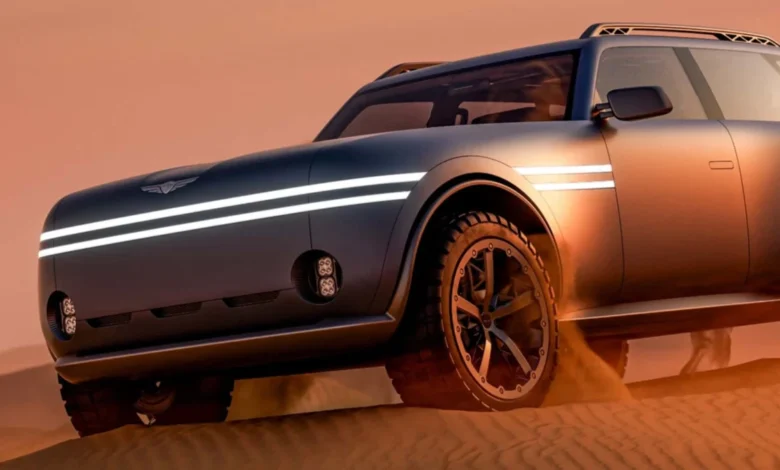
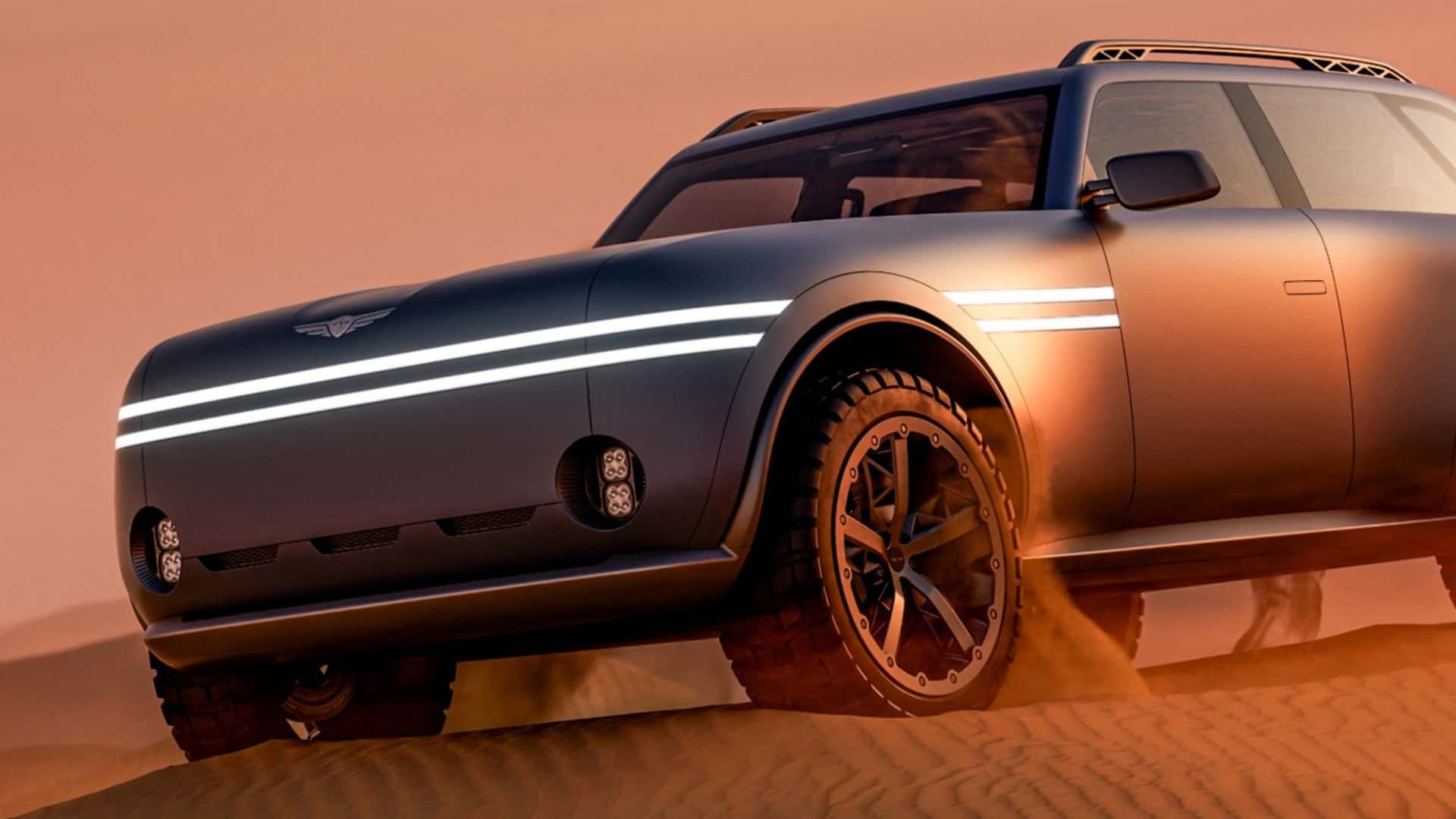
The luxury automotive landscape is witnessing a potential shift as Genesis, the premium arm of the Hyundai Motor Group, reconsidered its stance on the development of a luxury pickup truck. While the brand had previously toyed with the concept of a high-end utility vehicle, even producing internal mockups and design studies, the project was thought to have been relegated to the archives. However, recent developments within the broader Hyundai corporate structure suggest that a Genesis-badged pickup is no longer a dismissed fantasy but a strategic possibility. This shift in narrative comes as Hyundai prepares to launch a robust body-on-frame global pickup program, providing the necessary mechanical architecture that would allow Genesis to enter the segment without the prohibitive costs of developing a bespoke platform from scratch.
The catalyst for this renewed speculation stems from recent commentary by high-ranking executives within the Hyundai Motor Group’s Australian division. Speaking to the automotive publication Carsales, Hyundai Motor Group Australia Chief Operating Officer Gavin Donaldson provided insight into the brand’s internal deliberations. Donaldson emphasized that while no official production green light has been granted, the door remains open for a Genesis "ute"—the Australian term for a pickup—provided it can uphold the brand’s rigorous luxury standards. The core philosophy guiding such a project is the avoidance of "badge engineering." For a Genesis pickup to exist, it must offer a distinct experience that aligns with the brand’s "Athletic Elegance" design language and premium positioning, rather than merely serving as a trimmed-out version of a mass-market Hyundai product.
The Evolution of the Genesis Truck Concept
The journey of the Genesis pickup truck began several years ago in the brand’s design studios. Luc Donckerwolke, the Chief Design Officer for the Hyundai Motor Group and the architect of the modern Genesis aesthetic, has previously admitted that the company explored the idea through various mockups. These early studies were intended to test the limits of the Genesis design DNA, which is characterized by the "Two Lines" lighting signature and the Crest Grille. However, in early 2024, Donckerwolke suggested that the project had effectively been shelved. At the time, the focus of the brand was centered on solidifying its sedan and SUV lineup, specifically the expansion of the GV series, which has become the brand’s primary volume driver.
The shift from a "shelved" project to a "potential" project highlights the rapidly changing nature of the global automotive market. Luxury buyers are increasingly gravitating toward versatile vehicles that combine the utility of a truck with the refinement of a flagship limousine. This trend is particularly visible in the North American and Australian markets, where high-trim levels of standard pickups—such as the Ford F-150 Limited or the GMC Sierra Denali—often command price tags exceeding $80,000. Genesis, observing this demand, appears to be re-evaluating whether it can capture a slice of this high-margin segment.
Leveraging the Hyundai-Kia Foundation
The economic viability of a Genesis pickup truck rests almost entirely on platform sharing. Historically, Genesis has built its reputation by utilizing shared Hyundai Motor Group architectures, such as the rear-wheel-drive platforms found in the G80 and G90, and then heavily modifying them with unique suspension tuning, acoustic insulation, and interior craftsmanship. To build a truck, Genesis would likely look toward two major upcoming projects within the group: the Kia Tasman and the Hyundai "Boulder" project.
The Kia Tasman, which is nearing its global debut, utilizes a traditional body-on-frame construction. This architecture is designed for heavy-duty work, off-roading, and significant towing capacities—traits that are essential for any vehicle entering the mid-size or full-size pickup market. If Genesis were to adopt this frame, it would gain immediate credibility in terms of "truck" capability. Furthermore, Hyundai has recently hinted at its own body-on-frame ambitions through the Boulder concept, which is rumored to be a mid-size pickup aimed at global markets.
Another potential avenue for development involves the burgeoning partnership between the Hyundai Motor Group and General Motors. The two automotive giants recently signed a Memorandum of Understanding to explore co-development in several areas, including vehicle platforms and powertrain technologies. Given GM’s dominance in the pickup truck sector with the Chevrolet Silverado and GMC Sierra, industry analysts have speculated that Hyundai (and by extension, Genesis) could gain access to world-class truck engineering through this alliance.
Technical Prospects and Powertrain Strategy
A Genesis pickup would likely diverge from its corporate cousins through its powertrain offerings. While a standard Hyundai or Kia truck might focus on turbocharged four-cylinder or diesel engines, a Genesis version would almost certainly lean toward electrification and high-output hybrid systems. The Hyundai Motor Group is currently developing a next-generation hybrid system intended for larger vehicles, which could provide the smooth, effortless torque required for a luxury pickup.
Furthermore, the brand’s commitment to its "Magma" performance sub-brand suggests that a high-performance variant of a truck is not outside the realm of possibility. Much like the Ford F-150 Raptor or the Ram 1500 TRX, a "Genesis Magma Truck" could serve as a halo vehicle, combining off-road prowess with the bespoke interior materials and advanced technology suites that define the brand. This would include the latest iteration of the Genesis infotainment system, augmented reality navigation, and Level 3 semi-autonomous driving capabilities.
The Luxury Pickup Landscape: Market Analysis
The decision to enter the pickup market is fraught with historical precedents, both successful and unsuccessful. The most notable failure in this space was the Mercedes-Benz X-Class. Launched in 2017, the X-Class was a rebadged Nissan Navara. Consumers and critics quickly identified the lack of "Mercedes DNA" in the vehicle’s cabin and driving dynamics, leading to poor sales and its eventual discontinuation in 2020.
Genesis executives are reportedly well aware of the X-Class’s fate. Gavin Donaldson’s comments regarding "building the brand" and "supporting the luxury image" indicate that Genesis would only proceed if the vehicle felt like a true Genesis from the driver’s seat. This would require a complete overhaul of the interior, featuring the brand’s signature Nappa leather, real wood or carbon fiber trim, and industry-leading NVH (Noise, Vibration, and Harshness) levels.
Conversely, the success of electric luxury trucks like the Rivian R1T and the Hummer EV demonstrates that there is a demographic of wealthy buyers who desire a truck that functions as a status symbol and a high-tech gadget. For Genesis, a pickup would not be a tool for a construction site, but a "lifestyle vehicle" for the equestrian, the boat owner, or the luxury camper.
Chronology of Genesis Pickup Rumors
- 2015: Hyundai reveals the Santa Cruz concept, sparking rumors of a Genesis version.
- 2020: Genesis officially launches as a standalone brand in several global markets, focusing on the G70, G80, and G90.
- 2021-2022: Design studies for a Genesis pickup are conducted internally under Luc Donckerwolke.
- Early 2024: Donckerwolke signals that the pickup project has been shelved to prioritize the Magma performance brand and the X Gran Coupe halo car.
- Late 2024: Reports emerge of Hyundai’s "Boulder" project and the Kia Tasman’s final testing phases.
- Current: Hyundai Motor Group Australia executives confirm that a Genesis pickup is once again a topic of discussion, dependent on platform availability and brand alignment.
Broader Implications for the Genesis Brand
Introducing a pickup truck would be a bold move for a brand that is still establishing its "old world" luxury credentials in markets like Europe. While a truck would likely be a hit in the United States, Canada, Australia, and parts of the Middle East, it might clash with the sophisticated, urban image Genesis is cultivating in London, Frankfurt, and Seoul.
However, the automotive industry is currently in a "white space" era where traditional segment boundaries are blurring. If Genesis can successfully execute a pickup that maintains the "Two Lines" elegance while offering the utility of a body-on-frame chassis, it could solidify its position as the most innovative of the modern luxury brands. It would also provide a significant volume boost in the North American market, where trucks consistently outsell sedans.
For now, the project remains in the "consideration" phase. The immediate priorities for Genesis remain the rollout of the Magma performance line and the transition toward a fully electrified lineup. Yet, with the mechanical groundwork being laid by Hyundai’s upcoming truck programs, the path from concept to showroom has never been clearer for a Genesis pickup. If the market demand for premium utility continues to climb, the "shelved" project of yesterday may very well become the flagship disruptor of tomorrow.