Tesla Integrates Starlink V5 Satellite Connectivity into Cybercab Robotaxi Fleet to Enhance Autonomous Vehicle Redundancy and Global Connectivity

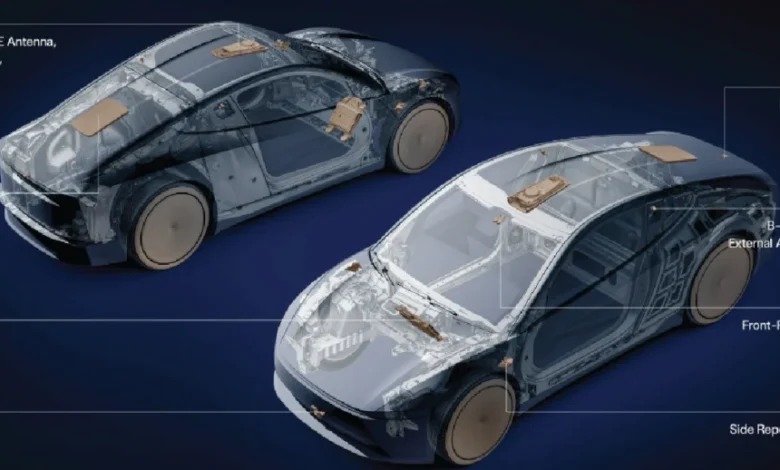
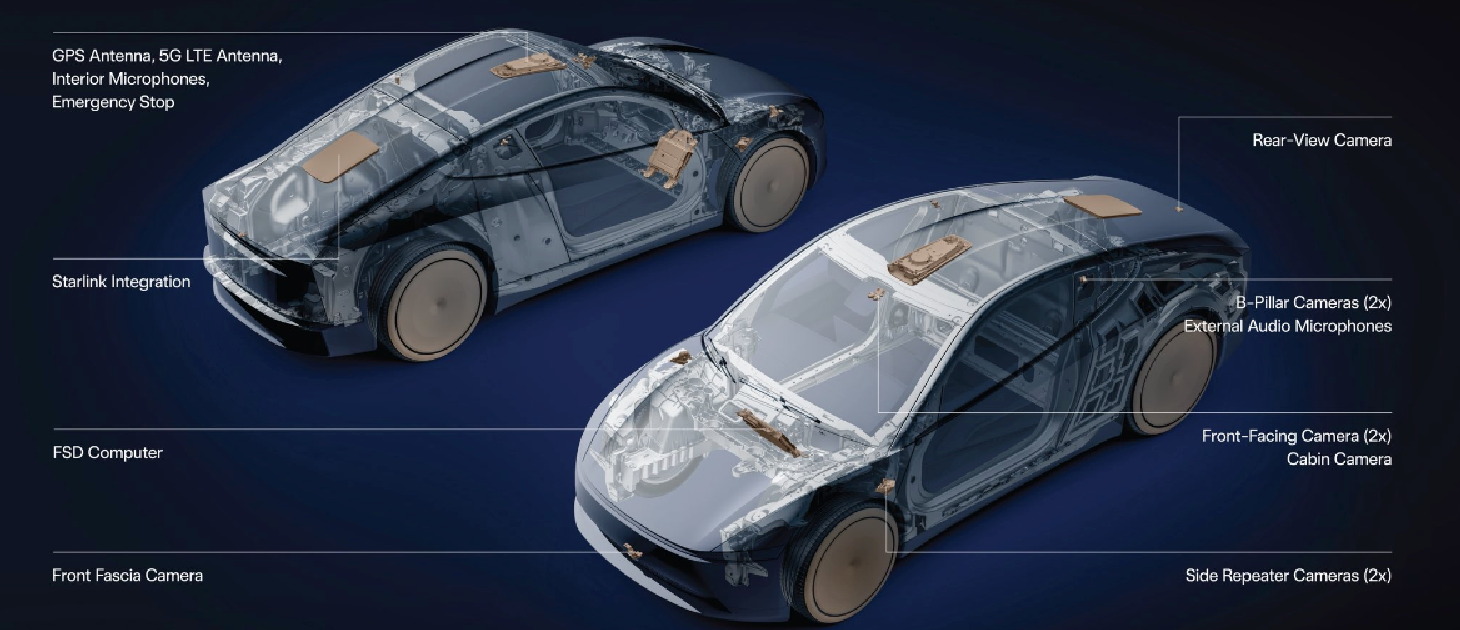
Tesla and SpaceX have officially announced the direct integration of Starlink satellite internet technology into the Cybercab, Tesla’s purpose-built robotaxi. The announcement, made through a series of synchronized technical reveals on the social media platform X on July 20, 2026, marks a significant evolution in the hardware architecture of Tesla’s autonomous vehicle fleet. A detailed cutaway diagram released by Starlink engineers illustrates a "Starlink V5" antenna embedded directly into the roof structure of the Cybercab, positioned adjacent to the vehicle’s primary camera housing and sensor suite. This integration represents the first time Starlink hardware has been manufactured as a native component of a Tesla production vehicle, signaling a deeper technical and financial synergy between Elon Musk’s aerospace and automotive ventures.
Technical Specifications and the Starlink V5 Integration
The hardware revealed in the technical diagram identifies the "Starlink V5" as a specialized, low-profile phased-array antenna designed specifically for automotive integration. Unlike the "Dishy McFlatface" consumer terminals or the larger high-performance maritime units, the V5 appears to be optimized for the aerodynamic constraints of the Cybercab. By embedding the antenna into the roof, Tesla avoids the drag penalties associated with external aftermarket mounts, maintaining the vehicle’s high-efficiency profile which is critical for maximizing the range of its electric powertrain.
The integration block is situated in the upper-central portion of the roof, providing a clear line of sight to the Starlink constellation of low-Earth orbit (LEO) satellites. According to the promotional materials, this setup is intended to provide "high-speed internet from space for the future of autonomous vehicles." While specific throughput data was not disclosed in the initial announcement, the V5 designation suggests an advancement over previous iterations, likely focusing on reduced latency and improved beam-tracking capabilities to maintain a stable connection while the vehicle is in motion at highway speeds.
The Role of Connectivity in Tesla’s Autonomous Ecosystem
The inclusion of satellite connectivity in the Cybercab has sparked immediate debate among industry analysts and automotive engineers, primarily because Tesla’s Full Self-Driving (FSD) system is designed to operate as an "edge" technology. Tesla’s autonomous driving philosophy centers on the car’s onboard computer—the AI4 hardware—processing visual data in real-time to make driving decisions without the need for an active data connection. This "offline-first" approach is a core safety feature, ensuring that the vehicle can continue to navigate safely even if it enters a tunnel or a cellular dead zone.

However, the requirement for persistent, high-bandwidth connectivity becomes more pronounced when transitioning from driver-assist systems to a fully driverless robotaxi fleet. There are several critical functions that necessitate the robust connection Starlink provides:
- Remote Assistance and Tele-operation: In "edge case" scenarios where the onboard AI encounters an obstacle it cannot confidently navigate, a remote human operator may need to intervene. Low-latency satellite connectivity ensures that a fleet manager can view real-time video feeds from the car’s cameras and provide guidance or remote commands, regardless of local cellular infrastructure quality.
- Fleet Dispatch and Optimization: For a robotaxi service to operate efficiently, the central dispatch system must have constant visibility into the location, battery status, and mechanical health of every vehicle in the fleet.
- Over-the-Air (OTA) Updates: Tesla frequently pushes software updates to improve vehicle performance and safety. Satellite integration allows these updates to occur anywhere in the world, ensuring the entire fleet remains on the most current software version without requiring vehicles to return to a service center or find a Wi-Fi hotspot.
- Passenger Experience: As the Cybercab lacks a steering wheel and pedals, the interior experience is focused entirely on passenger comfort and entertainment. High-speed internet allows for seamless 4K video streaming, gaming, and video conferencing during transit.
Chronology of the Cybercab Development and Connectivity Evolution
The path to integrating Starlink into Tesla’s hardware began years prior to this announcement. As early as 2020, Elon Musk hinted at the possibility of Starlink-equipped vehicles, though the focus at that time was primarily on larger vehicles like the Tesla Semi or the Cybertruck.
- October 2024: Tesla officially unveiled the Cybercab prototype, showcasing a two-seater design with inductive charging and no physical controls.
- Early 2026: Tesla began low-volume production of the Cybercab at Giga Texas, despite the fact that full regulatory approval for unsupervised autonomy was still pending in many jurisdictions.
- July 6, 2026: Reports surfaced that Tesla was stockpiling Cybercab units, prioritizing hardware readiness while continuing to refine the FSD software stack.
- July 20, 2026: The formal announcement of Starlink V5 integration was made, clarifying the hardware configuration for the production-spec robotaxi.
This timeline suggests that Tesla is moving toward a "global-ready" hardware configuration. By including Starlink as a standard feature, Tesla prepares the Cybercab for deployment in international markets where cellular 5G coverage may be inconsistent or non-existent.
Geographic Constraints and the Satellite Advantage
Currently, Tesla’s unsupervised robotaxi testing is highly localized. The service is currently limited to specific geofenced zones in Texas—specifically Austin, Houston, and Dallas—as well as a localized service area in Miami, Florida. These urban environments are characterized by dense cellular networks, making the immediate necessity of satellite internet less obvious.
The strategic advantage of Starlink becomes clear, however, when considering the expansion of the robotaxi service beyond urban centers. Cellular networks are notoriously unreliable in rural areas, mountainous terrain, and along vast stretches of interstate highways. For a robotaxi to provide a true "anywhere to anywhere" service, it cannot be tethered to the range of cellular towers. Starlink provides a redundant communication layer that ensures the vehicle remains "visible" to the Tesla network even in the most remote locations.
Furthermore, in the event of natural disasters or localized infrastructure failures—which can take down terrestrial cellular networks—the satellite-linked fleet would remain operational, providing a resilient transportation network during emergencies.
Economic Implications and Intra-Company Synergy
The integration of Starlink into Tesla vehicles also carries significant financial implications. Industry observers have noted a recurring pattern of "self-dealing" or vertical integration between Musk-led companies. By making Starlink a native component of the Cybercab, Tesla effectively creates a massive, captive customer base for SpaceX’s satellite service.
Each Cybercab in the fleet will likely require a monthly data subscription to maintain its Starlink connection. If Tesla successfully deploys millions of robotaxis, this would represent billions of dollars in recurring annual revenue for SpaceX. This follows other high-profile collaborations, such as Tesla’s $2 billion investment in xAI—the artificial intelligence firm founded by Musk—which was subsequently involved in a major deal with SpaceX.
Critics argue that these maneuvers prioritize the financial health of Musk’s private ventures over the immediate cost-efficiency of Tesla, a publicly traded company. However, supporters view this as a masterstroke of ecosystem building, creating a closed-loop technology stack where the hardware, software, and connectivity are all controlled by a single visionary entity.
Industry Reaction and Future Outlook
The reaction from the broader automotive and tech sectors has been one of cautious observation. Competitors in the autonomous space, such as Waymo and Cruise, have historically relied on a combination of multiple cellular carriers for redundancy. The move to satellite connectivity is a pivot that few other manufacturers are currently equipped to make, given that no other automaker has a sister company operating a global satellite constellation.

In a query posted to X shortly after the announcement, industry analyst Fred Lambert questioned whether the Starlink integration was currently in active production and sought clarification on the necessity of the hardware for urban-focused vehicles. Tesla’s lack of an immediate response regarding the production timeline is consistent with the company’s history of announcing hardware features that are "future-proofed" for later software activation.
As Tesla moves toward the mass deployment of the Cybercab, the Starlink V5 integration serves as a clear indicator of the company’s long-term ambitions. It is no longer just about building a car that can drive itself; it is about building a globally connected infrastructure that operates independently of traditional telecommunications providers.
The broader implications for the telecommunications industry are also significant. If Tesla proves that satellite-integrated vehicles are more reliable and easier to manage, other automakers may be forced to seek similar partnerships with satellite providers, potentially sparking a new "space race" within the automotive sector. For now, the Cybercab stands as a unique synthesis of automotive engineering and aerospace technology, representing a significant bet on a future where the internet is as ubiquitous as the air, even for the cars that navigate our roads.