The Evolution of Modern Medicine: How Gen Z Practitioners are Redefining Professionalism and Patient Care through Authenticity and Advocacy

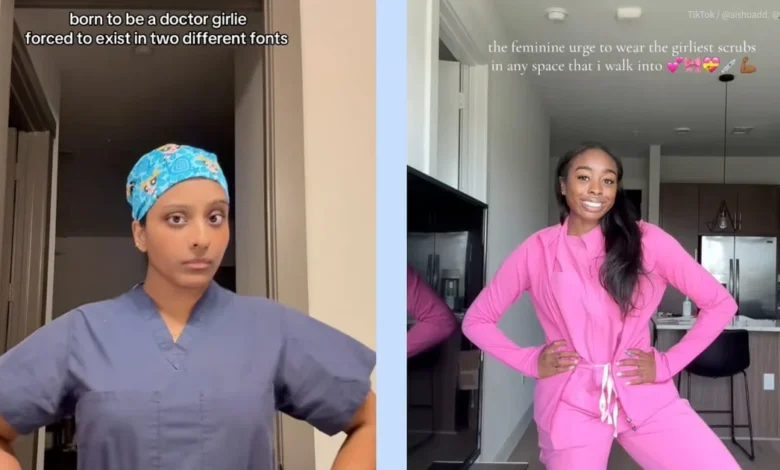
The landscape of American healthcare is undergoing a profound cultural transformation as Generation Z enters the medical workforce. Traditionally defined by a stoic, "white coat" persona that prioritizes hospital life above personal identity, the medical profession is being challenged by a new cohort of practitioners who prioritize authenticity, mental health, and social advocacy. Figures such as Tiffany Nguyen, Aishwarya Addepalli, and Erica Ogwumike represent a demographic that refuses to separate their personal identities from their professional roles, utilizing social media to bridge the gap between providers and the communities they serve.
The Rise of the Authentic Practitioner
Tiffany Nguyen, a 24-year-old physician assistant (PA) in training, exemplifies this shift. Known to her 24,800 TikTok followers as the "pre-med older sister," Nguyen presents a version of a healthcare provider that deviates significantly from historical norms. With acrylic nails and a tooth gem, she represents a generation that views personal expression not as a distraction from clinical competence, but as a tool for connection.
Nguyen’s journey is rooted in the "first-gen" experience. Raised in a Vietnamese immigrant household in Ohio by a mother and grandmother with limited formal education, she frequently served as the family’s medical translator and advocate from the age of ten. This background informed her mission to represent Asian American, low-income, and non-English speaking identities in a field where they are often marginalized. Her narrative is a direct counter-response to the "Grey’s Anatomy" archetype of the physician whose life is entirely consumed by the hospital. Instead, Nguyen and her peers are building a career model that integrates their heritage and personal struggles into their practice.
Chronology of a Shifting Medical Culture
The emergence of this new medical identity can be traced through a specific timeline of societal and educational shifts over the last decade.
- The Pre-Pandemic Era (2015–2019): During this period, the "wellness" movement began to permeate undergraduate and medical school curricula. Students like Erica Ogwumike, who was balancing Division I basketball with pre-med studies, began to see multidimensionality as an asset rather than a liability.
- The COVID-19 Catalyst (2020–2022): The pandemic served as a pivotal moment for Gen Z healthcare workers. Many, including Aishwarya Addepalli, conducted their medical school interviews via Zoom while in isolation. The stressors of the pandemic highlighted the fragility of the healthcare system and the high rates of burnout among veteran providers, prompting younger students to seek sustainable work-life boundaries.
- The Social Media Integration (2021–Present): Platforms like TikTok and Instagram became digital town squares for medical education. Providers began sharing "day in the life" content, not just for entertainment, but to demystify the medical path for underrepresented groups.
Data and Socioeconomic Context
The shift toward a more balanced and authentic medical career is supported by evolving data regarding physician burnout and workforce demographics. According to a 2023 report by the American Medical Association (AMA), nearly 53% of physicians reported symptoms of burnout, a figure that spiked during the pandemic. In response, Gen Z—who are projected to make up 30% of the workforce by 2030—are entering the field with a heightened focus on mental health.
Furthermore, the emphasis on representation by providers like Nguyen addresses a critical gap in the U.S. healthcare system. Data from the Association of American Medical Colleges (AAMC) indicates that while Asian Americans are well-represented in medicine generally, specific subgroups and low-income first-generation students still face significant barriers. Research consistently shows that patient outcomes improve when providers share cultural or linguistic backgrounds with their patients, as it fosters trust and improves compliance with treatment plans.
Overcoming the "Lazy" Stereotype through Resilience
A common critique of Gen Z is the stereotype of being "fragile" or "unfocused." However, the biographies of these practitioners suggest a high level of resilience. Nguyen’s commitment was tested in April when she suffered a hemorrhagic stroke. The experience of being a patient—worrying about the costs of ICU care as a low-income student while being unable to speak—deepened her empathy for the patients she intends to serve.
:quality(85):upscale()/2026/07/23/750/n/49351082/e59436a66a62489c238966.04867988_.png)
Aishwarya Addepalli, a 27-year-old anesthesiology resident, argues that her generation is actually more disciplined because they are self-aware. Addepalli, who gained viral fame for her Bharatanatyam-style dance videos, views her art as a meditative outlet essential for surviving the rigors of residency. "We still deeply care about people, patients, but we’re also more intentional about surviving and taking care of ourselves," she noted. This intentionality is a strategic response to a system that has historically exploited the "martyr" complex of healthcare workers.
Redefining the "Resident" and Workplace Boundaries
The term "resident" itself has historical roots in the 19th century, referring to doctors who literally resided at the hospital. This expectation of 24/7 availability was championed by figures like Dr. William Halsted, whose own work habits were famously fueled by substance use. Modern Gen Z residents are actively dismantling this "always-on" culture.
Erica Ogwumike, a resident physician and former Olympic athlete, emphasizes that her generation was taught that wellness is a prerequisite for competence. By maintaining her identity as an athlete and a content creator, she argues she becomes a more empathetic and effective dermatologist. The implementation of the Accreditation Council for Graduate Medical Education (ACGME) duty-hour requirements—which generally limit residents to 80 hours per week—has provided a structural framework for this shift, but the cultural push for boundaries comes from the residents themselves.
Implications for the Future of the Healthcare System
The "Gen Z era of healthcare" has several long-term implications for the medical industry:
- Improved Retention: By prioritizing mental health and work-life balance early in their careers, this generation may avoid the mid-career burnout that currently plagues the American medical system.
- Humanization of Medicine: The use of social media to share personal stories reduces the "power distance" between doctor and patient, potentially making healthcare more accessible and less intimidating for the general public.
- Diversity of Thought: The acceptance of "multidimensionality"—doctors who are also artists, athletes, or advocates—brings a wider range of problem-solving skills and perspectives to clinical settings.
- Policy Advocacy: As seen with Nguyen, there is a stronger focus on addressing the social determinants of health, such as income inequality and language barriers, directly within the clinical interaction.
Reactions from the Medical Community
While some veteran practitioners express concern that a focus on "work-life balance" could compromise the depth of clinical training, many medical educators are embracing the change. There is a growing recognition that a "happy provider leads to a healthier system." The consensus among the younger generation is that the "martyrdom" of previous eras did not necessarily result in better patient care; rather, it resulted in a workforce that was exhausted and prone to errors.
The transition is not without friction. Integrating a "bold and bubbly" social media persona with the gravity of medical practice requires a delicate balance. However, for practitioners like Nguyen, Addepalli, and Ogwumike, the risk of being "too authentic" is far lower than the risk of losing themselves to a rigid, outdated professional mold.
Conclusion: A New Standard of Care
The emergence of Gen Z in the medical field marks the end of the era of the anonymous, personality-free healthcare provider. By bringing their "whole selves" to the hospital, these young professionals are not just changing the way they work; they are changing the way patients experience care. Through the lens of representation, mental health advocacy, and the rejection of unsustainable work cultures, they are attempting to build a healthcare system that is as healthy for the provider as it is for the patient. As this generation moves into leadership roles, the "cool provider" may soon become the standard, signaling a more empathetic and sustainable future for global medicine.