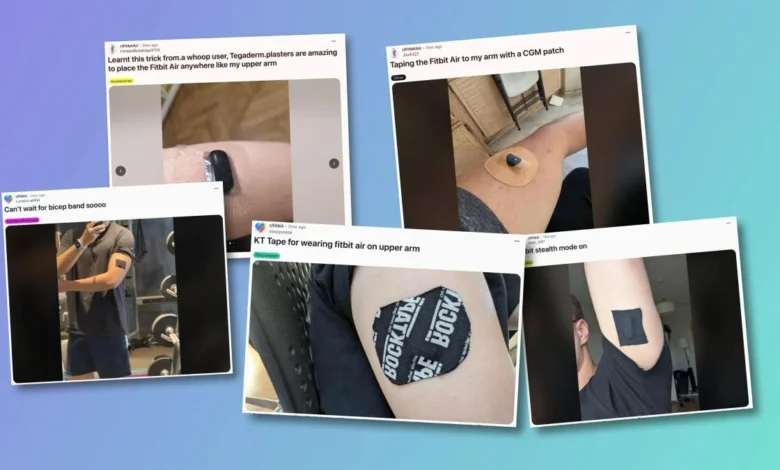
The wearable technology market has long been dominated by the wrist-worn form factor, a design convention popularized by early pedometers and reinforced by the industry’s reliance on pulse oximetry and photoplethysmography (PPG) sensors located on the underside of smartwatches. However, a growing subculture of fitness enthusiasts, particularly within online communities like the Fitbit Air subreddit, has begun to challenge this standard. Driven by a desire for greater ergonomic freedom and a preference for the "bicep-band" aesthetic popularized by specialized athletic trackers like Whoop, users are increasingly bypassing traditional wrist straps in favor of improvised adhesive solutions. This trend represents a notable shift in consumer behavior, where the functionality of a wearable device is prioritized over the manufacturer’s intended method of wear.
The Rise of the "Any-Wear" Movement
The emergence of this trend can be traced back to the broader movement toward "any-wear" technology. Athletes, specifically those involved in high-intensity interval training (HIIT), weightlifting, and CrossFit, have long complained that wrist-worn devices interfere with the use of wrist wraps, kettlebells, and heavy lifting gear. Beyond physical interference, there is the issue of personal preference; many users find that the constant presence of a watch on the wrist is distracting or aesthetically undesirable in certain professional or casual settings.
The chronology of this trend began with sporadic posts on enthusiast forums where users experimented with relocating their trackers to the upper arm or ankle. Initially dismissed as a niche "hack," the practice gained momentum as users shared evidence that repositioning the device did not necessarily compromise heart rate tracking accuracy. As interest grew, the discourse shifted from whether it was possible to how it could be done safely and effectively. This transition from experimentation to a semi-consistent practice highlights a disconnect between manufacturer design philosophy and the practical needs of active users.
Adhesive Solutions: A Technical Assessment
The primary challenge for those attempting to relocate their wearable is the maintenance of a secure, skin-safe, and durable attachment method. The community has experimented with a variety of materials, ranging from common household medical tape to high-performance athletic adhesives.
KT tape, or kinesiology therapeutic tape, is frequently cited as a starting point. While popular for its ability to stabilize muscles and joints, its efficacy as a device adhesive is limited by its design. Kinesiology tape is engineered to stretch and move with the skin, often losing its structural integrity when exposed to excessive perspiration or the humidity of a shower. For a device like the Fitbit Air, which requires consistent contact with the skin to monitor pulse, the failure of the adhesive can lead to data gaps.
The current consensus among power users points toward Continuous Glucose Monitor (CGM) overpatches as the gold standard for this application. CGMs, used by millions of patients to manage diabetes, require a reliable, long-term adhesive bond to the upper arm. These patches are designed to be hypoallergenic, water-resistant, and durable enough to withstand two weeks of daily activity. Because the dimensions of many modern trackers are similar to the footprint of a CGM transmitter, these overpatches provide an ideal "docking" station. They offer a level of security that standard medical tape cannot match, ensuring the sensor remains flush against the skin, which is a critical requirement for accurate PPG sensor performance.
Data Accuracy and Sensor Performance
The technical viability of relocating a tracker involves two primary variables: sensor contact and motion artifact. PPG sensors function by shining light into the skin and measuring the reflection to detect blood flow. When the device is strapped to the wrist, it is subject to significant motion, as the wrist is a highly articulated joint. By moving the device to the upper arm, where there is less complex movement and more stable muscle tissue, some users have reported an increase in heart rate data consistency during steady-state cardio.
However, the change in location introduces challenges for activity recognition. Most wearable algorithms are calibrated based on the specific cadence and movement patterns of a human wrist. When the device is placed on the bicep, the proprietary software often fails to correctly identify the activity—such as a jog or a rowing session—because the accelerometer data does not match the expected patterns of wrist movement. This necessitates manual logging of workouts, which can be an inconvenience for users accustomed to the "set it and forget it" convenience of modern wearables.
Broader Implications for Wearable Design
The trend of users taking "matters into their own hands" serves as a form of crowdsourced market research that device manufacturers would be wise to observe. If a significant segment of the user base is willing to utilize tape to alter their hardware, it suggests an unmet demand for alternative form factors.
Industry analysts note that while the wrist is the most convenient location for the user to interact with a screen, it is not always the most effective location for biometric monitoring. The shift toward bicep bands by brands like Whoop and Oura suggests that the industry is aware of these limitations. For manufacturers like Google (Fitbit) and Apple, the challenge lies in balancing the user’s desire for form-factor flexibility with the logistical difficulty of selling proprietary accessories for every potential body location.
Furthermore, the environmental and economic cost of this trend should not be overlooked. The reliance on single-use adhesive patches introduces a recurring cost that can quickly exceed the value of the device itself over the course of a year. Additionally, the skin irritation associated with prolonged exposure to aggressive medical adhesives is a legitimate health concern that many DIY enthusiasts often underestimate. Proper dermatological care, such as rotating the site of application and ensuring the skin is clean and dry, is essential to mitigate these risks.
Conclusion and Future Outlook
Taping a Fitbit to the arm is currently a symptomatic solution to a design gap. While it works for those seeking specific performance benefits or personal comfort, it is an imperfect workaround. The reliance on manual workout logging and the recurring expense of high-quality adhesives make it a niche solution rather than a mainstream recommendation.
As the wearable market continues to mature, it is probable that manufacturers will respond by expanding their ecosystem of accessories to include official bicep bands and chest-mount options. Until then, the community’s experimentation with adhesives serves as a reminder that the user experience is defined not just by what the manufacturer provides, but by how the user chooses to integrate that technology into their daily life. The "taped Fitbit" phenomenon is, at its core, a testament to the ingenuity of consumers who prioritize their health and fitness goals over the constraints of industrial design. Whether this remains a niche DIY trend or prompts a shift in future product design remains to be seen, but it is clear that the standard wrist-worn model is no longer the final word in wearable technology.