American Bar Association Repeals Landmark Law School Diversity Standard Amid Intense Pressure From Second Trump Administration

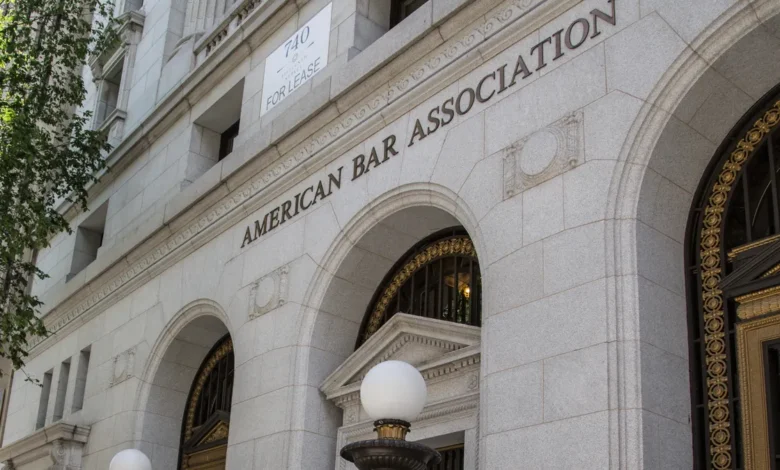
The American Bar Association officially voted to repeal its long-standing diversity and inclusion mandate for law schools, concluding a tumultuous period defined by mounting legal threats, intense political pressure, and a coordinated campaign by the second Trump administration. Tuesday’s decisive vote marks a monumental shift in legal education policy, dismantling a framework that has governed law school admissions and faculty recruitment for decades.
The decision centers on Standard 206, a critical rule enforced by the ABA Section of Legal Education and Admissions to the Bar. Under the repealed standard, accredited law schools were required to demonstrate concrete commitments to providing full opportunities for the study of law to members of underrepresented groups, particularly racial and ethnic minorities. The rule also mandated that institutions maintain diverse student bodies and employee rosters.
However, intense conservative scrutiny and aggressive federal oversight ultimately forced the hand of the nation’s sole recognized accrediting agency for law schools. Because graduation from an ABA-approved law school is a mandatory prerequisite for sitting for the bar exam in nearly every U.S. jurisdiction, the association holds profound leverage over the legal profession. This central role also made the ABA a prime target for federal officials aiming to eradicate diversity, equity, and inclusion initiatives across American higher education and professional training grounds.
Background Context and the Evolution of Standard 206
To understand the weight of Tuesday’s vote, one must examine the historical significance of Standard 206. For decades, the legal profession struggled with profound homogeneity, marked by structural barriers that historically excluded women and racial minorities from practicing law. When the ABA implemented diversity standards, the goal was to rectify these historical imbalances and ensure that the nation’s legal practitioners reflected the diverse population they served.
Over the years, Standard 206 evolved to require law schools to take affirmative, measurable steps toward creating inclusive academic environments. Institutions routinely collected demographic data, developed targeted recruitment pipelines, and implemented support systems designed to retain minority law students. Proponents of the standard consistently argued that diversity within law schools directly enhanced the quality of legal education by fostering robust classroom debates, broadening perspectives, and preparing graduates to navigate an increasingly multicultural society.
Yet, as the legal and political landscape shifted nationally—particularly following Supreme Court rulings curtailing the consideration of race in higher education admissions—diversity mandates faced unprecedented legal challenges. Critics argued that such standards amounted to impermissible quotas or preferential treatment, setting the stage for a high-stakes clash between federal regulatory bodies and legal educators.
Chronology of the Conflict With the Second Trump Administration
The repeal of Standard 206 did not happen in a vacuum; it was the culmination of more than a year of relentless public and legal pressure from the second Trump administration.
The conflict escalated dramatically in March 2025. Then-Attorney General Pam Bondi publicly targeted the ABA, declaring Standard 206 unconstitutional and threatening the organization’s federal recognition as an accrediting body. The Department of Justice’s intervention placed the ABA in an existential crisis, as the loss of federal recognition would shatter the entire national system of bar admissions, throwing the futures of tens of thousands of law students and practicing attorneys into chaos.
Recognizing the severity of the threat, the ABA attempted a compromise. In late 2025, the association proposed renaming Standard 206 from "Diversity and Inclusion" to "Access to Legal Education and the Profession." The revised proposal explicitly stated that no law school should take race or any other identity characteristic into account when making individual admissions or employment decisions.
Despite these modifications, the Trump administration remained unsatisfied, maintaining its pressure campaign and demanding a complete dismantling of the rule. Faced with the choice between defending its diversity mandate in protracted, high-risk litigation against the federal government or capitulating to ensure institutional survival, the ABA’s leadership ultimately chose self-preservation.
Melissa Hart, chair of the ABA accreditation council, acknowledged the stark reality of the situation during Tuesday’s proceedings, noting that the repeal of Standard 206 was an absolute necessity to preserve the organization’s continued recognition by state supreme courts and the U.S. Department of Education.

Public Comments and Internal Dissent
The path toward repealing Standard 206 was fraught with intense internal debate and overwhelming public opposition. Prior to the vote, the ABA solicited public feedback on the proposed repeal, drawing 50 formal comments from legal scholars, practitioners, civil rights organizations, and concerned citizens.
The response was overwhelmingly lopsided. All but two of the submitted comments strongly opposed repealing the standard. According to an internal ABA analysis, many submissions emphasized that diversity and inclusion are not merely political talking points, but foundational prerequisites for high-quality legal education and professional competence. Commenters argued that diverse legal teams and multiracial perspectives are essential for protecting the rule of law and maintaining public trust in the justice system.
Furthermore, several submissions highlighted the enduring legacy of exclusion within the American legal profession, asserting that removing the standard would actively roll back decades of progress. Critics of the repeal argued that existing federal law did not legally necessitate the complete elimination of the rule, and that the ABA’s decision represented a profound retreat from its core values.
In a candid May memo released ahead of the final vote, the ABA’s standards committee acknowledged the severe criticism, noting that a number of public comments asserted the repeal demonstrated "capitulation to the current federal administration and demonstrates a lack of integrity and courage."
Despite these stinging rebukes, the standards committee ultimately recommended the repeal. The committee pointed to the ABA’s "unique, essential role as an accreditor in a national system of accreditation and the current legal landscape," signaling that pragmatism and institutional survival ultimately outweighed ideological resistance.
Broader Impact and Implications for Legal Education

The removal of Standard 206 sends shockwaves through American higher education, carrying profound implications for law schools, prospective students, and the broader legal ecosystem.
Without the explicit federal and accrediting mandate to prioritize diversity, law schools now face a complex and uncertain compliance landscape. While many institutions in progressive states have expressed a desire to maintain holistic admissions practices and supportive programming within the boundaries of existing constitutional law, others in conservative jurisdictions may rapidly dismantle their DEI offices and related initiatives to avoid state-level political retaliation or donor backlash.
Legal experts warn that the absence of a unified national standard could lead to a fragmented legal education system, where the demographic makeup of law school student bodies varies wildly depending on geographic location. Such fragmentation could result in a noticeable decline in minority enrollment at premier law schools, ultimately reducing diversity within the upper echelons of the legal profession, corporate law firms, and the judiciary.
Moreover, the ABA’s capitulation sets a powerful precedent for other professional and academic accrediting bodies. Higher education watchdogs note that the successful targeting of the ABA by the Department of Education and the DOJ serves as a blueprint for federal intervention in medical, engineering, and business school accreditations.
As law schools adjust to this new reality, the debate over the soul of American legal education is far from over. While the ABA has officially closed the chapter on Standard 206 in the face of insurmountable political pressure, the fundamental tension between institutional autonomy, equal access, and federal oversight will undoubtedly continue to shape the future of the legal profession for generations to come.