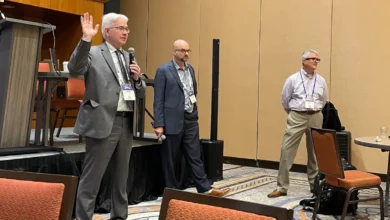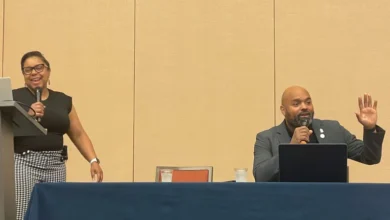
On a Tuesday that saw the Harvard University campus transformed into a global hub for municipal innovation, three American mayors took the stage at the Harvard T.H. Chan School of Public Health to confront one of the most pressing humanitarian challenges of the 21st century: the burgeoning homelessness crisis. The panel, part of a sprawling "Global Mayors at Harvard Day," brought together leaders from disparate regions of the United States—West Virginia, Oregon, and Oklahoma—to dissect the systemic failures contributing to housing instability and to share the localized strategies that are beginning to yield results.
The forum was co-sponsored by a coalition of Harvard’s most influential urban and health-focused entities, including the Bloomberg Center for Cities, the Initiative on Health and Homelessness, and the Harvard Urban Health Initiative. Moderated by Howard Koh, the Harvey V. Fineberg Professor of the Practice of Public Health Leadership and former U.S. Assistant Secretary for Health, the discussion underscored a growing consensus among local leaders: homelessness is no longer a peripheral social issue but a central crisis of public health, safety, and economic viability.
The National Landscape: A Rising Tide of Displacement
The urgency of the discussion was framed by sobering national statistics. According to the most recent federal data, an estimated 770,000 people experience homelessness in the United States on any given night, representing an 18 percent increase from previous counts. This surge reflects a post-pandemic reality where the expiration of eviction moratoriums, the exhaustion of one-time federal relief funds, and a chronic shortage of affordable housing have converged to push more Americans into precarious living situations.
Of this population, roughly one-third are considered "unsheltered," living in places not meant for human habitation, such as parks, sidewalks, or underpasses. The remaining two-thirds navigate a labyrinthine system of emergency shelters, transitional housing, or "doubled-up" arrangements with relatives. As Professor Koh noted during his opening remarks, the crisis has become "highly visible and highly unacceptable," serving as a stark indictment of the social safety net.
“We are here because we understand that homelessness represents a humanitarian crisis,” Koh told the audience. “But we can solve it if we have everybody in this room, and all the leaders and all the sectors across society, and especially our political leaders, our mayors, stepping up and taking charge of this crisis that is growing by the day.”
Tulsa’s Data-Driven "Rapid Exit" Strategy
Mayor Monroe Nichols of Tulsa, Oklahoma, provided a deep dive into how mid-sized cities are attempting to bridge the gap between bureaucracy and the street. Nichols argued that homelessness is the ultimate "intersectional" issue, impacting every facet of city governance.
“Public safety, public health: All the things we do as a city are impacted by the issue of homelessness,” Nichols said. He emphasized that the primary barrier to progress is often a lack of synchronization between data and action. In Tulsa, the mayor has organized his administration around hard numbers and clear benchmarks.
One of the most significant metrics Nichols shared involved the efficiency of the city’s response. Upon taking office, his administration discovered that the average time between a homeless individual’s first contact with a caseworker and their placement in housing was a staggering 220 days. Through a "rapid exit" strategy that streamlined inter-agency communication and prioritized immediate placement, the city has managed to slash that wait time to just 37 days.
Nichols also highlighted the scale of the challenge in Tulsa, noting that approximately 3,000 people enter the homelessness system every year. “Driving indicator No. 1 is, do we have 3,000 units in our community that we can get those people into? We’re not there yet, but that’s the goal,” he stated. His approach shifts the focus from managing the symptoms of homelessness to aggressively facilitating the transition into permanent housing.
Huntington: Addressing the Intersection of Opioids and Housing
For Mayor Patrick Farrell of Huntington, West Virginia, the homelessness crisis is inextricably linked to the legacy of the opioid epidemic. Huntington, a city that has often been at the epicenter of the nation’s drug crisis, has had to reinvent its social services to address the dual challenges of addiction and displacement.
Farrell’s strategy is rooted in economic and community revitalization. He argued that a city cannot attract investment or retain its youth if its streets are defined by human suffering. “We weren’t going to be able to attract businesses; we weren’t going to be able to fix the infrastructure,” Farrell said. “It became the first thing to tackle to be able to build everything else.”
To address this, Farrell launched a public safety dashboard, a tool designed to provide real-time transparency regarding the city’s progress. The dashboard serves a dual purpose: it informs policy and it educates the public on the "cost of inaction." Farrell pointed out that the traditional cycle of moving people from the street to the emergency room, then to jail, and back to the street is not only inhumane but also the most expensive way to handle the problem. By quantifying these costs, he has been able to build a coalition of hospitals, business leaders, and nonprofits to invest in more sustainable housing-first solutions.
Eugene: The Structural Failure of the Housing Market
Representing the Pacific Northwest, Mayor Kaarin Knudson of Eugene, Oregon, brought a unique perspective as a former educator in planning and urban design at the University of Oregon. Her analysis focused on the structural "brittleness" of the housing market.
In Eugene, the housing vacancy rate has remained below 5 percent for a decade—a level that economists generally consider to be a sign of a dysfunctional market. This lack of supply, coupled with stagnant wages, has made even basic housing units inaccessible to average earners. “The policy action that we need is to fund the housing our communities need,” Knudson asserted.
Knudson’s data-driven approach revealed a surprising insight: Eugene did not necessarily need a massive influx of new transitional shelter beds. Instead, the bottleneck was the "pipeline" out of those shelters. “We need maybe 100 more spaces, maybe 200, but what we really need to work on is the pipeline out of that experience,” she explained. She noted that federal funding cuts have historically decimated the ranks of case managers who serve as the essential link between temporary shelter and permanent stability. Without these professionals, individuals become "stuck" in the shelter system, preventing others from entering.
The Global Mayors at Harvard: A Chronology of Collaboration
The panel on homelessness was just one component of a larger, high-stakes gathering of municipal leaders. The Bloomberg Harvard City Leadership Initiative brought 45 mayors from 16 different countries to campus for a day of intensive knowledge exchange.
The day began with a series of closed-door sessions where mayors discussed the challenges of local governance in an era of political polarization and climate change. By midday, the leaders dispersed across the university’s various schools—from the Kennedy School of Government to the Graduate School of Design—to participate in more than 30 public and private forums.
The event served as a "living laboratory" for urban policy. While the mayors of Huntington, Tulsa, and Eugene were discussing housing, other groups were tackling issues ranging from AI integration in city services to the implementation of green transit systems. The common thread was the Bloomberg Center’s mission: to equip mayors with the leadership tools and data-driven frameworks necessary to solve complex problems.
Analysis of Implications: From Local Action to Federal Necessity
The insights shared by Mayors Nichols, Farrell, and Knudson highlight a critical shift in how cities view homelessness. There is a move away from "shelter-first" models toward "housing-first" and "data-first" strategies. However, the mayors were unanimous in their assessment that city government cannot solve this crisis in a vacuum.
The implications of their discussion suggest several key takeaways for future policy:
- The Cost Argument: As Mayor Farrell noted, the fiscal cost of homelessness on emergency services and the justice system often exceeds the cost of providing permanent supportive housing. This economic reality is becoming a powerful tool for mayors to convince skeptical taxpayers and business owners to support housing initiatives.
- The Case Management Gap: Mayor Knudson’s point about the loss of case managers highlights a national shortage of social service professionals. Even when housing units are built, the lack of human infrastructure—people to navigate the paperwork and provide mental health support—remains a significant hurdle.
- Market Brittleness: The crisis is no longer just about the "chronically homeless" population with high needs. It is increasingly about the "working homeless" who are priced out of markets with sub-5% vacancy rates. This suggests that zoning reform and housing supply are as much a part of the homelessness solution as social services are.
Conclusion: A Call for Political Will
The forum at the Harvard Chan School concluded with a call to action. Professor Howard Koh emphasized that while the data and the strategies are becoming clearer, the missing ingredient in many jurisdictions remains political will. The three mayors on stage represented a vanguard of leaders who have chosen to treat homelessness not as an intractable reality of urban life, but as a solvable policy failure.
As the 45 mayors concluded their day at Harvard, the consensus was clear: the visibility of the homelessness crisis is a reflection of the health of the entire community. By integrating public health data with urban planning and economic development, these leaders are attempting to build cities where "unacceptable" humanitarian crises are no longer the norm, but a memory of a less coordinated past. The success of Tulsa’s rapid exit, Huntington’s dashboard, and Eugene’s market analysis offers a roadmap for other cities struggling under the weight of the same national crisis.