Navigating the Human Element of School Closures and Mergers: A Roadmap for Educational Leadership

The landscape of American public education is currently undergoing a period of significant structural realignment, driven by shifting demographics, fluctuating enrollment numbers, and the long-term fiscal realities of a post-pandemic economy. While the administrative decision to close or merge a school often occurs with the swiftness of a board vote or a press release, the psychological and cultural transition for the individuals involved is a far more protracted and delicate process. At the National Association of Elementary School Principals (NAESP) National School Leaders Conference in Orlando, Florida, experts and practitioners gathered to address this often-overlooked "human piece" of organizational change, offering a blueprint for leaders tasked with guiding communities through the grief of endings and the uncertainty of new beginnings.
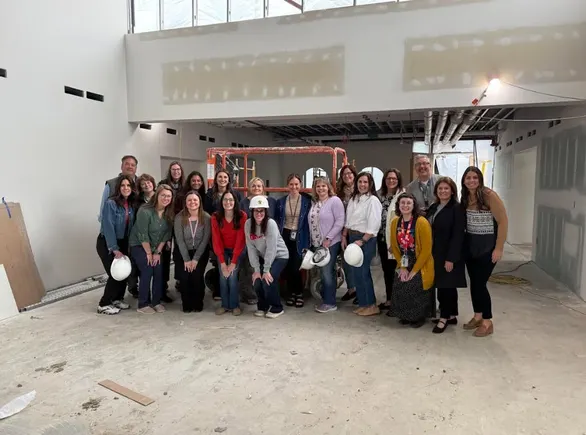
Vicki Wilson, a seasoned school leadership consultant and former principal, joined forces with Nicole Garza, the principal of Grosse Ile Elementary School in Michigan, to present a session titled "The Human Side of Change." Their presentation centered on the premise that the technical aspects of a school merger—such as redistricting, facility management, and budget consolidation—are secondary to the emotional transition of the staff, students, and parents. According to Wilson, the most significant hurdle in any organizational shift is not the implementation of the new system, but the proper processing of what is being left behind.
The Psychological Framework of Transition
To provide a theoretical foundation for their discussion, Wilson referenced the transition model developed by William Bridges in his seminal work, Managing Transitions. Bridges’ model distinguishes between "change," which is situational (the new site, the new boss, the new team), and "transition," which is the psychological process people go through as they internalize and come to terms with the details of the new situation.
The model identifies three distinct phases:
- The Ending: This phase involves letting go of the old identity and the old way of doing things. It is often characterized by grief, denial, and anger.
- The Neutral Zone: This is the "in-between" time when the old is gone but the new isn’t fully operational. It is a period of high anxiety but also high creativity, where people feel lost between their former roles and their future ones.
- The New Beginning: This phase marks the point where people develop a new identity, experience new energy, and discover a sense of purpose that makes the change work.
Wilson emphasized that for a school merger to be successful, leaders must allow stakeholders to move through these phases at their own pace. "The hardest part about organizational change isn’t what’s beginning. It’s what’s ending," Wilson told the assembly of school leaders. "That’s where that human piece is coming in, because there’s endings that are happening."
Case Study: The Grosse Ile Elementary Merger
The practical application of Bridges’ model was demonstrated through the experience of Nicole Garza in the Grosse Ile Township Schools district in Michigan. The district faced a common challenge: the need to consolidate a K-2 building and a 3-5 building into a single K-5 elementary school. This decision was not merely a logistical one; it required merging two distinct school cultures, two sets of faculty, and two different pedagogical environments.
The timeline for the Grosse Ile merger was intentionally extended to allow for a multi-year transition. The process began with the announcement that the two buildings would eventually become one, now known as Grosse Ile Elementary. During the year leading up to the official merger rollout, Garza was tasked with leading both buildings simultaneously after one of the outgoing principals stepped down.
Garza noted that the initial atmosphere was far from harmonious. Staff members from the two buildings were hesitant to collaborate, harboring a "silo" mentality that threatened to derail the merger before it even began. "The staff in both buildings didn’t want to work together or gather to do anything unifying," Garza recalled. Without intervention, she feared the official opening of the merged school would be a "disaster" characterized by internal friction and a lack of cohesive culture.
Honoring the Grieving Process
Recognizing that her staff was stuck in the "Ending" phase of Bridges’ model, Garza, with Wilson’s guidance, took the unconventional step of dedicating an entire professional development day in August 2024 to the concept of grief. Rather than focusing on curriculum or logistics, the day was designed to allow staff members to voice their losses.
In an effort to ensure total honesty, Garza and her administrative team removed themselves from the room. This allowed teachers and support staff to speak freely about what they would miss—whether it was a specific classroom, a long-standing tradition, or the intimacy of a smaller building—without the fear of appearing unsupportive of the administration’s goals. Wilson noted that this process was cathartic, stating that the staff "felt better at the end of that" because their feelings had been validated rather than ignored.
Bridging the Neutral Zone: The "Leaving Your Mark Olympics"
Once the "Ending" had been acknowledged, the challenge shifted to navigating the "Neutral Zone." To foster a sense of unity and break down the barriers between the two original buildings, Garza launched the "Leaving Your Mark Olympics."
This initiative involved splitting the 44 staff members into six cross-functional teams. Each team was a mix of teachers from different grade levels and both original buildings. The goal was to force interaction in a low-stakes, high-engagement environment. Before the physical games began, Garza had each team create "collective resumes." These resumes tallied the total years of educational experience, degrees earned, and specialized certifications held by the group. This exercise served to build mutual respect, as veteran teachers from different buildings realized the immense wealth of knowledge their new colleagues brought to the table.
The "Olympic Games" themselves included lighthearted activities such as "trashket ball," balance beam walks, and a high jump competition using sticky notes. While the activities were "simple and silly," as Garza described them, they provided the first opportunity for the combined staff to laugh and play together.
To sustain this momentum throughout the academic year, Garza implemented a points system. Staff members could earn points for their Olympic teams by engaging in behaviors that fostered a positive school culture. This included:
- Sending notes of encouragement to colleagues in the other building.
- Sharing digital resources or lesson plans across grade levels.
- Volunteering to help in a teammate’s classroom during a prep period.
By the time the physical merger was completed, the cultural merger had already taken place. Garza noted that when the new school year began in the consolidated building, the only remaining hurdles were related to ongoing construction projects—the staff themselves were already a unified front.
National Context: The Rise of School Consolidations
The presentation in Orlando comes at a time when school closures are becoming a frequent reality for districts across the United States. Data from the National Center for Education Statistics (NCES) indicates that while the total number of public schools remained relatively stable for a decade, there has been a notable shift toward consolidation in rural and suburban areas facing declining birth rates.
Following the COVID-19 pandemic, many districts also saw a "cliff" in enrollment as families moved to private schools, homeschooling, or different states. Furthermore, the expiration of Elementary and Secondary School Emergency Relief (ESSER) funds has left many boards with difficult budgetary decisions. According to recent projections, school closures are expected to increase over the next five years, particularly in the Northeast and Midwest, where population growth has stagnated.
In this context, the Grosse Ile model offers a critical lesson: administrative efficiency cannot come at the cost of emotional intelligence. When a school closes, a community loses an anchor. When two schools merge, two identities are erased to make room for a third. Without a deliberate focus on the "human piece," these transitions can lead to teacher burnout, high turnover, and a decline in student performance.
Broader Implications for Educational Leadership
The success of the Grosse Ile merger highlights several key takeaways for educational leaders nationwide. First, communication must be clear, frequent, and transparent. Wilson noted that Garza’s success was rooted in "clarity, information, and empowering staff." When employees feel informed, their anxiety in the "Neutral Zone" decreases.
Second, leadership must be willing to invest time in culture-building that does not have an immediate academic "ROI." The "Olympics" and the "grief sessions" did not directly improve test scores, but they created the relational infrastructure necessary for a healthy learning environment. A fractured staff cannot effectively teach a unified student body.
Finally, the ultimate metric of a successful merger is the shift in language. Wilson concluded that the transition is complete when staff members stop referring to "my old school" or "their building" and start saying "this is our school."
As school districts continue to navigate the complexities of the 21st-century educational landscape, the human-centric approach championed by Wilson and Garza serves as a reminder that schools are more than just buildings and budgets; they are communities of people. By honoring the pain of endings and intentionally building the foundations of new beginnings, leaders can ensure that even in times of radical change, the heart of the educational mission remains intact.