Coroner confirms measles-related infant deaths in Pennsylvania amid ongoing national debate over public health data transparency

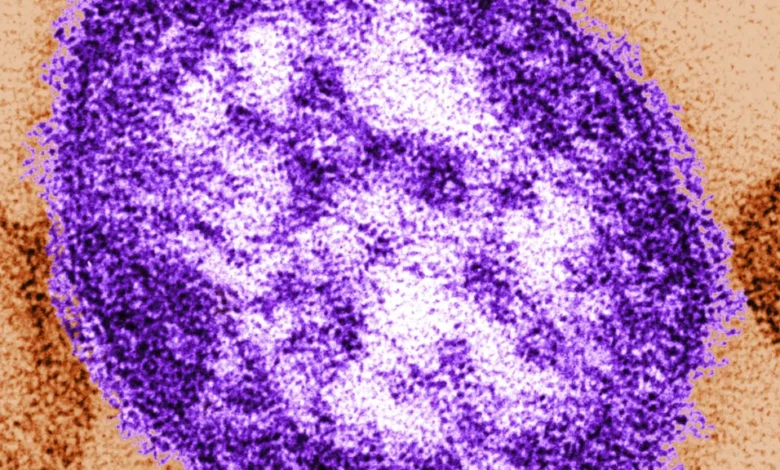
The medical investigation into two infant deaths in Pennsylvania last month has reached a pivotal conclusion, as Lancaster County Coroner Dr. Stephen Diamantoni confirmed that one of the fatalities was directly caused by a measles infection. The deaths, which occurred in August, have moved to the center of a volatile national conversation regarding the integrity of public health reporting, the role of federal agencies like the Centers for Disease Control and Prevention (CDC), and the intensifying political scrutiny surrounding vaccine policy in the United States.
Dr. Diamantoni, who provided these findings in response to a formal request under Pennsylvania’s Right-to-Know Law, has relayed his conclusions to the CDC. However, the federal agency has maintained a cautious stance, opting to hold back on officially classifying these deaths as "measles-associated" in its national reporting. This administrative hesitation has left the CDC’s public-facing data in a state of flux, prompting concerns from public health experts who fear that political pressure may be undermining the reliability of objective scientific reporting.
A Chronology of the Tragic Events
The circumstances surrounding the deaths of the two infants, Ivan Miller and Mary Stoltzfus, highlight the fragility of medically vulnerable populations in the face of preventable infectious diseases.
Ivan Miller passed away on August 14, shortly after birth. Following an autopsy, Dr. Diamantoni’s office determined the primary cause of death to be a ruptured spleen. While the child was confirmed to have been infected with the measles virus, the coroner clarified that the infection was not the clinical cause of the spleen rupture. Instead, the virus was listed on the death certificate as a significant contributing condition present at the time of the infant’s passing. The specific etiology regarding how and when the spleen injury occurred remains a subject of ongoing medical investigation.
Four days later, on August 18, six-week-old Mary Stoltzfus died at her home. Unlike the case of the Miller infant, no autopsy was performed on Stoltzfus. Based on the findings of the physicians overseeing her care, the coroner attributed her death to a measles infection. Stoltzfus had been born with a rare genetic condition known as Amish lethal microcephaly, a neurodegenerative disorder characterized by an underdeveloped brain and a significantly smaller head circumference. Given the clinical prognosis for infants with this condition, which typically results in a life expectancy of six months or less, the infant was exceptionally vulnerable to external infections, including the measles virus, which ultimately proved fatal.
It is important to note that both infants were far below the age threshold for the first dose of the measles, mumps, and rubella (MMR) vaccine, which is standardly administered at approximately 12 months of age. Their protection relied entirely on the concept of herd immunity—the collective resistance of a community to a disease when a high percentage of the population is vaccinated.
The Evolution of the National Vaccination Landscape
The current outbreak in Pennsylvania, which has recorded more than 620 cases across 37 counties this year, is part of a broader, concerning trend in the United States. Following the official elimination of the domestic spread of measles in 2000, the nation enjoyed nearly two decades of relative safety. This status was predicated on maintaining vaccination coverage rates at or above 95%, the threshold deemed necessary to prevent sustained transmission.
However, in recent years, vaccination rates have begun to decline, falling below the critical 95% target in several regions. This shift has facilitated the resurgence of the virus, leading to localized outbreaks that threaten to strip the United States of its "measles-free" status. International health organizations, including the Pan American Health Organization, are scheduled to meet in November to assess whether the U.S. and Mexico have failed to maintain the conditions necessary to retain this status, a development that would mark a significant regression in American public health history.
Political Friction and Data Transparency
The deaths of the two Pennsylvania infants have been subjected to an unprecedented level of political interference. Pennsylvania Governor Josh Shapiro initially publicized the deaths, utilizing the tragic events to emphasize the critical importance of public health immunization efforts. His remarks prompted a sharp rebuke from U.S. Health Secretary Robert F. Kennedy Jr., a key appointee in the current administration known for his long-standing skepticism regarding established vaccine safety and efficacy.
In a move that stunned many in the scientific community, Kennedy publicly questioned the validity of the deaths, suggesting they might have been "fabricated." This rhetoric, which mirrored his previous questioning of measles-related fatalities, has created a climate of uncertainty regarding the reporting mechanisms of the CDC.
The CDC’s own website has become a focal point of this controversy. Initially, the agency’s tracking page reflected the two measles-associated deaths in Pennsylvania. Shortly thereafter, those references were removed, replaced by a disclaimer stating that the agency was reviewing additional information before finalizing its reporting. As of late October, the page remains updated with a vague advisory: "CDC will update its reporting as additional information becomes available and relevant reviews are completed."
Implications for Public Health Institutions
The apparent disconnect between local coroner findings and federal data reporting has raised alarms among public health professionals. Dr. Georges Benjamin, executive director of the American Public Health Association, has been among those sounding the alarm. "Frankly, the CDC is not to be trusted in sharing information," Benjamin stated, reflecting a growing sentiment among medical experts that political objectives may be eclipsing scientific data collection.
The implications of this shift are profound. The CDC has historically functioned as the "gold standard" for epidemiological data. When that data is perceived as being subject to political filtration, it compromises the ability of state and local health departments to allocate resources effectively, educate the public, and implement necessary containment strategies during outbreaks.
Furthermore, the skepticism fostered at the federal level trickles down to the public. When high-ranking officials question the validity of reported infectious disease deaths, it emboldens misinformation campaigns and complicates the efforts of frontline medical workers to provide evidence-based care. The refusal to finalize the status of the Pennsylvania deaths in the national database—despite the coroner’s clear findings—serves as a case study in how institutional trust is eroded.
Looking Toward the Future
The path forward for American public health is fraught with challenges. The resurgence of measles is not merely a statistical anomaly; it is a manifestation of deeper societal divisions regarding the role of science in governance. As international bodies prepare to evaluate the U.S. status in November, the focus remains on whether the nation can revert to a model where public health decisions are shielded from partisan rhetoric.
The cases of Ivan Miller and Mary Stoltzfus represent, at their core, a failure of the protective shield that community-wide vaccination provides. Whether or not these deaths are officially logged in a federal database, their impact on their families and their communities is absolute. The broader question for the American health infrastructure remains: can the institutions tasked with protecting the public regain the trust necessary to prevent further outbreaks, or has the political climate fundamentally altered the way we address, report, and combat infectious disease?
As the Pennsylvania outbreak continues to expand, the urgency for a clear, science-led, and transparent response is greater than ever. The data, according to Dr. Diamantoni, is clear. What remains to be seen is whether the federal health apparatus can reconcile its reporting with the facts on the ground, or if the politicization of public health data will become the new, precarious normal in the face of resurgent preventable diseases.
Related posts: