Deepest Animal Colonies Ever Observed Discovered in Mariana Trench by Chinese Researchers

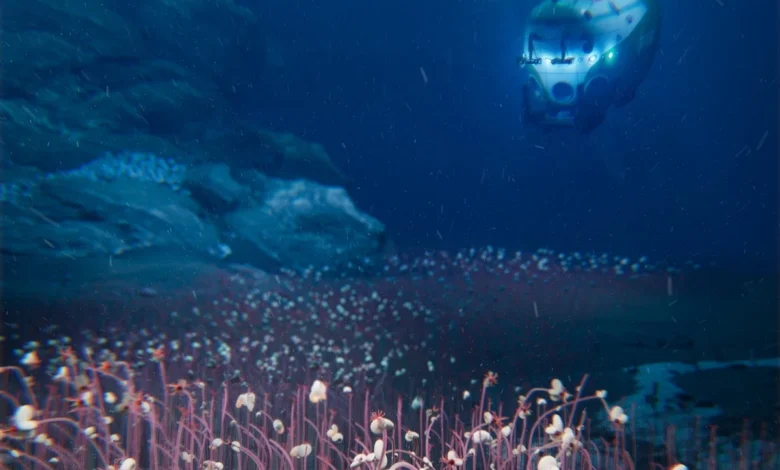
A monumental biological discovery has fundamentally altered our understanding of the Earth’s most extreme habitats. An international team of scientists, utilizing the Chinese manned submersible Fendouzhe, has identified the deepest and most extensive chemosynthesis-based animal communities ever documented. Located at the bottom of the Mariana Trench, nearly six miles below the ocean’s surface, these thriving ecosystems challenge long-standing scientific models regarding carbon cycling, biological survival at extreme pressure, and the distribution of life in the hadal zone.
The expedition, which conducted 23 separate dives into the Mariana Trench last year, revealed a sprawling oasis of biological activity where life was previously thought to be sparse or non-existent. These communities, consisting of thousands of bivalves, tubeworms, and various crustaceans, exist in total darkness, relying entirely on chemical energy rather than sunlight to sustain their metabolic processes.
A New Frontier in Hadal Biology
The hadal zone, defined by ocean depths exceeding 6,000 meters (approximately 3.7 miles), represents the deepest trenches on the planet. For decades, these regions were considered biological deserts, characterized by crushing pressures that can exceed 1,000 times atmospheric pressure at sea level. However, the recent study published in the journal Nature indicates that these trenches are not merely barren sediment basins but are, in fact, host to complex, interconnected biological communities.
The researchers, led by Xiatong Peng of the Institute of Deep-sea Science and Engineering at the Chinese Academy of Sciences, documented these communities across a vast geographical range. The identified organisms spanned an area of roughly 1,553 miles, at depths ranging from 3.6 to 5.92 miles. This discovery suggests that the environmental conditions required to support such life—specifically the presence of chemical seeps—are far more common than current geological models predict.
The Mechanics of Extreme Survival
In the absence of sunlight, these organisms rely on chemosynthesis, a biological process where microbes convert inorganic chemicals into organic matter. The study highlights that the primary energy source for these deep-sea colonies is methane and hydrogen sulfide. Isotopic analysis performed by the team confirmed that these chemical fluids are transported through deep sediment layers via tectonic faults.
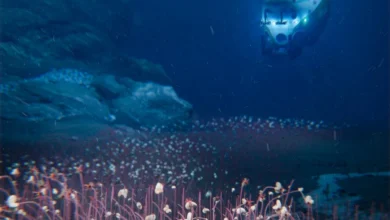
The biological composition of these communities is remarkably diverse. High-definition video captured by the Fendouzhe revealed fields of siboglinid tubeworms—some reaching lengths of up to a foot—growing in dense clusters around microbial mats. Alongside these worms, scientists identified mounds of clams, mollusks, sea lilies, sea cucumbers, and spiky crustaceans. These organisms have evolved specialized adaptations to survive in a high-pressure, low-temperature environment where the lack of photosynthesis traditionally limits the available food supply.
Chronology of Deep-Sea Exploration
The human effort to reach the deepest points of the ocean has been a decades-long endeavor characterized by significant technological milestones:

- 1960: Don Walsh and Jacques Piccard became the first humans to reach the bottom of the Mariana Trench in the bathyscaphe Trieste. Their brief, 20-minute stay provided the first visual confirmation that life could exist at such extreme depths.
- 2012: Film director James Cameron completed the first solo dive to the Challenger Deep, the deepest point of the Mariana Trench. He famously described the experience as “desolate” and “alien,” highlighting the lack of visible complex life at that specific landing point.
- 2020–2024: The development and deployment of the Fendouzhe (Striver) submersible significantly expanded the duration and frequency of deep-sea exploration.
- 2025: Publication of the comprehensive study in Nature, marking the first time extensive, large-scale animal communities were documented at depths approaching six miles.
Analyzing the Implications for Carbon Cycling
The discovery of these communities is forcing a re-evaluation of how carbon is cycled within the deep ocean. Historically, it was believed that deep-sea life was almost entirely dependent on "marine snow"—organic matter falling from the surface. However, the presence of these chemosynthetic communities proves that the ocean floor acts as a significant, independent producer of biomass.
The methane-rich fluids fueling these animals are essentially tapping into geologic carbon stores. By processing this methane, these organisms potentially act as a biological filter, preventing large volumes of greenhouse gases from escaping into the water column. The researchers noted that these findings suggest the "hadal biosphere" is significantly more integrated into the global carbon cycle than previously understood.
Official Perspectives and Scientific Commentary
The scientific community has reacted to the news with significant interest, noting that the discovery of such a "vibrant oasis" fundamentally shifts the paradigm of marine biology. Mengran Du, a co-author of the study, emphasized the rarity of such findings: "What makes our discovery groundbreaking is not just its greater depth—it’s the astonishing abundance and diversity of chemosynthetic life we observed. Unlike isolated pockets of organisms, this community thrives like a vibrant oasis in the vast desert of the deep sea."
The discovery has also provided a stark reminder of what is at stake regarding the ongoing debate over deep-sea mining. As nations continue to negotiate through the International Seabed Authority (ISA) regarding the potential extraction of minerals from the abyssal plains, this study serves as a warning. Many of these regions, previously thought to be devoid of life, are now proven to host sensitive and complex ecosystems that could be irreversibly destroyed by industrial activity.
The Future of Deep-Sea Research
The study’s authors conclude that the geological similarities between the Mariana, Kuril-Kamchatka, and Aleutian Trenches suggest that these chemosynthetic communities may be widespread across the world’s hadal zones. This necessitates a more robust international framework for protecting these "last wild zones" on Earth.
Beyond the ecological implications, the research underscores the necessity of continued investment in submersibles like the Fendouzhe. The ability to remain at extreme depths for extended periods allows for detailed observation rather than the fleeting glimpses afforded by early 20th-century technology.
As the scientific community digests these findings, the focus will likely shift to mapping the connectivity between these various deep-sea colonies. If these sites are linked by subterranean fluid pathways, the entire floor of the western Pacific could be home to a massive, interconnected network of life that has remained hidden from human observation until now.
The study, titled "Flourishing chemosynthetic life at the greatest depths of hadal trenches," stands as a landmark contribution to oceanic science. It underscores a fundamental truth about our planet: even in its most inaccessible and hostile corners, life continues to find a way to evolve, adapt, and flourish, reminding us that our understanding of the Earth’s biological capacity is still in its infancy. Future expeditions will undoubtedly aim to determine the extent of these communities globally, ensuring that we account for these deep-sea residents in our broader climate and environmental conservation strategies.
Related posts: