Deepest Animal Communities Ever Recorded Discovered by Chinese Submersible in the Mariana Trench

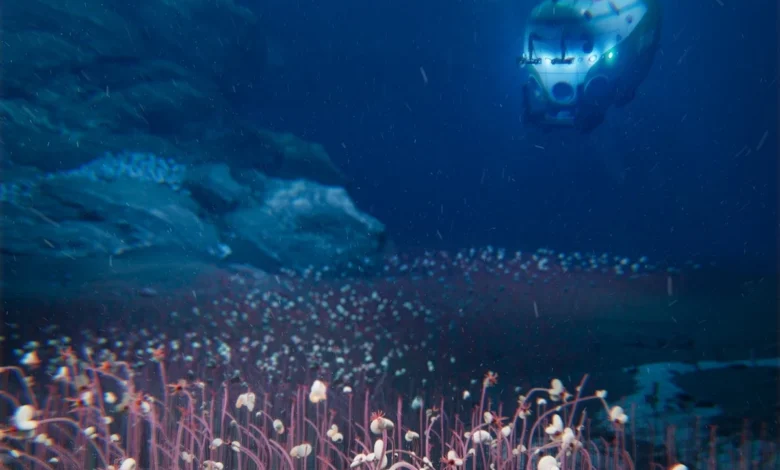
In a landmark achievement for marine biology and deep-sea exploration, a team of researchers from the Institute of Deep-sea Science and Engineering at the Chinese Academy of Sciences has documented the deepest and most extensive animal communities ever observed on Earth. Utilizing the manned submersible Fendouzhe, the expedition successfully located and filmed thriving colonies of mollusks, tubeworms, and various other invertebrates living nearly six miles below the surface of the ocean. This discovery, published recently in the journal Nature, fundamentally alters the scientific understanding of life in the hadal zone—the deepest parts of the ocean trenches—and challenges long-standing models regarding deep-ocean carbon cycling and the limits of biological resilience.
The findings are the result of an intensive series of dives conducted throughout 2024 and 2025 into the Mariana Trench in the western Pacific, as well as explorations of the Kuril–Kamchatka Trench and the western Aleutian Trench. The research team reported finding vibrant "oases" of life at depths ranging from 3.6 to 5.92 miles (approximately 5,800 to 9,500 meters). These communities are not merely isolated pockets of life but are sprawling ecosystems that span a cumulative distance of more than 1,550 miles across the deep-sea floor. The presence of such abundant life in a region characterized by crushing pressure, near-freezing temperatures, and absolute darkness suggests that the deep ocean is far more biologically active than previously hypothesized.
The Mechanism of Survival: Life Without Sunlight
The most striking aspect of these deep-sea communities is their total independence from sunlight. While most life on Earth relies on photosynthesis—the process by which plants and algae convert solar energy into chemical energy—the creatures of the Mariana Trench survive through chemosynthesis. This process allows organisms to derive energy from chemical reactions, specifically those involving hydrogen sulfide and methane-rich fluids that seep through the Earth’s crust.
The research team, led by Xiatong Peng, found that these fluids are transported along geological faults that traverse deep sediment layers within the trenches. Through isotopic analysis, the scientists determined that the methane in these regions is produced microbially from organic matter deposited deep within the seafloor. This methane serves as the primary fuel for specialized bacteria, which in turn form the base of the food web for larger organisms.
"What makes our discovery groundbreaking is not just its greater depth—it’s the astonishing abundance and diversity of chemosynthetic life we observed," said study co-author Mengran Du, a marine geochemist. "Unlike isolated pockets of organisms, this community thrives like a vibrant oasis in the vast desert of the deep sea."
Diversity and Abundance of Hadal Fauna
The video footage captured by the Fendouzhe reveals a landscape teeming with specialized life forms. Among the most prominent residents are siboglinid polychaetes, commonly known as tubeworms, which were observed growing up to a foot in length. These worms were frequently found clustered around "snow-like" microbial mats, which provide a concentrated source of nutrients.
In addition to the tubeworms, the researchers documented thousands of bivalves and mollusks. These organisms have adapted to survive under pressures that would instantly crush most surface-dwelling creatures. Beyond these primary colonies, the expedition observed a diverse array of other invertebrates, including:
- Free-floating marine worms: Translucent organisms that navigate the high-pressure water column.
- Spiky crustaceans: Scavengers that roam the seafloor in search of organic detritus.
- Sea lilies (Crinoids): Stalked echinoderms that filter-feed from the surrounding currents.
- Sea cucumbers and sea urchins: Benthic organisms that play a critical role in processing sediment.
The researchers noted that the density of these populations was unexpected. Previous missions to the hadal zone had often described the environment as "desolate" or "alien." Hollywood director James Cameron, who visited the Mariana Trench in 2012, famously described the landscape as a "featureless" lunar-like plain. However, the latest Chinese expedition suggests that these descriptions may have been the result of limited search areas rather than a lack of life.
The Role of the Fendouzhe Submersible
The success of the mission is largely attributed to the technological capabilities of the Fendouzhe (meaning "Striver"). Developed by the Chinese Academy of Sciences, the Fendouzhe is one of the world’s most advanced deep-sea manned submersibles, capable of reaching the very bottom of the ocean’s deepest trenches.

During the 2024-2025 mission cycle, the submersible performed 23 dives into the Mariana Trench alone. These repeated descents allowed researchers to map the seafloor with high precision and collect samples of water, sediment, and biological specimens for laboratory analysis. The ability of the Fendouzhe to stay submerged for extended periods provided the scientists with the necessary time to observe animal behavior in situ, a task that is difficult to achieve with remotely operated vehicles (ROVs) or brief manned missions.
Mengran Du described the experience of diving in the submersible as "extraordinary," likening it to traveling through time. "Each descent transported me to a new deep-sea realm, as if unveiling a hidden world and unraveling its mysteries," she stated.
Chronology of Exploration in the Mariana Trench
The discovery marks a significant milestone in the history of deep-ocean exploration. The timeline of human interaction with the Mariana Trench highlights the rapid advancement of deep-sea technology over the last century:
- 1960: Don Walsh and Jacques Piccard make the first manned descent to the bottom of the Challenger Deep in the bathyscaphe Trieste. They stay for only 20 minutes and report seeing very little life.
- 2012: James Cameron conducts the first solo dive to the Challenger Deep in the Deepsea Challenger. He captures high-definition footage but describes the environment as largely barren.
- 2019: Victor Vescovo reaches the bottom as part of the Five Deeps Expedition, identifying several new species but not observing large-scale chemosynthetic communities.
- 2024-2025: The Chinese Academy of Sciences expedition utilizes the Fendouzhe to identify extensive, thousands-strong colonies of animals, proving that the hadal zone supports massive, complex ecosystems.
Implications for Global Carbon Cycling and Environmental Policy
The discovery of these "vibrant oases" has significant implications for how scientists model the Earth’s carbon cycle. Traditionally, it was believed that the deepest parts of the ocean were biological "sinks" where very little carbon was processed by living organisms. However, the presence of massive chemosynthetic communities suggests that the hadal zone is a site of active carbon transformation.
By consuming methane and hydrogen sulfide, these organisms prevent these potent greenhouse gases from potentially migrating into the upper ocean layers. Understanding the scale of this biological processing is crucial for climate scientists attempting to quantify the Earth’s natural carbon sequestration mechanisms.
Furthermore, the findings add a new layer of complexity to the ongoing international debate over deep-sea mining. The International Seabed Authority (ISA) is currently in the process of drafting regulations that would allow commercial mining of the seafloor for valuable minerals like cobalt, nickel, and manganese. Proponents of mining have often argued that the deep-sea floor is a biological wasteland where industrial activity would cause minimal ecological damage.
The discovery of extensive animal colonies in the trenches provides a powerful counter-argument. Ocean scientists and environmental advocates warn that mining operations could release plumes of toxic sediment and destroy fragile, slow-growing ecosystems that have remained undisturbed for millions of years. The "compelling evidence" of such high biodiversity at extreme depths suggests that the environmental impact of deep-sea mining could be far more catastrophic than previously estimated.
Future Research Directions
As the scientific community digests the data from the Fendouzhe mission, the lead authors of the study suggest that these communities may be more widespread than previously anticipated. Given the geological similarities between the Mariana Trench and other deep-sea canyons around the world, it is likely that similar chemosynthetic oases exist in unexplored regions of the Atlantic and Indian Oceans.
The research team plans to conduct further isotopic and genomic studies on the collected specimens to understand how these organisms evolved to withstand such extreme conditions. By studying the genetic makeup of these "extremophiles," scientists hope to gain insights into the origins of life on Earth and the possibility of life existing in the subsurface oceans of icy moons like Europa or Enceladus.
The findings published in Nature serve as a reminder that the deep ocean remains the last great frontier of biological discovery on our planet. As technology continues to bridge the gap between the surface and the abyss, it is becoming increasingly clear that the "desolate" depths of the ocean are, in fact, home to some of the most resilient and fascinating life forms known to science.