Higher Education Faces Severe Financial Threats as Treasury Proposal Targets Tax-Exempt Status Over Diversity Programs

Private colleges and universities across the United States are confronting a perilous financial horizon as federal regulators move forward with a controversial proposal to strip institutions of their tax-exempt status if they maintain certain diversity, equity, and inclusion (DEI) initiatives. According to a recent analysis by financial rating agency Moody’s, the potential revocation of tax-exempt privileges would trigger a cascade of severe economic consequences, most notably a drastic reduction in philanthropic contributions, a sharp escalation in borrowing costs, and profound operational strain on institutional balance sheets.
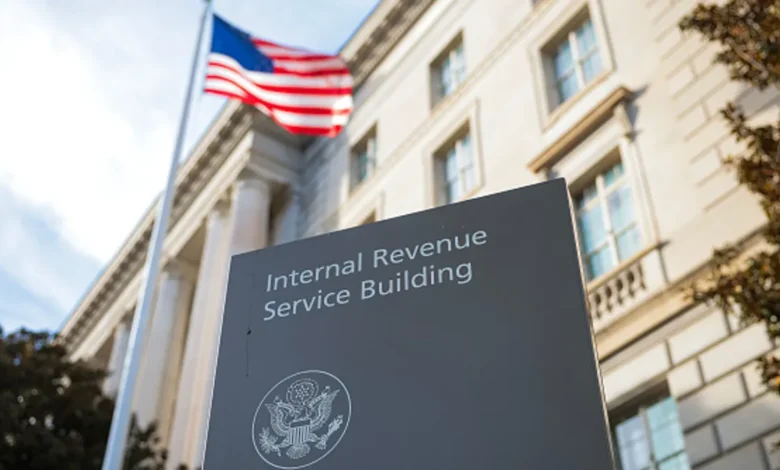
The regulatory push represents a significant departure from decades-old tax enforcement precedents. At the center of the debate is a newly proposed rule issued by the U.S. Department of the Treasury. If finalized in its current form, the regulation would dismantle a roughly 50-year-old Internal Revenue Service (IRS) policy that has historically permitted higher education institutions to consider race in targeted programming, scholarships, and financial assistance. Under the long-standing guidance, such efforts were permissible provided they aligned with the broader institutional policy of maintaining a racially nondiscriminatory student body.
However, the political and regulatory landscape has shifted dramatically. Proponents of the Treasury’s new directive argue that targeted diversity measures amount to impermissible racial preferences. When announcing the regulatory proposal earlier this month, IRS leadership adopted a stern posture regarding compliance. Frank Bisignano, head of the IRS, emphasized the administration’s hardline stance, stating that the proposed regulations formally put institutions on notice and that schools continuing to engage in what the administration defines as racial discrimination should anticipate the complete forfeiture of their tax-exempt status.
Chronology of the Regulatory Push and Legislative Pushback
The unfolding conflict follows a carefully timed sequence of regulatory actions, public announcements, and legislative countermeasures that have left higher education administrators bracing for a turbulent transition.
The timeline of events highlights the rapid escalation of the dispute:
- February 2025: Federal scrutiny intensifies as agencies across Washington evaluate institutional compliance with federal nondiscrimination statutes, laying the groundwork for broader enforcement actions.
- Early September 2026: The U.S. Department of the Treasury formally unveils the proposed rule change, signaling the potential termination of the 50-year-old IRS accommodation for targeted minority programming in higher education.
- September 11, 2026: Financial analysts at Moody’s release an extensive assessment detailing the catastrophic financial implications that colleges and universities would face if the IRS strips them of their tax-exempt classification.
- Mid-September 2026: Recognizing the vulnerability of institutions to politically motivated enforcement, congressional Democrats step in. Two House lawmakers introduce the HONEST Act, a legislative measure designed to erect procedural guardrails and due process protections against arbitrary IRS investigations.
- Early November 2026: The official public comment window for the Treasury’s proposed rule is scheduled to close, after which federal agencies will review feedback before drafting a final version.
- June 2027: The Treasury Department projects that the final rule will officially go into effect, immediately exposing non-compliant private institutions to severe fiscal penalties and potential legal battles.
The Financial Toll: Philanthropy and Capital Projects at Risk
Among the most immediate and damaging impacts identified by financial analysts is the potential evaporation of philanthropic revenue. For private higher education institutions, major gifts and endowments are the lifeblood of institutional advancement, funding everything from student financial aid to cutting-edge research facilities.
Data compiled by Moody’s illustrates the heavy reliance of colleges on charitable giving. Across the rating agency’s portfolio of rated institutions, gifts accounted for roughly 6.6% of overall operating revenue in fiscal year 2025. If an institution loses its 501(c)(3) tax-exempt status, donors who previously relied on charitable deductions to offset their tax liabilities may redirect their philanthropic capital entirely toward other tax-exempt entities. Such a shift would choke off a vital revenue stream just as many colleges are grappling with inflationary pressures and declining enrollment demographics.
Furthermore, philanthropy plays an indispensable role in capital development. Large gifts are frequently earmarked for the construction and modernization of academic buildings, residential housing complexes, and athletic facilities. A prolonged slump in capital giving would force universities to either defer crucial infrastructure updates or lean more heavily on borrowing, further constraining balance sheets and reducing debt-servicing capacity in an already unforgiving macroeconomic climate.
Escalating Borrowing Costs and Tax Liabilities
Beyond the loss of donations, the financial viability of private institutions would be directly threatened by the loss of access to tax-exempt municipal bonds. Historically, private colleges and universities have utilized tax-exempt bonds to finance long-term capital projects at significantly lower interest rates than those available to for-profit corporations.
If these institutions lose their tax-exempt status, they will be forced to rely exclusively on taxable debt markets. According to Moody’s analysts, the transition to taxable borrowing would compel affected entities to absorb millions of dollars in additional debt-service costs over the lifespan of their loans. The higher cost of capital would severely limit institutional flexibility, forcing painful trade-offs between academic programming, faculty retention, and administrative overhead.

Compounding these structural challenges is the looming uncertainty surrounding direct federal tax liabilities. While the precise tax bills that individual colleges might face would vary widely based on endowment size, real estate holdings, and commercial revenue generation, analysts agree that the aggregate financial burden would introduce unprecedented volatility into institutional budgeting.
Anticipated Legal Challenges and Precedents
Given the immense financial stakes involved, higher education legal experts and financial analysts widely anticipate that any finalized rule will immediately face fierce challenges in federal court.
The Moody’s report explicitly points to a growing track record of successful legal actions brought against executive branch policies targeting higher education. In recent years, federal courts have intervened to block or scale back aggressive federal initiatives, such as multiagency efforts to cap indirect research funding and stringent Education Department guidance targeting diversity, equity, and inclusion programs. University general counsels are expected to mount coordinated legal defenses, arguing that the Treasury’s regulatory shift exceeds statutory authority and violates constitutional protections.
Congressional Intervention: The HONEST Act
Fearing that the proposed tax penalties could be weaponized to penalize colleges holding ideological or political viewpoints unaligned with the current administration, federal lawmakers have mobilized to protect the sector.
In response to the Treasury’s announcement, two prominent House Democrats introduced the HONEST Act. The proposed legislation aims to establish robust due process procedures and accountability measures governing how the IRS initiates and conducts investigations into higher education institutions.

The scope of the HONEST Act is comprehensive, covering public universities, private nonprofit colleges, and their affiliated foundations and endowments. Key provisions of the bill include:
- Evidentiary Requirements: The legislation would mandate that the IRS compile and document verifiable evidence of wrongdoing prior to launching a formal investigation into any college or university.
- Ideological Protections: The bill explicitly bars federal regulatory agencies from opening investigations based on an institution’s curriculum, academic publications, or ideological positions.
- Procedural Safeguards: By instituting strict transparency and oversight mechanisms, the legislation seeks to prevent politically motivated targeting of dissenting academic institutions.
Broader Implications for the Higher Education Sector
As the public comment period approaches its deadline in early November, academic leaders, institutional boards, and financial planners are closely monitoring the regulatory pipeline. The debate over tax-exempt status and diversity initiatives transcends mere accounting metrics; it touches upon the fundamental autonomy of American higher education.
Whether the Treasury’s rule survives the inevitable legal challenges or is successfully modified by legislative interventions such as the HONEST Act, the current standoff underscores a permanent shift in the relationship between federal tax authorities and academic institutions. For private colleges, navigating this high-stakes environment will require careful balancing of legal compliance, institutional mission, and financial risk management as the June 2027 effective date draws closer.
Related posts: