Exploring the Nuances of Rural Life and the Human Psyche in Daniel Mason’s Newest Novel Country People

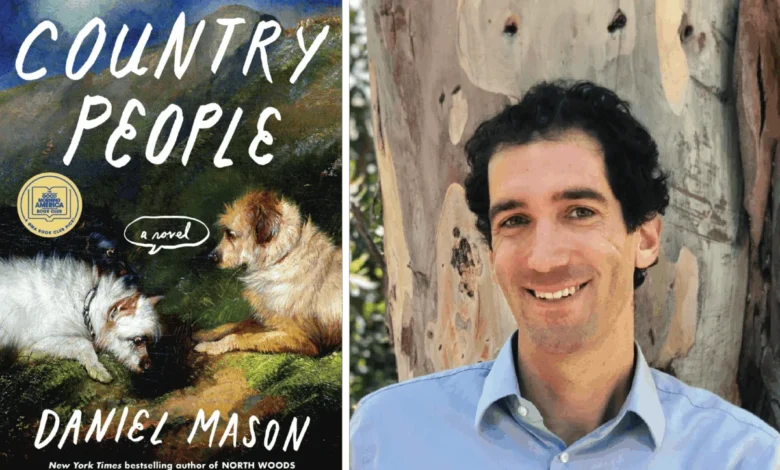
The literary landscape of 2024 has been marked by the highly anticipated release of Country People, the fifth novel by Daniel Mason, an acclaimed author and psychiatrist whose previous work, North Woods, earned significant critical acclaim and solidified his reputation as a master of historical and environmental narrative. Departing from the sprawling, multi-century scope of his previous efforts, Mason’s latest work narrows its focus to a contemporary family’s transition from the tech-saturated environment of the San Francisco Bay Area to the quiet, often inscrutable landscapes of rural Vermont. The novel serves as an exploration of the American rural-urban divide, the stagnation of academic life, and the persistent, often invisible epidemic of male loneliness.
The narrative follows Miles, a devoted husband and father who accompanies his wife, an "academic superstar," to a yearlong visiting professorship in Vermont. While his wife thrives in her professional network, Miles remains tethered to a dissertation he has been attempting to complete for 14 years. Accompanied by their two children and the family dog, the move serves as the catalyst for a comedic yet poignant examination of what happens when urban fantasies of "country living" collide with the mundane and sometimes isolating realities of small-town existence.
The Shift Toward Contemporary Comedy and Free Indirect Discourse
For Daniel Mason, a Stanford University associate professor of psychiatry who has spent much of his career writing historical fiction—such as The Piano Tuner and The Winter Soldier—the move toward a contemporary comedic tone represents a significant stylistic evolution. In recent discussions regarding the book’s development, Mason noted that while his previous works utilized humor incidentally, Country People was his first deliberate attempt at a comedic novel. This shift was born out of his own experiences living in Western Massachusetts and Southern Vermont while researching North Woods, where he observed the inherent comedy in his own family’s "city people" preconceptions about rural life.
The novel employs a literary technique known as free indirect discourse. This style provides a third-person narrative that nonetheless grants the reader intimate access to a character’s internal thoughts and emotional inflections. Mason cites Gustave Flaubert’s Madame Bovary and the works of Virginia Woolf as inspirations for this approach. By using this voice, Mason allows the reader to inhabit Miles’ wandering thoughts, capturing the minute indecisions of daily life—such as the existential weight of choosing between jeans or sweatpants for a social outing—and elevating them to reflections on belonging and identity.
Addressing the Epidemic of Male Loneliness
A central theme of Country People is the profound difference in social connectivity between the male and female protagonists. While the wife maintains a robust network of academic and social ties, Miles exists as a "bunch of little islands," connecting with others only through specific, often solitary interests like gardening or local legends. This narrative choice reflects a broader societal trend that has gained significant attention in public health circles.
In 2023, the U.S. Surgeon General, Dr. Vivek Murthy, issued an advisory titled "Our Epidemic of Loneliness and Isolation," which highlighted the physical and mental health risks associated with social disconnection. Data from the Survey Center on American Life suggests that men have seen a particularly sharp decline in social circles over the last three decades; the percentage of men reporting they have no close friends increased fivefold between 1990 and 2021. Mason’s characterization of Miles provides a literary face to these statistics, illustrating how a man can be deeply devoted to his family and yet remain profoundly lonely.
Academic Stagnation and the "All But Dissertation" Phenomenon
The character of Miles also serves as a study in the "ABD" (All But Dissertation) phenomenon common in higher education. Having nursed his project for 14 years, Miles represents a specific type of academic paralysis where passion for an idea does not translate into the execution of a finished product. This stagnation is a well-documented reality in graduate education. According to the Council of Graduate Schools, approximately 50% of doctoral students in the United States leave their programs without a degree, often after years of research.
Mason explores this through Miles’ distractibility. The character is portrayed as someone who is intensely interested in everything he encounters but lacks the structural framework to find his place in the world. This "wandering sense of purpose" is amplified by the change in setting, as the lack of urban distractions in Vermont forces Miles to confront the reality of his unfinished work and his uncertain professional identity.
The Taxonomy of Imagination: Legends and Conspiracy Theories
One of the more unique elements of Country People involves a local community obsessed with the "Hollow Earth" legend. This plot point allows Mason to utilize his background as a psychiatrist to explore the "taxonomy of imagination." The legend of a hollow earth—historically championed by figures such as John Cleves Symmes Jr. in the 19th century—serves as a bridge between harmless folklore and the more modern, often darker world of conspiracy theories.
Through characters like "Snowflake Bentley," whom Miles meets in an emergency room, Mason delves into the boundary between imagination and delusion. In a clinical context, the distinction between a strongly held belief and a psychiatric symptom can sometimes be thin. By weaving these themes into the narrative, Mason examines why individuals are drawn to "things that aren’t true" and how shared belief systems, however eccentric, can provide a sense of community to those who feel alienated from mainstream society.
Environmental and Geographic Context
The setting of rural Vermont is not merely a backdrop but a primary character in the novel. Mason’s research period in the region allowed him to capture the specificities of the landscape—the apple orchards, the harsh winters, and the insular nature of small-town social structures. The transition from the Bay Area, a global hub of technology and fast-paced innovation, to the slower, more cyclical nature of rural New England creates a friction that drives much of the book’s conflict.
This "city-to-country" trope is a staple of American literature, but Mason enriches it by avoiding the clichés of rural caricature. Instead, he focuses on the "mundane moments"—a school play, a trip to the local hospital—to show how these everyday interactions are the true sites of human connection and self-discovery.
Chronology of Development
The development of Country People can be traced back to the final stages of Mason’s work on North Woods.
- 2022-2023: While researching the historical landscapes of New York and Vermont, Mason began noting the "comedy of errors" inherent in his own family’s temporary relocation to the country.
- Late 2023: Following the critical success of North Woods, Mason began drafting "little scenes" centered on a character named Miles, initially without the intention of forming a full novel.
- Early 2024: The project evolved into a full-length manuscript as Mason leaned into the contemporary voice he had briefly experimented with in the final chapters of his previous book.
- Mid-2024: Country People was finalized, representing a departure from his usual four-to-five-year writing cycle, fueled by the "freeing" nature of the comedic genre.
Broader Implications and Critical Analysis
The publication of Country People highlights a growing trend in contemporary literature where established authors are moving away from grand historical epics toward "micro-realism"—the intense study of domestic life and internal psychology. Mason’s ability to pivot from the sweeping historical vistas of his earlier work to the granular, day-to-day anxieties of a modern father suggests a versatile maturity in his craft.
Furthermore, the novel’s focus on the "Hollow Earth" and the nature of belief arrives at a time of significant cultural anxiety regarding misinformation and the fragmentation of truth. By treating these beliefs with a mixture of psychiatric curiosity and narrative empathy, Mason offers a more nuanced perspective than the typical dismissive critique of conspiracy culture.
In conclusion, Country People is more than a story of a family move; it is a clinical and comedic autopsy of the modern American male’s psyche. By blending the trivialities of daily life with profound questions of belonging and the nature of reality, Daniel Mason has created a work that reflects the quiet desperation and occasional beauty of the contemporary human condition. The novel stands as a testament to the idea that looking closely at "small" moments can yield the most significant insights into who we are and where we belong.