Beyond the Certificate: Why Higher Education Must Pivot from AI Exposure to Workforce Readiness


Universities across the United States are currently engaged in a massive, rapid-fire experiment: integrating artificial intelligence literacy into their core curricula. From Ivy League institutions to regional community colleges, students are participating in intensive workshops, experimenting with generative AI platforms, and earning digital badges and certificates intended to signal their preparedness for an increasingly automated economy. Yet, beneath the veneer of technological progress, a significant structural concern has emerged. Despite the proliferation of these initiatives, there is a lack of rigorous, empirical evidence to suggest that these programs translate into tangible workplace problem-solving abilities, improved job prospects, or equitable career outcomes for students across diverse socioeconomic backgrounds.
The Mirage of the AI Pilot Program
Higher education is currently grappling with an "AI pilot program problem." Many of the institutions heralding their programs as successful rely on anecdotal, short-term metrics. These often include student satisfaction surveys, basic test scores, or simple attendance logs. While these indicators suggest that students are engaged, they fail to answer the most critical question: can these students actually apply these tools to solve complex, real-world problems once they leave the classroom?
The current landscape of AI education is fragmented. Most existing data on the efficacy of these programs are derived from localized, single-region studies that lack longitudinal tracking. By labeling programs as "successful" before assessing long-term student performance or employer satisfaction, universities risk creating a cycle of surface-level credentialism. This trend poses a particular danger to students at public, less-resourced institutions, who may be introduced to high-level tools without the necessary mentorship, practice, or industry connections required to leverage those skills in a competitive job market.
A Chronology of the Academic AI Pivot
The rush to integrate AI into higher education did not happen in a vacuum. It was triggered by the late 2022 public release of advanced generative AI tools, which fundamentally disrupted the academic status quo.
- Late 2022 – Early 2023: The "Disruption Phase." Universities faced an immediate crisis regarding academic integrity, leading to a surge of ad-hoc policies and initial student workshops focused on how to use AI without violating honor codes.
- Mid-2023 – Early 2024: The "Institutionalization Phase." Colleges began moving from reactive measures to proactive AI literacy programs. Formal certificates and minor programs were launched, often supported by external technology partnerships.
- Late 2024 – Present: The "Evaluation Gap." As the initial novelty wears off, educators and researchers have begun to question the ROI of these certificates. Recent academic papers, including those published in Frontiers in Education and by researchers at CUNY and NYU, have highlighted the urgent need for standardized metrics that transcend simple classroom participation.
Bridging the Gap: Data and Applied Practice
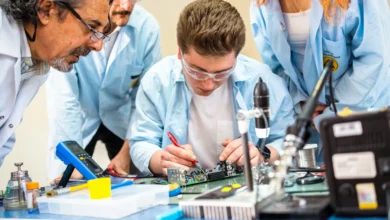
To understand whether these programs actually move the needle, researchers are looking toward cross-institutional models. A notable study, led by Ngoc Cindy Pham, involved a collaborative initiative between the City University of New York (CUNY) and New York University (NYU) Tandon School of Engineering. By bringing undergraduate and graduate engineering students together in a series of industry-led workshops, the initiative sought to determine if "applied use" was dependent on institutional prestige or simply on the quality of engagement.
The preliminary findings were revealing. The most accurate predictor of a student’s ability to create a functional, AI-driven output was not their home institution, but the volume of their participation. Among students who attended only one or two sessions, roughly 21 percent successfully produced a usable AI-driven project. That figure jumped to 56 percent for those who attended six or more sessions. This suggests that the "dosage" of hands-on practice, combined with direct guidance from industry professionals, is a far more significant factor in student success than previously assumed.

The Role of Industry Partnerships
The disconnect between academia and the workforce remains the primary barrier to true AI readiness. While universities have historically relied on guest speakers to provide industry flavor, the current landscape demands a deeper integration. Employers are no longer just external observers; they must be architects of the curriculum.
Industry professionals are uniquely positioned to define the parameters of "responsible AI use." This goes beyond knowing how to prompt a chatbot; it involves navigating data privacy concerns, understanding the ethical implications of algorithmic bias, and determining when a human, rather than a machine, should be the final arbiter of a decision. When students engage with professionals who demonstrate these competencies within an actual organizational framework, they gain a competitive edge that a classroom-based certificate simply cannot replicate.
Federal Policy and the Apprenticeship Model
As academia struggles to standardize its approach, federal policymakers are moving toward a performance-based incentive model. In July 2025, the U.S. Department of Labor announced a $162 million investment into Registered Apprenticeship programs, focusing on performance metrics such as hiring, retention, and career advancement.
Organizations such as Jobs for the Future (JFF) have begun to operationalize this funding, with a $40 million grant aimed at building the infrastructure for AI, semiconductor, and nuclear energy industries. While universities are not apprenticeships—and should not attempt to replicate that model in its entirety—the shift toward outcome-based funding provides a blueprint. If universities are to secure long-term support, they must shift their focus toward demonstrable skills and measurable, career-aligned outcomes.
Implications for Future Curricula
For higher education to successfully bridge the AI divide, a three-pronged strategy is required:
- Standardized Assessment of Competency: Universities must move beyond "attendance" as a metric. Evaluation should focus on professional communication, judgment, and the creation of tangible work products that mirror real-world tasks.
- Cross-Institutional Research: Single-campus studies are no longer sufficient. Institutions must collaborate to share data across different student demographics, ensuring that AI literacy does not exacerbate existing achievement gaps.
- Integrated Professional Guidance: The "finish line" of a program should not be a certificate, but a portfolio of work reviewed by industry partners. This ensures that students are not just learning the technology, but are also learning the workplace culture and ethical standards required to use that technology effectively.
The Path Forward
The goal of higher education is to prepare students for the complexities of the future. Artificial intelligence is arguably the most significant shift in the nature of work since the industrial revolution. Yet, the current "pilot program" approach is failing to provide the level of rigor necessary to truly prepare students for this new landscape.
Without a pivot toward shared metrics, longitudinal tracking, and genuine employer partnership, AI literacy programs risk becoming little more than academic window dressing. However, if universities can foster a collaborative, evidence-based approach that emphasizes sustained practice over one-off workshops, they can build a system that empowers all students, regardless of where they are enrolled. The transition from "exposure" to "readiness" is not merely an educational preference; it is a fundamental requirement for maintaining the relevance and integrity of higher education in the age of AI.