The $1 Million Lifeline: How a Small Alaska Town Transformed Its Child Care Desert into a Model for Rural Economic Resilience

The picturesque town of Seward, Alaska, is best known for its stunning glacial vistas, Resurrection Bay, and its role as a premier cruise ship port. However, beneath the veneer of seasonal tourism, the town of 2,800 residents faced a silent, internal crisis that threatened its long-term viability: an acute shortage of child care. For years, parents struggled to balance employment with the demands of raising young children, creating a bottleneck that hampered the local economy. In 2021, an unexpected $1 million donation from Norwegian Cruise Line Holdings Ltd. catalyzed a dramatic shift, providing the capital necessary to reverse a trend that had left the community on the brink of a workforce collapse. Five years later, licensed child care capacity in Seward has expanded by 150 percent, offering a blueprint for other rural communities grappling with similar infrastructural voids.
A Chronology of Crisis and Recovery
The struggle for adequate child care in Seward was not a new phenomenon, but it reached a breaking point in the years leading up to the COVID-19 pandemic. As early as 2018, Casie Warner, then working as a home visitor, documented the systemic failures impacting low-income families. Parents were routinely forced to turn down extra work shifts or skip medical appointments due to the absence of reliable care.
The situation deteriorated further in 2019 when a local child care program operated by the Qutekcak Native Tribe closed, eliminating 20 critical spots. The crisis deepened in 2021 when a preschool program funded by federal Title I money shuttered because the local elementary school no longer met the enrollment thresholds for low-income families. By that point, the town was left with only two licensed programs, providing a mere 20 slots for a population of over 80 children in need.
The arrival of the $1 million donation from Norwegian Cruise Line—part of a broader $10 million relief package for Alaska port communities—coincided with this nadir. The Seward City Council, recognizing that the lack of childcare was a primary driver of labor shortages, acted decisively. They channeled the funds into a strategic partnership with Happy Youth Programs and Educational Resources (HYPER), a local nonprofit led by Warner. The initiative focused on three pillars: provider training, startup grants for home-based businesses, and a direct subsidy program for families.
The Economics of Child Care Deserts
The challenges faced by Seward are symptomatic of a national crisis in rural America. According to the Center for American Progress, approximately 1 in 7 Americans lives in a rural community where child care options are scarce. The metrics for Alaska are particularly stark: roughly 96 percent of the state’s children reside in a "child care desert," defined as an area with at least three children for every available licensed spot. In low-income rural areas, this ratio is even more severe, often reaching nine children per one slot.

The economic consequences of this deficit are quantifiable. A 2023 report from the U.S. Chamber of Commerce Foundation estimated that Alaska lost $165 million in economic activity annually due to parents’ inability to access the child care required to maintain steady employment. In Seward, this manifested in worker shortages across critical sectors, including the medical facility and the state’s maximum-security prison. In 2023, the town was forced to temporarily close its local jail because it could not staff the facility, a direct outcome of a transient, unstable workforce that could not secure the stability required to settle in the region long-term.
From Survival to Sustainability: The Provider Perspective
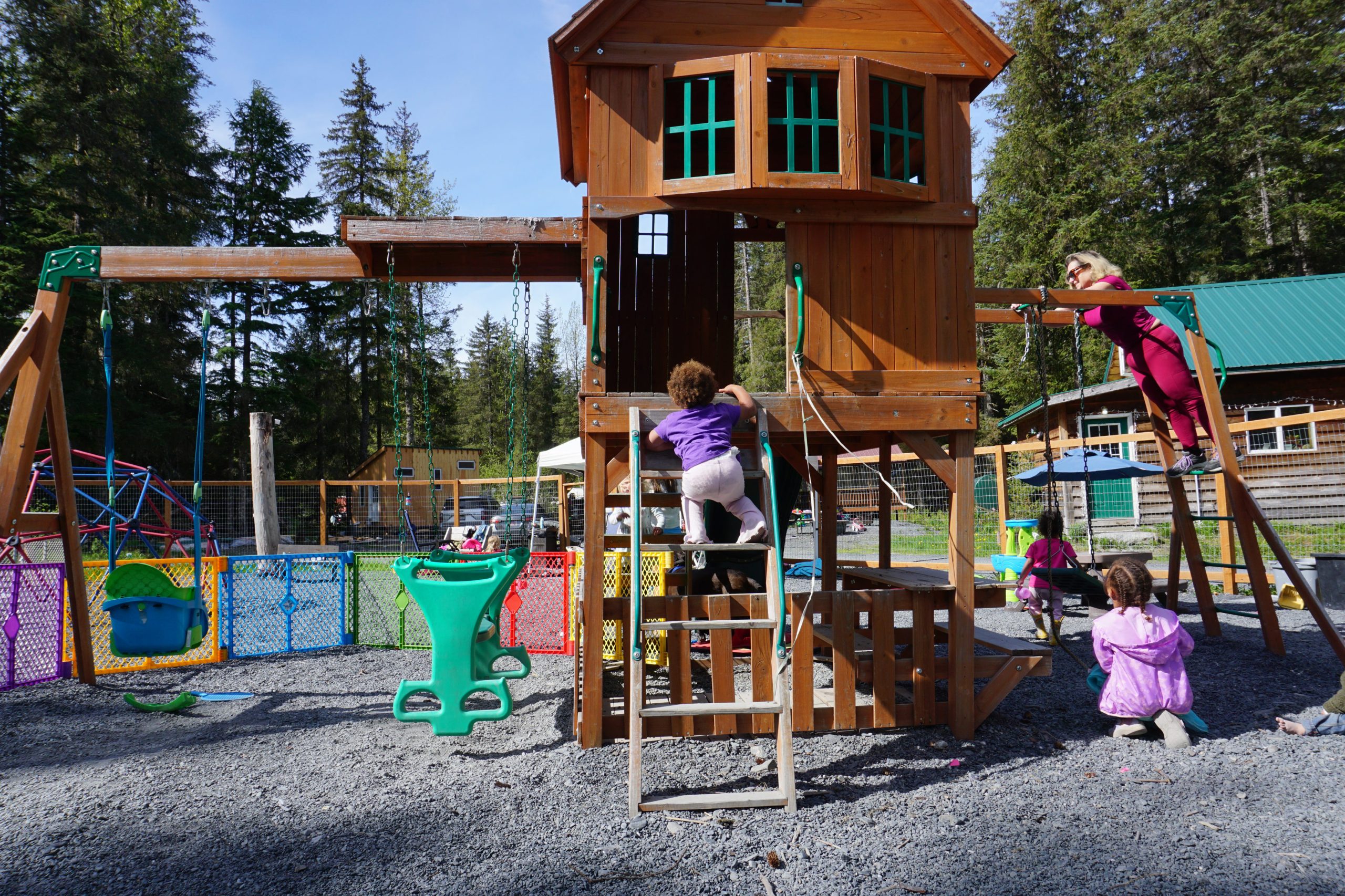
The infusion of capital allowed individuals like Josie McClain to transform their home-based operations into viable, professional businesses. McClain, who holds a degree in elementary education, utilized $10,000 from the HYPER grant to construct a screened-in porch, enabling year-round outdoor play. This investment allowed her to become licensed as a group child care provider, increasing her capacity from eight to 12 children.
Her experience highlights the "impossible math" of rural child care. Without the infusion of nonprofit funds and, at times, state subsidies, providers struggle to maintain operations while charging rates that local families can afford. McClain’s program is one of only two in the town providing 24-hour care, a necessity for parents working shifts at the local hospital or within the tourism industry. Despite the improvements, the work remains grueling. The recent reduction in federal reimbursement rates for healthy meals and the constant challenge of hiring assistants mean that even successful providers like McClain operate on thin margins, often foregoing vacations and personal savings to ensure the doors remain open.

The Role of Public Policy and Future Funding
While the philanthropic injection from Norwegian Cruise Line served as a successful "bridge" to stability, experts argue that private donations are not a sustainable substitute for robust public funding. Hailey Gibbs, associate director of early childhood policy at the Center for American Progress, notes that the operating costs for high-quality care are inherently high, and in rural areas where the tax base is small, government intervention is essential.
Alaska’s state government has taken incremental steps, including a $6 million allocation in 2025 to expand eligibility for child care assistance. However, these efforts have been inconsistent. Governor Mike Dunleavy’s recent veto of $6.4 million in workforce retention funds and $3.7 million for Head Start programs has introduced new uncertainty for providers. These political fluctuations pose a direct threat to the fragile progress made in towns like Seward.
Katie Shepard, who co-runs the Timberline Learning Center, underscores the administrative burden that discourages potential providers. Opening a center involves navigating a labyrinth of licensing, safety regulations, and insurance requirements. Without the $30,000 grant her center received from HYPER to cover startup costs and licensing, she asserts that her program would never have launched.

Broader Implications: A Model for Community Retention
The long-term goal for city planners in Seward, such as Courtney Bringhurst, is to create a "ripple effect." By stabilizing child care, the city hopes to encourage families to relocate permanently, thereby bolstering the local school system and attracting a wider array of businesses that require a stable, year-round workforce.
The strategy currently under development involves securing a more permanent, reliable source of revenue, potentially through a tourism tax levied on the cruise ships that dock in the bay. With a new cruise ship dock expected to increase the volume of visitors, proponents argue that a small portion of this revenue should be reinvested into the community’s basic infrastructure—which includes child care.
As Seward navigates the transition from a seasonal port to a stable, year-round town, the lessons of the last five years are clear: child care is not merely a social service, but a foundational pillar of the rural economy. Whether other communities can replicate this success depends largely on their ability to marry local ingenuity with sustained, long-term public and private investment. For now, the parents of Seward, like Ella Wright, are seeing the benefits. Her daughter’s development and her own ability to return to full-time work serve as a testament to the fact that when a community prioritizes its youngest members, the entire local economy reaps the reward. The "quiet and cold" months in Alaska are no longer just a season of waiting, but a period of development, ensuring that the town of Seward remains a place where families can put down roots.
Related posts: