Blanche defends Trump’s criticism of supreme court justices after ruling to block mail-in voting executive order

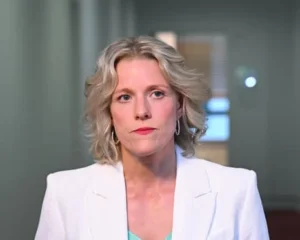
United States Attorney General Todd Blanche addressed the media at the White House on Tuesday to clarify the administration’s position regarding a recent Supreme Court ruling that effectively blocked President Donald Trump’s executive order aimed at imposing strict new limitations on mail-in voting. Despite the judicial setback, Blanche signaled that the executive branch remains steadfast in its pursuit of what it describes as election integrity, asserting that ongoing federal investigations into voting irregularities will continue unabated.
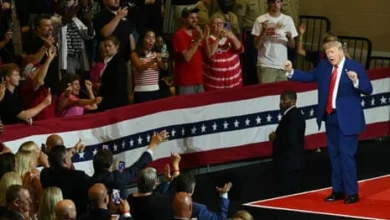
The Attorney General’s comments arrived against a backdrop of mounting tensions between the executive branch and the judiciary. President Trump, who has frequently utilized mail-in ballots himself, has been vocal in his opposition to the practice, labeling it a "laughing stock" and a potential vector for fraud—claims that have been consistently challenged by election officials and legal experts. In the wake of the Court’s decision, which saw only Justices Clarence Thomas and Samuel Alito side with the administration, Trump issued a scathing critique of the bench on his social media platform, Truth Social. He characterized the majority of the justices as "petrified" of political pressure and failing in their duty to uphold the Constitution.
Blanche, however, sought to frame the President’s rhetoric as a legitimate exercise of free speech. "He is very frustrated," Blanche told reporters. "He has every right, and indeed he should communicate his concerns with the Supreme Court whenever he has them. This isn’t the first time that he’s done it, and it won’t be the last. The idea that President Trump shouldn’t be allowed to communicate to the American people his frustration, I don’t share that."

Federal Crackdown on Non-Citizen Voting
The Attorney General’s briefing was initially teased as a announcement of a "big development" regarding a federal crackdown on voting by non-citizens. The actual announcement, delivered by Ryan Raybould, the U.S. Attorney for the Northern District of Texas, involved the filing of criminal charges against six lawful permanent residents and one undocumented immigrant. The charges relate to alleged instances of voting in federal elections over the past eight years.
While the administration hailed the operation as a significant triumph for election security, the data suggests the scale of the issue is limited. Of the seven individuals charged, two cast provisional ballots that were never counted. Of the remaining five, four votes were cast and counted in error. Given that over 11.3 million Texans participated in the 2024 general election, the impact of these individual votes on the total tally is statistically negligible. Furthermore, President Trump secured a decisive victory in Texas, winning by a margin of more than 1.5 million votes.
Critics of the administration’s approach argue that the focus on such a small number of isolated cases is intended to generate political momentum ahead of the midterm elections rather than address a systemic threat to democracy. The decision to invite a Fox News crew to film the arrest of a green-card holder from Nigeria—who allegedly voted in 2018—has further fueled concerns that the Department of Justice is being utilized for performative political messaging.
The Kennedy Center Dispute and Judicial Friction
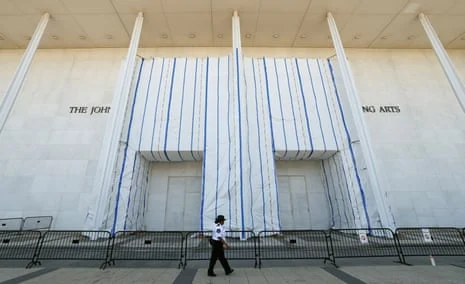
Tensions between the White House and the federal judiciary are not limited to voting rights. On the same day as the Attorney General’s briefing, a federal judge in Washington, D.C., reaffirmed a previous ruling that Donald Trump’s name cannot be added to the exterior of the John F. Kennedy Center for the Performing Arts. Judge Christopher Cooper, a nominee of former President Barack Obama, issued a sharp directive barring the Trump-appointed board of the center from proceeding with any plans to rename the facility or its surrounding plaza.

The dispute stems from a long-standing disagreement over whether the President has the authority to unilaterally alter the branding of a congressionally mandated memorial. Judge Cooper’s order was unequivocal, stating that the federal law governing the Kennedy Center permits no such modification without explicit congressional approval. "Simply put, defendants cannot install memorials for President Trump or anyone or anything else at the Kennedy Center without Congress’s blessing," the order read.
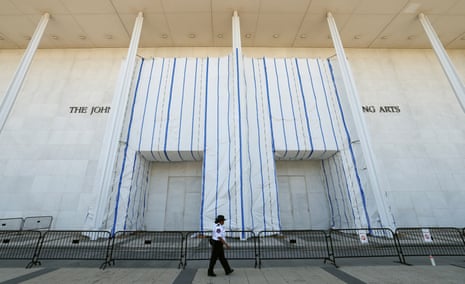
President Trump reacted by declaring that the Kennedy Center would be closed indefinitely and that scheduled renovations would be halted until the ruling is overturned by an appellate court or the Supreme Court. He alleged that the facility is in a state of "virtual collapse" and characterized the judge as "hostile and conflicted."
Legislative Stagnation and Cryptocurrency Regulation
The atmosphere on Capitol Hill remains equally charged. On Tuesday, Senate Democrats successfully blocked a significant cryptocurrency regulation bill, the CLARITY Act, citing inadequate provisions to prevent government officials from profiting from digital assets. The failure of the bill, which fell on a 49-50 vote, reflects deep-seated concerns regarding potential conflicts of interest within the executive branch.
Democratic senators, including Ruben Gallego and Adam Schiff, argued that the legislation as currently written was insufficient to address the "profiteering" risks associated with high-ranking officials holding digital assets. Financial disclosures released earlier this summer indicated that President Trump has generated approximately $1 billion from cryptocurrency ventures during his time in office.

Senator Gallego’s statement after the vote underscored the partisan divide: "This legislation failed squarely because Republicans refuse to say no to the president. Instead of spending their time twisting themselves into knots to appease President Trump, Republicans should have worked more closely with Senate Democrats to craft a bill that could pass with strong ethics provisions."
AI Regulation and the "Arms Race"
Amid these domestic political skirmishes, the rapid evolution of artificial intelligence has emerged as a rare point of bipartisan interest, though one defined by disagreement over the role of the government. At the Pro-Human Assembly in Washington, Senator Bernie Sanders and political commentator Steve Bannon both addressed the urgent need for AI oversight, albeit from vastly different ideological starting points.
Sanders, who has introduced legislation to ban the development of artificial superintelligence, argued that Congress has been "asleep at the wheel." He stated, "If AI surpasses human intelligence, as many scientists believe could happen, this technology will escape human control with potentially catastrophic consequences." Sanders advocated for binding international safety rules, arguing that voluntary industry standards are insufficient when the future of humanity is at stake.
Bannon, conversely, focused his remarks on an economic "quarantine" of China, urging the government to isolate Beijing’s technological ecosystem. While Bannon avoided direct criticism of President Trump—who has dismissed AI concerns as a "hoax"—he emphasized the necessity of executive action to prevent the loss of American technological supremacy.
The Financial Cost of Foreign Engagement
As these domestic issues consume the political agenda, the Congressional Budget Office (CBO) provided a stark reminder of the fiscal burdens facing the administration. According to the latest estimates, the ongoing war in Iran has cost the U.S. Pentagon approximately $38 billion as of August 1, 2026. This figure encompasses the replacement of munitions, increased operational tempo, and fuel costs, though it does not account for indirect impacts on the broader federal budget, such as the increased costs borne by the Postal Service and other government agencies.
Implications and Outlook
The convergence of these events—ranging from the legal challenges surrounding mail-in voting and the Kennedy Center to the legislative deadlock on cryptocurrency and the growing debate over AI—paints a picture of a government struggling to find consensus in a highly polarized environment.
The administration’s determination to continue its "election integrity" initiatives, even in the face of Supreme Court opposition, suggests that the executive branch will continue to test the limits of its power. Meanwhile, the failure of the CLARITY Act and the ongoing friction over the Kennedy Center demonstrate that the legislative and judicial branches remain significant constraints on the President’s agenda.
As the midterm elections approach, the political discourse is likely to intensify, with both parties seeking to leverage these controversies to mobilize their respective bases. Whether the current strategy of confrontational rhetoric and executive-led initiatives will yield electoral dividends for the administration remains an open question, but the impact on the institutional stability of the federal government will be felt for years to come.