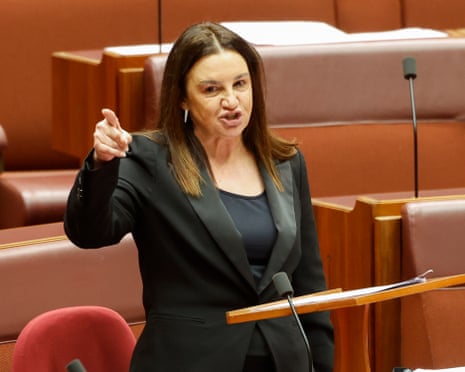
Senator Jacqui Lambie has launched a scathing and direct appeal to the Australian electorate, urging voters to turn their backs on One Nation leader Pauline Hanson, whom she has branded as both dangerous and delusional. The extraordinary intervention, delivered during an adjournment speech in the Senate, marks a significant escalation in the ongoing friction between the two prominent independent figures. Lambie’s critique extends beyond a mere personal feud, framing Hanson’s political methodology as a deceptive populist strategy that mimics the divisive tactics of international figures such as Donald Trump and Nigel Farage.

The core of the tension stems from a recent and highly contentious cartoon series produced by One Nation, which repeatedly labeled Liberal MP Andrew Hastie as a traitor. Lambie, who has emerged as a staunch defender of parliamentary decorum and stability, described her reaction to the series as one of intense frustration, noting that she has been subjected to a sustained campaign of abuse for standing up against the rhetoric directed at her colleague.
The Populist Playbook and the Rhetoric of Division
Lambie’s argument is rooted in the belief that One Nation has adopted a specific, damaging style of politics that prioritizes anger and scapegoating over substantive policy development. During her address, the Tasmanian senator dissected what she terms the populist trick: the practice of identifying convenient targets for blame to distract from the lack of tangible benefits for the working class.

"One Nation whips up the anger and they tell people who to blame," Lambie stated. "That’s the populist trick. It’s a trick, Australia, and we’ve got to wake up to it. Because every time a populist leader, like Trump or Farage, gets any power, the lives of working people don’t get better. They get worse."
Lambie further scrutinized Hanson’s alignment with international political figures, particularly in relation to foreign policy. She explicitly condemned the suggestion that Australian military personnel should be involved in "forever wars," specifically criticizing Hanson’s perceived support for the aggressive foreign policy postures associated with the MAGA movement in the United States. Lambie questioned the morality and strategic sense of such alignment, characterizing Hanson’s worldview as profoundly disconnected from the national interest.
A Growing Feud: The Andrew Hastie Connection
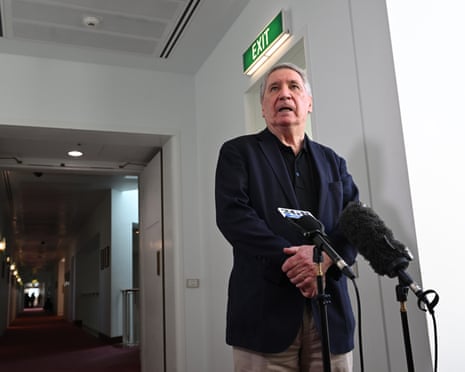
The recent escalation of hostilities has not been limited to the Senate chamber. Andrew Hastie, the Liberal member for the Western Australian seat of Canning, has also publicly voiced his concerns regarding the tone set by One Nation. Hastie has described the current political atmosphere as having "taken a real dip," characterizing One Nation’s tactics as essentially importing divisive, US-style MAGA politics into the Australian context.
The feud has placed significant strain on the relationship between the Coalition and the crossbench. Hastie, a former SAS captain, has indicated that he has had no direct communication with Hanson for the past week, suggesting a breakdown in working relations. When questioned on whether the Coalition should consider forming a government that includes One Nation, Hastie emphasized that the Liberal Party must prioritize its own foundational strength and primary vote rather than relying on alliances with minor parties whose tactics he finds antithetical to his own party’s values.
"We are fighting for our survival and we should be focused on that," Hastie noted in a recent interview, signaling a clear shift in the Liberal Party’s posture toward One Nation, moving from potential cooperation to active distance.
Contextualizing the Political Landscape
This conflict occurs against a backdrop of increasing volatility in Australian politics. The rise of minor parties and independents has fundamentally altered the power dynamics in the Senate, making the "ugly politics of populism" a point of intense national debate. Analysts suggest that the shift toward more aggressive, personality-driven campaigning—often facilitated by digital media and short-form content like the cartoons produced by One Nation—represents a departure from the traditional parliamentary consensus model.
The concern expressed by Lambie is that this style of engagement creates a permanent state of fear. By failing to offer genuine solutions, she argues, figures like Hanson, Trump, and Farage focus on "feathering their own nests" while leaving the electorate divided. Lambie’s call to action is for a return to a politics of respect, where the objective is to find common ground rather than to exploit social fissures for electoral gain.
Broader Implications and Institutional Scrutiny
The tension between Lambie and Hanson is not the only issue currently preoccupying the halls of Parliament. The broader political discourse is currently dominated by concerns regarding the integrity of government processes and the influence of emerging technologies.

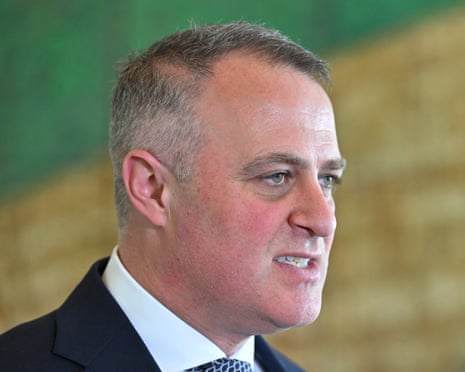
Recent reports have highlighted a "pattern of behavior" within the federal government regarding grant allocations. Shadow treasurer Tim Wilson has leveled serious accusations against the Labor government, specifically citing the health minister’s office in relation to a $6 million sports precinct upgrade in Adelaide. The allegation is that funding was steered toward specific projects without the rigorous planning or costings typically required, a situation that critics argue echoes past scandals involving the distribution of public funds to secure electoral advantages.
Furthermore, the integrity of political institutions is being tested by the rapid advancement of artificial intelligence. Deputy Prime Minister Richard Marles has recently engaged with the ethical implications of this technology, expressing concern that the pace of AI development must be balanced with robust, human-centric safeguards. Marles has taken a cautious approach, acknowledging the potential for AI to provide significant benefits while simultaneously warning that the regulatory framework must evolve to prevent the technology from being used in ways that harm the Australian public.

Antisemitism and the Search for Consensus
Adding to the complexity of the current political environment is the ongoing discourse surrounding social cohesion and extremism. Former ASIO boss Dennis Richardson recently addressed the Lowy Institute, noting that the national response to antisemitism had been insufficient in the immediate aftermath of recent international conflicts.
Richardson’s comments, which emphasized that the "ball was dropped" regarding the condemnation of extremist rhetoric, have sparked a renewed national conversation about the responsibility of leaders to address hate speech. His call for a nuanced discussion on Islamic extremism—one that avoids the stigmatization of the broader Muslim Australian community—highlights the delicate balance that policymakers must navigate. The work of the ongoing royal commission into these issues, while currently unfinished, is expected to provide a crucial, fact-based assessment of the experiences of minority groups in Australia, potentially shifting the focus away from the divisive rhetoric favored by populist actors.

Looking Ahead: The Strategic Challenge
As Australia moves toward the next federal election, the clash between Lambie and Hanson serves as a microcosm of a larger strategic challenge. For the major parties, the necessity of maintaining a distinct identity while navigating a fractured crossbench is becoming increasingly difficult.
The Liberal Party’s decision to "push back" against the influence of One Nation, as articulated by Andrew Hastie, suggests that the mainstream right is attempting to reclaim its brand from the influence of radical populism. Conversely, the success or failure of this strategy will depend on the public’s receptiveness to these calls for a return to more traditional political norms.

Ultimately, the warnings issued by Senator Lambie are reflective of a broader anxiety regarding the stability of Australian democracy. Whether this rhetoric is dismissed as political theater or recognized as a necessary alarm, it is clear that the discourse surrounding the "politics of fear" will continue to be a defining feature of the upcoming legislative and electoral cycles. The demand for respect and evidence-based policy, as championed by Lambie, stands in stark contrast to the populist strategies currently under scrutiny, setting the stage for a critical debate about the future direction of the nation’s political culture.