Luxembourg Deepens Global Health Commitment with Record-Breaking €47.5 Million Funding Package for the World Health Organization

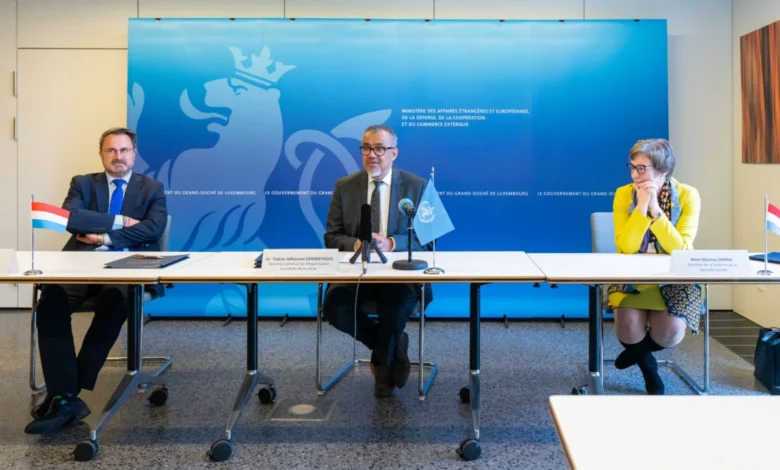
In a landmark development for international public health diplomacy, the Government of Luxembourg formalized its most substantial financial commitment to the World Health Organization (WHO) to date. On 20 December 2024—fittingly coinciding with International Human Solidarity Day—senior Luxembourgish officials met with WHO leadership to sign two groundbreaking agreements totaling €47.5 million. This historic package comprises a €46.5 million Strategic Partnership Framework (SPF) managed through the Ministry of Development Cooperation and Humanitarian Affairs, alongside a pioneering €1 million multiyear agreement facilitated by the Ministry of Health and Social Safety.
Designed to accelerate progress toward the United Nations Sustainable Development Goals (SDGs) throughout the 2025–2028 funding cycle, these agreements represent a profound strengthening of ties between the Grand Duchy and the global health body. By combining flexible core contributions with targeted thematic investments, Luxembourg has cemented its status as an outsized champion of multilateralism, disease prevention, and equitable access to healthcare on the world stage.
Main Facts of the Historic Agreement
The signing ceremony, held in a spirit of cooperative diplomacy, brought together key figures from both Luxembourg and the WHO. The delegation was led by Xavier Bettel, Deputy Prime Minister and Minister of Foreign and European Affairs, Cooperation and Foreign Trade, alongside Martine Deprez, Minister of Health and Social Safety. They were joined by Dr Tedros Adhanom Ghebreyesus, Director-General of the WHO, to formalize the financial pacts.
The financial architecture of the package is divided into two distinct yet complementary streams:
- The Strategic Partnership Framework (€46.5 million): Overseen by the Ministry of Development Cooperation and Humanitarian Affairs, this represents the largest single agreement the WHO has ever signed with Luxembourg. Crucially, the fund includes a mix of fully flexible resources and thematic allocations. The flexible component empowers the WHO to deploy capital rapidly to areas of highest and most urgent global need, bypassing the bureaucratic delays often associated with earmarked donations. The thematic portions are explicitly dedicated to critical global health initiatives, including the Universal Health Coverage (UHC) Partnership, specialized research into neglected tropical diseases, and the final global push toward polio eradication.
- The Ministry of Health and Social Safety Agreement (€1 million): Marking a historic milestone, this represents the first-ever multiyear voluntary contribution to the WHO originating directly from Luxembourg’s Ministry of Health and Social Safety. Running through 2028, these funds are earmarked to fortify domestic and international resilience against sanitary crises, bolster epidemic preparedness and response mechanisms, and actively combat persistent health inequalities, with a dedicated institutional focus on gender mainstreaming.
Chronology and Background of Luxembourg-WHO Collaboration
Luxembourg’s relationship with the WHO is rooted in decades of consistent multilateral engagement, but the events of late December 2024 represent a qualitative leap in the nation’s foreign assistance strategy.
Historically, small European nations have punched above their weight in international development by focusing on niche competencies, predictable funding, and unwavering support for rules-based international organizations. Over the past decade, as the global health landscape has been repeatedly tested by systemic shocks—ranging from the West African Ebola outbreak to the COVID-19 pandemic—Luxembourg progressively elevated global health security as a core pillar of its foreign policy.

The lead-up to the 20 December signing involved months of strategic bilateral negotiations. Policymakers in Luxembourg City and WHO headquarters in Geneva sought to align the Grand Duchy’s national development priorities with the WHO’s Thirteenth General Programme of Work (GPW 13) and its successor frameworks. The objective was to design a funding mechanism that transcends traditional, fragmented donor assistance, offering instead a predictable, multiyear foundation that enables the WHO to plan long-term technical interventions rather than reacting purely to short-term emergencies.
The choice of signing the agreements on International Human Solidarity Day added profound symbolic weight to the occasion. It underscored a political philosophy that views global health not merely as a matter of technical assistance or charity, but as an indispensable prerequisite for global security, human rights, and economic stability.
Supporting Data and Financial Allocation Dynamics
To understand the strategic significance of the €47.5 million package, it is necessary to examine the modern financing model of the WHO. For years, the organization has grappled with a structural imbalance in its budget: a heavy reliance on tightly earmarked (voluntary) contributions, which restricted how the Director-General could respond to sudden health crises, contrasted with a relatively small base of flexible assessed contributions (member state dues).
Recognizing this vulnerability, WHO member states launched initiatives like the WHO Investment Round to mobilize more predictable, flexible resources. Luxembourg’s new contribution directly addresses this systemic challenge.
- Flexibility as a Force Multiplier: A substantial portion of the €46.5 million SPF is fully flexible. In practical terms, this allows Dr Tedros and his technical teams to allocate funds toward underfunded emergencies, sudden disease outbreaks, or vital operational logistics without waiting for specific donor approval. In global health governance, flexible funding is widely considered the gold standard of donor generosity.
- Targeted Thematic Impact: Beyond flexible funds, the agreement ring-fences vital resources for specific, measurable outcomes. The Universal Health Coverage Partnership, supported by these funds, currently operates in over 115 countries, helping governments strengthen their primary health care systems. Furthermore, the inclusion of tropical disease research addresses conditions that disproportionately affect impoverished populations in the Global South—populations that frequently fall outside commercial pharmaceutical research and development priorities.
- Polio Eradication: Despite decades of progress, eradicating the final transmission chains of the poliovirus remains one of public health’s most complex logistical challenges. Luxembourg’s continued financial backing ensures that surveillance, vaccination campaigns, and containment protocols can be sustained in high-risk regions.
Official Responses and Diplomatic Reactions
The signing ceremony drew warm praise from international leaders and national officials alike, who emphasized the philosophical alignment underpinning the partnership.
Martine Deprez, Minister of Health and Social Safety, highlighted the domestic and international synergy of the partnership during the bilateral discussions. "From now till 2028, this contribution will help finance priority areas in Luxembourg’s collaboration with WHO," Minister Deprez stated. She placed particular emphasis on operational readiness, noting that the funds will be deployed "notably for sanitary crisis preparedness and response and the fight against health inequalities, with a special focus on gender." By explicitly integrating gender considerations into health security, Luxembourg’s contribution acknowledges that public health emergencies affect men, women, and marginalized groups differently, requiring nuanced, equitable interventions.
Xavier Bettel, Deputy Prime Minister and Minister of Foreign and European Affairs, Cooperation and Foreign Trade, framed the agreements within the broader context of Luxembourg’s enduring commitment to international law and institutional cooperation. "By signing two new partnership agreements, we have reaffirmed Luxembourg’s continued support for the WHO and its mission," Mr Bettel remarked. "This reflects our strong commitment to promoting global health and multilateralism. We launch these agreements with WHO because we believe the best way to avoid is to prevent."

Mr Bettel’s philosophical emphasis on prevention captures a fundamental shift in modern public health economics: investing upstream in robust health systems, normative guidance, and surveillance is infinitely more cost-effective—and saves vastly more lives—than managing catastrophic downstream crises.
Dr Tedros Adhanom Ghebreyesus, WHO Director-General, expressed profound gratitude for the milestone pact. Taking to social media and speaking directly at the ceremony, Dr Tedros underscored the poetic justice of finalizing the agreement on International Human Solidarity Day. He described the financial package as "a strong statement of solidarity by Luxembourg, not just with WHO, but with the people of the world."
The WHO chief also drew attention to a less visible yet vital aspect of the partnership: Luxembourg’s backing of the organization’s core normative work. Beyond emergency response, the WHO is globally renowned for developing, validating, and disseminating high-quality technical products, clinical guidelines, norms, and standards. These scientific benchmarks form the invisible architecture upon which national health ministries build their domestic laws, treatment protocols, and regulatory frameworks. By supporting this foundational normative work, Luxembourg ensures that low- and middle-income countries retain access to world-class scientific guidance.
Broader Impact and Strategic Implications for Global Health
The ratification of these agreements carries several critical implications for the future architecture of international health cooperation through 2028 and beyond.
- Reinforcing Multilateralism at a Time of Geopolitical Strain: In an era marked by rising geopolitical fragmentation, protectionist tendencies, and skepticism toward international institutions, Luxembourg’s decisive financial backing serves as a powerful vote of confidence in the multilateral system. By channeling substantial resources through the WHO rather than relying exclusively on bilateral aid, Luxembourg reinforces the principle that global threats—whether pandemics, antimicrobial resistance, or climate-induced health shocks—require coordinated, global solutions.
- Predictability for Long-Term Planning: The multiyear nature of both the €46.5 million SPF and the €1 million health ministry agreement provides the WHO with financial visibility through 2028. This long-term horizon is essential for retaining specialized scientific talent, procuring long-lead medical supplies, and sustaining multi-year epidemiological studies that cannot be planned on an annual budgetary cycle.
- Addressing the Root Causes of Health Disparities: By explicitly targeting health inequalities and emphasizing gender-responsive programming, the partnership aligns with the core pledge of the 2030 Agenda for Sustainable Development: to "leave no one behind." Public health experts have long noted that marginalized populations bear the heaviest burden during health crises. Luxembourg’s targeted funding aims to build structural resilience directly into the communities most vulnerable to systemic shocks.
- Setting a Benchmark for Donor Nations: As the largest agreement Luxembourg has ever established with the WHO, this package sets a high benchmark for other donor nations of comparable economic size. It demonstrates that small and medium-sized economies can play an outsized, catalytic role in shaping global health security, provided there is sustained political will and strategic clarity.
As the international community navigates the complex post-pandemic recovery era and prepares for future biological threats, the enduring partnership between Luxembourg and the WHO stands as a testament to the power of proactive diplomacy. Through this €47.5 million investment, Luxembourg has not only secured its legacy as a steadfast partner in global humanitarianism but has also provided the World Health Organization with the flexible, reliable resources necessary to protect health, promote well-being, and serve the most vulnerable populations worldwide through 2028.