Bridging Science and Survival: How BRAC Is Pioneering Locally Led Climate Adaptation in Vulnerable Regions

As global temperatures continue to rise and extreme weather events increase in frequency and intensity, international development organizations are forced to rethink conventional approaches to climate resilience. For decades, institutional climate strategies have prioritized top-down interventions, focusing heavily on macroeconomic investments, high-tech infrastructure, and computerized forecasting tools deployed from afar. However, a growing body of field evidence suggests that sustainable climate adaptation requires an inverted paradigm—one that begins by listening closely to the populations already living on the front lines of environmental degradation.
BRAC, one of the world’s largest Southern-led development organizations, is championing this shift. Drawing on more than five decades of grassroots experience across Bangladesh and other climate-vulnerable geographies, the organization is advancing a model that merges ancestral agricultural wisdom with modern meteorological science. By equipping local populations—particularly women smallholder farmers—with actionable data and localized resources, BRAC is demonstrating that the most effective climate solutions are often co-designed rather than simply delivered.
The Micro-Geography of a Global Crisis
While climate change is unquestionably a planetary phenomenon driven by cumulative global carbon emissions, its manifestations are intensely local and highly heterogeneous. A uniform adaptation strategy cannot adequately address the starkly divergent realities faced by agrarian communities separated by only a few hundred miles. In coastal regions, smallholders contend with the progressive salinization of arable soil and freshwater aquifers driven by rising sea levels and storm surges. Simultaneously, inland farmers might battle prolonged droughts, erratic monsoon cycles, or devastating flash floods that wash away newly sown crops before germination.
This geographic specificity distinguishes climate adaptation from global mitigation efforts. While reducing greenhouse gas emissions requires centralized, large-scale industrial and regulatory coordination, adaptation is inherently decentralized. It hinges on micro-level variables: the specific soil composition of a single plot of land, the historical hydrology of a local watershed, the socioeconomic vulnerabilities of a household, and the traditional coping mechanisms passed down through generations.
According to Md Liakath Ali, Director of BRAC’s Climate Change Program, acknowledging this local nuance is non-negotiable for effective policy execution. "Climate science provides the macro-level horizon, but survival happens in the micro-level trenches," Ali has emphasized in operational briefings. BRAC’s framework does not attempt to supersede traditional farming practices with foreign technologies; instead, it aims to create an operational synergy where scientific data validates, enhances, and contextualizes indigenous knowledge.
Evolution of a Grassroots Model: A Chronological Overview
BRAC’s methodology is rooted in an organizational history that spans over fifty years, evolving from post-war relief efforts in newly independent Bangladesh into a comprehensive global institution. Understanding the trajectory of its climate initiatives requires examining key milestones in community-based development:
- 1972–1980s (The Foundation): Established originally as the Bangladesh Rural Advancement Committee in 1972, the organization initially focused on emergency relief, resettlement, and localized rural rehabilitation following the Bangladesh Liberation War. During this period, BRAC developed its foundational philosophy: sustainable development is impossible without deep community engagement and the empowerment of marginalized rural populations.
- 1990s–2000s (Expansion of Livelihood and Agricultural Programs): As rural communities in South Asia began experiencing the early, subtle disruptions of shifting weather patterns on traditional cropping calendars, BRAC integrated agricultural extension services into its core poverty alleviation programs. Field workers began documenting localized crop failures and shifting pest behaviors, laying the groundwork for future climate-specific interventions.
- 2010s (Formalizing the Climate Change Program): Recognizing that environmental shocks were becoming the primary driver of rural poverty and displacement, BRAC formally established its dedicated Climate Change Program. This era marked the transition from ad-hoc disaster response to proactive, systemic resilience-building, focusing on saline-tolerant crops, alternative livelihoods, and community-based risk management.
- 2020s and Beyond (Scaling Locally Led Adaptation): In the current decade, BRAC has shifted toward institutionalizing locally led adaptation on a continental and global scale. This includes the establishment of specialized adaptation clinics and targeted initiatives aimed at integrating millions of women smallholder farmers into the formal climate resilience economy.
Translating Data into Daily Decisions: The Adaptation Clinic Framework
A critical vulnerability in contemporary climate finance is the "last-mile gap"—the disconnect between sophisticated scientific data generated by international meteorological agencies and the practical needs of a subsistence farmer preparing a field for planting. A high-resolution rainfall probability model computed by a supercomputer in a distant capital is functionally useless if it remains trapped in digital formats or academic papers.
To bridge this divide, BRAC pioneered the concept of adaptation clinics, particularly visible in its operations across rural Bangladesh. These clinics function as decentralized knowledge hubs, translating complex meteorological forecasts, agricultural advisories, and early-warning alerts into accessible, actionable guidance.
When a smallholder farmer visits an adaptation clinic, the consultation centers on immediate, pragmatic operational questions rather than abstract climate theories: Should seeds be sown immediately or delayed by two weeks due to an anomalous delayed monsoon? Are current irrigation schedules sustainable given projected groundwater depletion rates? Is a traditionally cultivated staple crop becoming too volatile for the soil’s current nitrogen and salinity levels?
By synthesizing macro-level meteorological data with micro-level agricultural context, these clinics empower farmers to make risk-informed decisions. This operational model transforms climate data from a passive informational asset into an active tool for economic preservation.
Re-Framing Smallholder Farmers as Domain Experts
Traditional international development paradigms have historically suffered from a deficit-based framing of vulnerable populations, characterizing rural communities primarily by what they lack—capital, advanced technology, formal education, and institutional infrastructure. While resource scarcity is an undeniable reality in these regions, this deficit mindset frequently overlooks the profound experiential expertise held by those who have managed marginal lands for decades.

Farmers who have tilled the same soil across generations possess an intuitive, empirical understanding of ecological indicators. They recognize subtle variations in soil texture, micro-climate humidity, weed proliferation, and seasonal animal behavior long before those shifts are captured by satellite telemetry or formalized in scientific literature.
When external interventions disregard this baseline knowledge, well-intentioned projects frequently fail upon implementation. Technologies that appear optimal in laboratory settings—such as high-yielding seed varieties requiring precise chemical inputs or complex irrigation infrastructure—often collapse in the field because they conflict with local socio-economic realities or environmental constraints.
Locally led adaptation rectifies this imbalance. It positions the farmer not as a passive recipient of aid, but as the primary architect of resilience. Governments, multilateral financial institutions, NGOs, and scientific researchers retain vital responsibilities—primarily in mobilizing capital, funding infrastructure, and advancing scientific research—but their role shifts from prescribing solutions to supporting community-led initiatives.
Empowering Women Smallholder Farmers: A Strategic Imperative
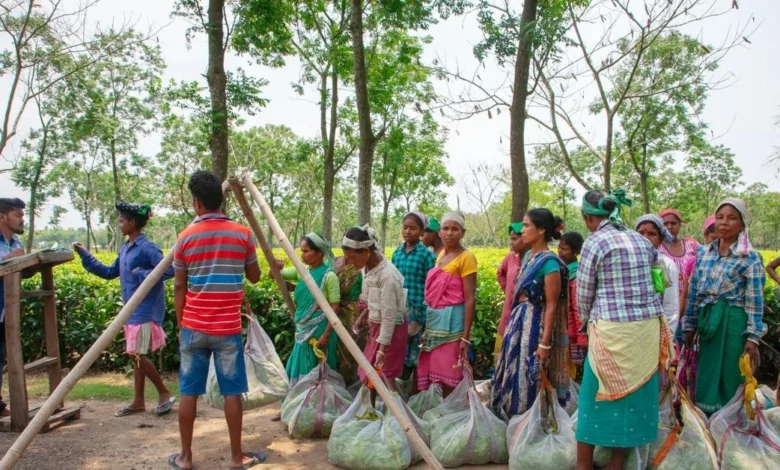
A cornerstone of BRAC’s current strategic vision is its ambitious commitment to reach nearly two million women smallholder farmers operating in highly climate-vulnerable zones. This demographic focus is neither incidental nor merely philanthropic; it is a structural necessity for effective climate governance.
Across much of the Global South, women constitute the backbone of agricultural production, animal husbandry, and household food security. They manage vital daily farming operations, seed selection, and post-harvest processing. Yet, systemic gender inequalities severely restrict their access to essential resources, including formal land titles, institutional credit, agricultural extension services, cooperative memberships, and technological tools.
This disparity magnifies their exposure to climate shocks while simultaneously suppressing the adaptation capacity of entire communities. When gender barriers are deliberately dismantled, the multiplier effect is profound. Studies in agricultural economics consistently demonstrate that when women farmers receive equitable access to climate-smart agricultural training, weather advisories, and financial instruments, overall farm productivity increases significantly. Furthermore, the resulting gains translate directly into improved household nutrition, higher educational retention for children, and enhanced community-wide resilience against subsequent environmental shocks.
BRAC’s model addresses these intersecting vulnerabilities by ensuring that outreach programs are specifically tailored to the operational realities of women. By providing targeted resources, peer-to-peer mentoring networks, and localized financial inclusion services, the initiative seeks to build enduring self-reliance rather than temporary dependency.
Fact-Based Analysis of Broader Implications and Future Outlook
The systemic challenges highlighted by BRAC’s operational model point toward necessary structural reforms within the broader international climate finance architecture. As global carbon emissions continue to test planetary boundaries, the international community has pledged tens of billions of dollars toward climate adaptation. However, historical disbursement patterns reveal persistent structural inefficiencies.
An overwhelming majority of global climate finance continues to flow through multilateral development banks and large international intermediaries, with only a fraction reaching local implementers and grassroots organizations. This centralized distribution model creates high administrative overheads, lengthy approval cycles, and a persistent disconnect between funder mandates and community-level needs.
BRAC’s localized framework offers a compelling empirical counter-model. By demonstrating that decentralized, community-vulnerable-led interventions achieve higher rates of adoption and long-term sustainability, the organization provides a blueprint for institutional reform. Funders and policymakers are increasingly forced to evaluate whether future capital allocations will continue to favor top-down mega-infrastructure projects or pivot toward flexible, localized adaptation funds managed directly by community-based entities.
Furthermore, as climate volatility accelerates globally—affecting not only traditional developing economies but increasingly impacting agricultural sectors in North America, Europe, and East Asia—the lessons of locally led adaptation hold universal relevance. No geographic region is entirely immune to the systemic failure of rigid agricultural systems confronted by rapid environmental shifts.
Ultimately, the work being pioneered on the front lines of climate vulnerability suggests that the ultimate success of global climate adaptation will not be measured solely by the sophistication of our technologies, but by the inclusivity of our institutions. The next generation of climate solutions will not be discovered exclusively in climate laboratories or corporate boardrooms; they are already being forged through the daily resilience, observational rigor, and collective ingenuity of communities living on the edge of change. For international development frameworks, the imperative is clear: the populations bearing the heaviest burdens of the climate crisis must no longer be treated as the final stop in a delivery chain, but as the foundational starting point for all global action.