Underground Fungal Networks Are Essential to Earth’s Survival and Require Urgent Global Conservation Protection

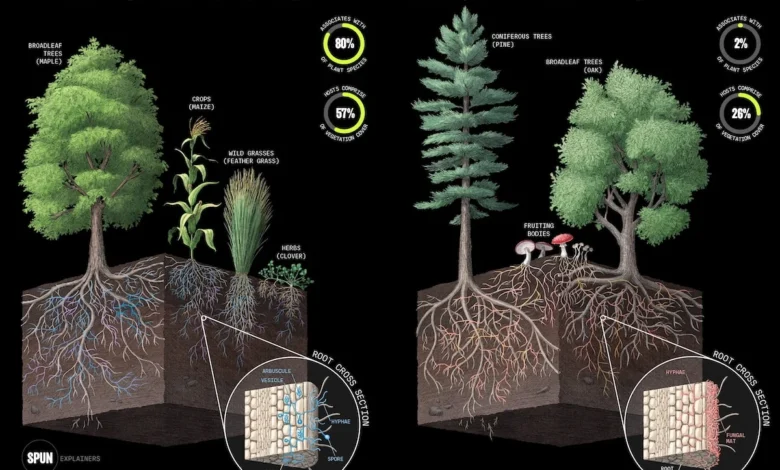
The hidden architecture of the planet is currently facing an existential threat that has, until recently, remained largely invisible to the human eye. Researchers from the Society for the Protection of Underground Networks (SPUN) have published a groundbreaking study in the journal Nature, revealing that the complex, subterranean fungal webs that sustain global ecosystems are severely under-protected. According to the study, 90 percent of the world’s most critical mycorrhizal fungi biodiversity hotspots reside in areas that lack any formal conservation status. This lack of protection poses a direct risk to global food security, carbon sequestration capacity, and the overall resilience of the biosphere in the face of rapid climate change.
The Role of Mycorrhizal Fungi in Planetary Health
Mycorrhizal fungi are far more than mere decomposers; they function as the planetary circulatory system. These fungi form symbiotic relationships with the vast majority of terrestrial plants, extending their reach through microscopic, thread-like structures known as hyphae. By weaving through the soil, these networks facilitate the exchange of essential nutrients—such as phosphorus and nitrogen—in return for carbon produced by plants via photosynthesis.
The scale of this operation is staggering. These organisms are responsible for drawing approximately 13 billion tons of carbon dioxide into the soil annually, an amount equivalent to roughly one-third of global annual fossil fuel emissions. Beyond their role as carbon sinks, they act as a biological defense system, shielding plants from pathogens and enabling them to withstand extreme weather events, including prolonged droughts and heatwaves. Without these networks, forest regeneration would falter, crop yields would plummet, and the structural integrity of topsoil would vanish.
Chronology of Discovery and Mapping
For centuries, scientific exploration has prioritized the visible world—mountains, oceans, and forests—while the soil remained a "black box." The realization that underground biodiversity could be mapped on a global scale is a relatively recent phenomenon, catalyzed by the rapid advancement of genetic sequencing and data processing.
The timeline of this shift in perspective began in earnest in 2021, when SPUN was officially launched with the ambitious goal of mapping the world’s fungal communities. Following three years of intensive data collection, researchers utilized a dataset of over 2.8 billion fungal sequences spanning 130 countries. This effort culminated in the development of the "Underground Atlas," a high-resolution, predictive modeling tool that allows scientists to visualize fungal richness and endemism for the first time. The publication of the Nature study in July 2025 marks the first large-scale application of this data, providing a concrete, evidence-based roadmap for environmental policymakers.

Supporting Data and Biodiversity Hotspots
The data presented by the research team highlights a profound mismatch between where fungal biodiversity is most concentrated and where conservation efforts are currently focused. Using their predictive models, the team identified specific hotspots of fungal richness, including the Guinean forests of West Africa, the temperate rainforests of Tasmania, and the Cerrado savanna in Brazil.
Crucially, the findings indicate that only 9.5 percent of these identified hotspots fall within existing protected areas. This "fungus blindness"—a term coined by researchers to describe the systemic oversight of fungi in conservation planning—has left the majority of these vital systems vulnerable to land-use change, deforestation, and industrial agriculture. With 450 million years of evolutionary history, these networks were the original engineers that allowed plants to colonize land and eventually support human civilization. The current rate of loss suggests that we are unraveling the very fabric that allows our current agricultural systems to function.
Perspectives from the Scientific Community
The implications of this study have drawn reactions from prominent voices in ecology and conservation. Dr. Toby Kiers, Executive Director of SPUN, emphasized that the failure to protect these networks is a failure to protect the future of the planet. "If we have healthy fungal networks, then we will have greater agricultural productivity, bigger and beautiful flowers, and can protect plants against pathogens," Kiers stated. She further noted that the shift from mapping mountains to mapping the soil is a necessary evolution in our understanding of planetary maintenance.
Dr. Merlin Sheldrake, Impact Director at SPUN, noted that these new maps are specifically designed to bridge the gap between abstract biological data and tangible policy. By providing tools that are accessible to lawyers, land managers, and climate strategists, the team hopes to normalize the inclusion of "underground biodiversity" in international climate accords.
The study has also garnered support from high-profile advisors and conservationists, including Jane Goodall, author Michael Pollan, and Fungi Foundation founder Giuliana Furci. Their involvement underscores the growing consensus that soil health must be elevated to a central pillar of global climate strategy, ranking alongside the protection of oceans and tropical rainforests.
Strategic Implications for Conservation and Restoration
The "Underground Atlas" is not merely a scientific repository; it is a utilitarian tool for decision-makers. As governments and NGOs seek to meet international biodiversity targets, such as the Kunming-Montreal Global Biodiversity Framework, these maps provide quantitative data that can inform where to establish new protected areas or create "underground corridors" that allow for the migration of fungal species.

For restoration managers, the data offers a new benchmark for success. Historically, reforestation efforts have often focused exclusively on planting trees, frequently failing because the soil was devoid of the necessary fungal partners required to support new growth. Dr. Alex Wegmann of The Nature Conservancy highlighted that these maps provide clear targets for what diverse, healthy mycorrhizal communities should look like in a given ecosystem, allowing for more precise and effective restoration practices.
The Path Forward: Safeguarding the Subterranean
As the international community grapples with the accelerating impacts of climate change, the protection of these fungal networks presents a clear, actionable opportunity. The "Underground Explorers" initiative, which currently involves nearly 400 scientists across 80 countries, continues to sample remote ecosystems in regions like Bhutan, Mongolia, and Ukraine. With only 0.001 percent of the planet’s surface sampled to date, the scope for discovery remains vast.
However, the speed of environmental degradation does not afford the luxury of patience. The findings from the Nature study serve as a stark warning: the underground, while resilient to natural cycles, is highly susceptible to human disruption. The conversion of biodiverse lands for intensive agriculture, the overuse of synthetic fertilizers that kill off beneficial fungi, and the fragmentation of landscapes all serve to weaken these ancient networks.
To mitigate these risks, the integration of fungal biodiversity data into environmental impact assessments must become the standard. If, as the researchers suggest, we are to ensure that underground biodiversity becomes as fundamental to decision-making as satellite imagery, then the global community must reorient its conservation priorities. Safeguarding the fungi that underpin our water cycles, food security, and carbon sequestration is not just an environmental imperative—it is a prerequisite for human survival in an increasingly volatile climate. As the data suggests, the future of the surface depends entirely on the stability of the world beneath our feet.