The resurgence of the rare Bundibugyo virus in the Democratic Republic of Congo (DRC) and neighboring Uganda has sounded a clarion call for a fundamental shift in how the global health community approaches pandemic readiness. While international attention has historically been monopolized by more frequent, high-profile pathogens like Ebola and Marburg, the current surge of this lethal filovirus demonstrates the precariousness of a system that often overlooks rare, yet catastrophic, infectious diseases. In a recent analysis published in the New England Journal of Medicine, Dr. Nancy Sullivan, a distinguished professor of biology and virology at Boston University, argues that the global response framework is dangerously skewed toward familiar threats, leaving significant gaps in the ability to contain emerging or re-emerging pathogens that do not follow predictable patterns of occurrence.
A Rare Relative of the Ebola Family
The Bundibugyo virus belongs to the Ebolavirus genus within the Filoviridae family—a group of viruses notorious for causing severe hemorrhagic fevers. Since its initial identification in the Bundibugyo District of western Uganda in 2007, the virus has remained relatively dormant, appearing only once more in a localized outbreak in the DRC in 2012. This long-standing absence from the global headlines led to a false sense of security, resulting in a lack of dedicated vaccine development and therapeutic research compared to its more infamous relative, the Zaire ebolavirus.
However, the current outbreak has shattered the assumption that this virus would remain a minor epidemiological footnote. As of the latest reporting by the World Health Organization (WHO) on June 11, the scale of the crisis has reached a critical threshold, with 695 confirmed cases and 138 confirmed deaths across the border regions of the DRC and Uganda. This trajectory signifies not only an increase in virulence but also a broader geographic reach, complicating the logistics of containment and heightening the risk of further cross-border transmission.
Chronology of the Crisis
The current health emergency gained momentum early in 2026, though experts suggest the virus had been circulating in rural, underserved communities for several weeks prior to formal detection. The sentinel event—the death of a nurse in a local medical facility—served as a grim catalyst, highlighting the profound vulnerability of healthcare workers who remain on the front lines of unknown infectious threats.
- Pre-2026: Bundibugyo virus was documented in only two major clusters (2007, Uganda; 2012, DRC), leading to limited international investment in rapid diagnostic assays or specific vaccines.
- Early 2026: Sporadic reports of unexplained hemorrhagic symptoms emerge in remote forest communities along the DRC-Uganda border.
- Late Spring 2026: A surge in mortality among healthcare workers triggers an investigation by local health authorities and international partners.
- June 2026: WHO formalizes the reporting of 695 confirmed cases, marking this as the most significant outbreak of the Bundibugyo species in recorded history.
The Diagnostic Bottleneck
One of the most persistent challenges in managing this outbreak is the inherent difficulty of early clinical diagnosis. The symptoms of Bundibugyo virus infection—fever, fatigue, muscle pain, and headache—are clinically indistinguishable from common endemic diseases such as malaria, typhoid fever, and yellow fever in their initial stages.
Dr. Sullivan’s analysis highlights that in the absence of rapid, point-of-care testing, medical staff are forced to treat patients empirically. By the time a patient presents with hallmark symptoms of hemorrhagic fever—such as internal and external bleeding, organ failure, and systemic inflammation—the window for effective supportive care and containment has often narrowed significantly. The reliance on centralized, distant reference laboratories creates a "diagnostic lag." In the DRC, where infrastructure remains a primary barrier, samples may need to be transported across hundreds of miles of difficult terrain. Each day lost to logistics is a day that the virus continues to propagate within households and hospitals.
The High Cost of Limited Infrastructure
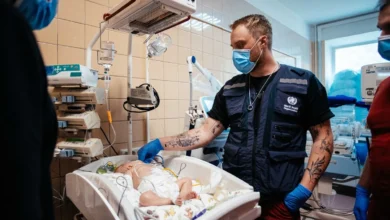
The virus spreads through direct contact with infected bodily fluids, making family members and hospital personnel the most vulnerable populations. The lack of stringent infection control measures—often due to a shortage of personal protective equipment (PPE) and isolation facilities—has allowed the virus to gain a foothold in clinical settings.
"Delays in specimen collection, transportation and testing can postpone confirmation by days or weeks," Sullivan notes. These delays effectively paralyze public health officials. Without a confirmed case, the machinery of contact tracing, quarantine, and isolation cannot be deployed with the necessary authority or precision. In communities where trust in the formal healthcare system is already fragile, these delays can further erode public compliance with isolation protocols, as citizens may perceive the intervention as either unnecessary or ineffective.
Rethinking Global Preparedness Strategies
The Bundibugyo crisis serves as a stark indictment of the "reactive" model of global health. For decades, the strategy has been to wait for an outbreak to reach pandemic potential before committing significant resources to research and development (R&D).
Dr. Sullivan advocates for a transition toward "proactive, broad-spectrum preparedness." This involves investing in medical countermeasures that target families of viruses rather than single species. While there is no currently licensed vaccine specifically for Bundibugyo, researchers have noted that vaccines designed for other filoviruses may provide cross-reactive immunity. However, relying on off-label or experimental applications is not a substitute for dedicated, localized, and scalable tools.
Furthermore, the operational aspect of preparedness must be overhauled. International cooperation during the current outbreak has been hindered by the complexities of navigating two separate national health systems. "Preparedness planning should extend beyond diagnostics, vaccines, and therapeutics to include operational readiness for multinational outbreak response," Sullivan emphasizes. This means pre-positioning assets, standardizing data-sharing agreements between neighboring nations, and ensuring that border health posts are equipped to act as the first line of defense.
Broader Implications for Global Security
The implications of the Bundibugyo outbreak extend far beyond the affected provinces in the DRC and Uganda. As global travel and trade networks continue to expand, the risk of a rare, high-consequence pathogen reaching international transit hubs becomes a statistical reality. If a virus with a high case-fatality rate—like Bundibugyo—can circulate undetected for weeks in one region, it is not unreasonable to assume it could do so in others.
The economic and social toll of such outbreaks is also profound. Beyond the direct mortality, the collapse of local markets, the disruption of agricultural production, and the strain on regional health systems create long-term instability. The current outbreak has necessitated the diversion of critical resources from other essential health services, such as routine immunization and maternal care, further exacerbating the health disparities in the region.
The Path Forward
To prevent the next "rare" outbreak from becoming a regional or global catastrophe, the global health community must adopt a more holistic view of epidemic intelligence. This includes:
- Strengthening Genomic Surveillance: Deploying portable, real-time sequencing technologies to remote regions to identify viral threats before they become outbreaks.
- Expanding Diagnostic Capacity: Moving away from centralized testing models toward decentralized, rugged, and easy-to-use diagnostic tools that can function in austere environments.
- Investing in "Platform" Technologies: Prioritizing the development of vaccines and therapeutics that can be rapidly adapted to treat multiple variants of a viral family, ensuring that the next "unexpected" pathogen is met with a ready-to-deploy response.
- Operational Integration: Creating permanent, multinational task forces that are authorized to respond across borders without the administrative friction that currently defines international aid efforts.
The Bundibugyo virus is a potent reminder that nature remains an unpredictable adversary. The current outbreak is not merely a tragedy of biology, but a failure of foresight. By continuing to prioritize only the most famous pathogens, the world leaves itself open to being blindsided by the "rare" viruses that, given the right conditions, have the capacity to claim thousands of lives and destabilize entire regions. As the situation in the DRC and Uganda continues to evolve, the international response must move beyond the delivery of immediate aid and toward the structural transformation of how we prepare for the unknown. The lesson of Bundibugyo is clear: in an interconnected world, the rare is no longer a peripheral concern, but a central pillar of global security.