Congo Basin at a Crossroads: Massive Oil and Gas Expansion Threatens 53 Percent of Democratic Republic of the Congo

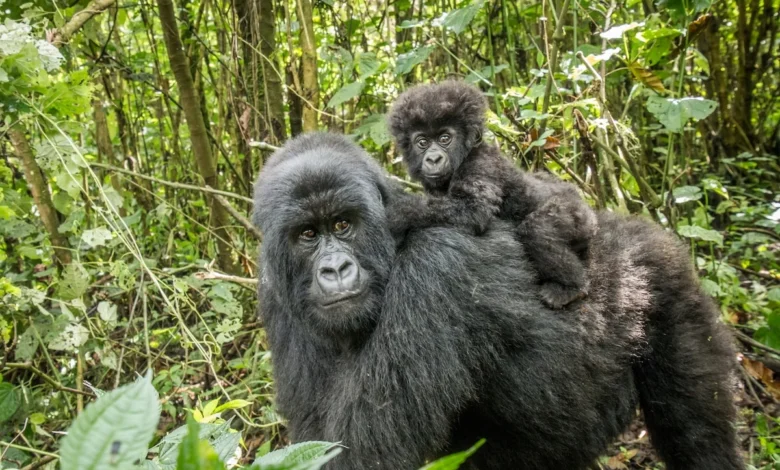
The Democratic Republic of the Congo (DRC) stands at a critical environmental juncture as the government moves to auction off more than half of its national territory for oil and gas exploration. According to a landmark report released by Earth Insight, titled "Forests to Frontlines: Oil Expansion Threats in the DRC," the government has initiated a licensing round for 52 new oil blocks. These concessions, when added to three previously awarded blocks, encompass 306 million acres of land. This massive industrial footprint puts at risk 64 percent of the country’s remaining pristine tropical forests, including vital habitats for endangered great apes and the world’s largest tropical peatland complex.
The scale of this expansion is unprecedented in the region, effectively signaling a pivot away from the country’s international commitments to climate mitigation and biodiversity conservation. The proposed oil blocks overlap with 20.5 million acres of officially protected areas, 21.3 million acres of designated Key Biodiversity Areas, and 165.1 million acres of intact tropical forest. Perhaps most alarmingly, 72 percent of the recently established Kivu-Kinshasa Green Corridor—an initiative designed to promote ecological connectivity and sustainable development—is now slated for potential drilling.
A Chronology of Escalating Environmental Risk
The current crisis did not emerge in a vacuum; it follows a calculated trend of fossil fuel prioritization that began gaining momentum in 2022.
- 2022: The Initial Push: The Congolese government launched a controversial auction for 30 oil and gas blocks. This move immediately sparked international outcry, as many of these blocks overlapped with the Cuvette Centrale peatlands and protected national parks, such as Salonga National Park, a UNESCO World Heritage site.
- 2023: Diplomatic Strains: Throughout 2023, international conservation groups and local NGOs pushed for the cancellation of these licenses, citing the catastrophic risk of oil spills and the subsequent deforestation required for infrastructure, such as pipelines and access roads.
- 2024: The Kivu-Kinshasa Corridor: The government attempted to balance its international reputation by promoting the Kivu-Kinshasa Green Corridor, intended to be a flagship model for sustainable land use.
- 2025: The Current Expansion: The latest licensing round effectively undermines the integrity of the aforementioned corridor. By opening 52 additional blocks, the government has moved to secure rights over 53 percent of the country’s landmass, dwarfing the 2022 efforts and signaling a broader, more systemic intent to extract hydrocarbons despite global pressure to transition to renewable energy.
The Ecological Significance of the Congo Basin
To understand the severity of this development, one must consider the global role of the Congo Basin. As the second-largest tropical rainforest on Earth, the basin acts as a "second lung" for the planet, sequestering carbon dioxide at a rate that is essential for stabilizing global temperatures.
Central to this ecosystem is the Cuvette Centrale. This vast peatland complex stores an estimated 30 gigatons of carbon—roughly equivalent to three years of total global fossil fuel emissions. If these peatlands are disturbed by drilling activities, the potential for a massive carbon release is immense. The disruption of the water table, the removal of vegetation for site construction, and the inevitable pollution from drilling fluids threaten to turn this critical carbon sink into a carbon source, a scenario that would be devastating for international efforts to meet the Paris Agreement targets.
Beyond the carbon balance, the region is a sanctuary for unique species. Mountain gorillas, eastern lowland gorillas, and bonobos depend on the stability of these forests. Habitat fragmentation caused by industrial infrastructure often leads to increased poaching, as roads built for heavy machinery provide hunters with easier access to previously inaccessible, remote forest interior.
Socioeconomic Impacts and the Human Dimension
While the government argues that oil extraction is necessary for economic development and poverty alleviation, the human cost of these auctions is significant. An estimated 39 million people reside within the boundaries of the proposed oil blocks. These include Indigenous communities and local forest-dwelling groups whose survival is inextricably linked to the health of the rivers and the forest ecosystem.
"Imagine: 39 million Congolese people and 64 percent of our forests could be directly affected by the awarding of these oil blocks," said Pascal Mirindi, campaign coordinator for the organization Notre Terre Sans Pétrole (Our Land Without Oil). "Where is the logic? Where is the coherence? We are reminding our leaders that the Congolese people are the primary sovereign. We will not remain silent while certain people organize themselves to sell off our future."

The conflict between state-level economic planning and community-level land rights highlights a fundamental breakdown in transparency. Critics point out that the decision-making process for these auctions has largely excluded the very people who will be forced to bear the brunt of environmental degradation. Without a seat at the table, these communities face the potential loss of their traditional livelihoods, cultural heritage, and clean water sources.
Institutional Responses and International Implications
The international community, including conservation organizations like Rainforest Foundation UK and the Coalition des Organisations de la Société Civile pour le Suivi des Reformes et de Action Publique (CORAP), has called for an immediate cessation of the 2025 licensing round. The consensus among these groups is that fossil fuel development in such a fragile, carbon-dense ecosystem is fundamentally incompatible with the 21st-century requirements for environmental stewardship.
Anna Bebbington, a research manager at Earth Insight, noted that the expansion is not merely a regional issue but a global one. "Oil and gas development in these fragile ecosystems would have devastating impacts on biodiversity, communities, land rights and the global fight against climate change," Bebbington stated.
The contradiction in the DRC’s policy—promoting green corridors on one hand while auctioning off the same land for oil exploration on the other—has drawn sharp criticism from global climate advocates. It raises questions about the credibility of the DRC’s international climate commitments and its eligibility for future international climate finance, which is often contingent upon the protection of tropical forest assets.
Analytical Outlook: The Path Forward
The situation in the Democratic Republic of the Congo serves as a microcosm for the global struggle between resource extraction and planetary health. While the government maintains a sovereign right to develop its natural resources, the "Forests to Frontlines" report highlights that this specific development path is fraught with long-term risks that likely outweigh short-term economic gains.
Financial analysts often warn that fossil fuel investments in such ecologically sensitive, high-risk regions can become "stranded assets" as global energy markets shift toward cleaner alternatives. If the DRC moves forward with these contracts, it risks locking its economy into a sunset industry while simultaneously destroying the natural capital that could otherwise support sustainable tourism, carbon credit markets, and ecosystem services.
For the international community, the challenge lies in providing viable alternatives. If the DRC is to forgo the revenue associated with oil and gas, there must be meaningful, large-scale support for sustainable development that respects the rights of the 39 million people living on the frontlines of this conflict. Transparency, the inclusion of civil society in governance, and a re-evaluation of the current licensing rounds are the necessary first steps toward preserving one of the most vital ecological systems left on Earth.
The coming months will likely see increased pressure from both local activists and global environmental bodies. Whether the government of the DRC will yield to these calls or continue on its current trajectory remains to be seen, but the outcome will undoubtedly have lasting implications for global biodiversity and the trajectory of the climate crisis.