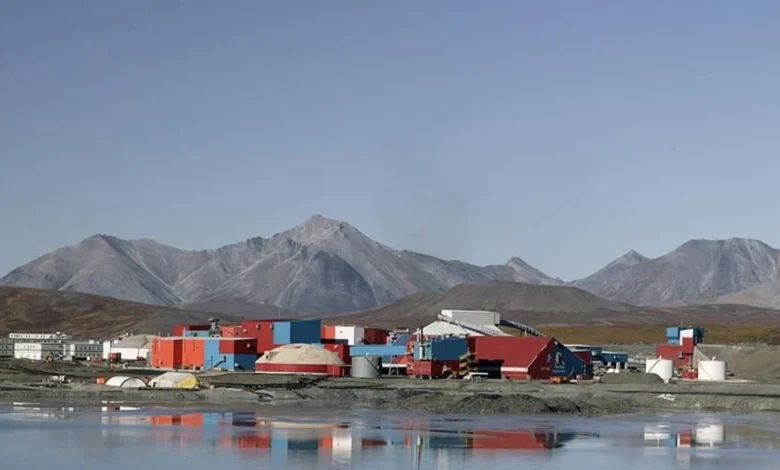
Deep in the rugged wilderness of northwest Alaska, roughly 105 miles north of the Arctic Circle, one of the world’s largest zinc mining operations is preparing for a significant energy transition. The Red Dog Mine, an industrial titan that currently relies entirely on massive diesel generators to sustain its round-the-clock operations, is set to integrate a pioneering renewable energy infrastructure. The Alaska Energy Authority’s board of directors has unanimously approved a nearly $5 million loan from its Power Project Fund to help finance a state-of-the-art 8.8-megawatt (MW) solar farm coupled with advanced battery energy storage.
The initiative marks a critical turning point for remote industrial power generation in extreme northern climates. While solar power in the Arctic presents unique seasonal challenges—ranging from 24 hours of darkness in mid-winter to continuous daylight during the summer months—advancements in photovoltaic efficiency and battery storage technology have made such projects increasingly viable. The upcoming installation is slated to become the largest operating solar farm in the state of Alaska, fundamentally altering the energy profile of an enterprise historically bound to fossil fuels.
Project Logistics, Funding, and Timeline
The broader infrastructure undertaking carries an estimated price tag of $35 million. Tugliq Red Dog 1, the entity responsible for the development, has been tasked with building, owning, and operating the solar array and its associated storage facilities. Once operational, the facility will sell the generated electricity directly to Teck Alaska, the primary operator of the Red Dog Mine.
Financial backing for the venture received a crucial boost when the Alaska Energy Authority board authorized a loan approaching $5 million through the state’s established Power Project Fund. According to state loan review documents, initial site preparation and groundwork began in June, initiating a multi-year construction timeline. Project developers and state officials anticipate that the solar array and its accompanying battery infrastructure will be fully completed, tested, and brought online by October 2028.
The chosen location for the array spans approximately 30 acres of rugged terrain. Plans dictate the installation of more than 15,000 high-efficiency solar panels designed to withstand the harsh environmental conditions characteristic of the Brooks Range region. The land itself is owned by NANA, an Iñupiat-owned Alaska Native corporation, reflecting a collaborative approach to resource development and modern energy integration in the region.

Operational Realities and Energy Demands at Red Dog Mine
To understand the significance of an 8.8 MW solar installation, one must examine the staggering energy consumption required to keep the Red Dog Mine functional. The facility currently burns approximately 40,000 gallons of diesel fuel every single day. This heavy reliance on fossil fuels generates the vast amount of electricity needed to power extraction machinery, processing plants, administrative facilities, and workforce housing.
During the peak operational months of summer, the mine’s energy demands surge. At times, the facility draws such massive amounts of electricity from its on-site diesel generators that operators are forced to curtail power usage in non-essential areas across the site to avoid overloading the system. The introduction of the 8.8-megawatt solar farm, paired with an 8.8 MW, 15 megawatt-hour (MWh) battery storage system, will provide a vital buffer during these high-demand periods.
The battery storage component is particularly critical for managing energy loads. During the height of the Arctic summer, when the sun remains above the horizon for weeks on end, the solar panels will generate abundant clean energy. The 15 MWh storage capacity will allow excess daytime generation to be captured and dispatched during periods of peak operational stress or when weather conditions temporarily reduce solar output.
State Projections and Transition Dynamics
According to official state projections, the solar and battery storage project will initially cover approximately 5% of the zinc mine’s total electricity needs under its current operational configuration. While a 5% offset might appear modest against the colossal daily diesel consumption of the facility, the long-term strategic value of the project extends far beyond active mining operations.
Teck Resources, the parent company, indicates that the mine’s existing identified mineral deposits are expected to support active extraction and processing operations through 2031. Concurrently, the company is actively studying the feasibility of developing two nearby mineral deposits. Should those expansions move forward and secure final approval, the state estimates that the solar and battery installation would account for roughly 3% of the expanded operation’s increased electricity demand.

However, the true long-term utility of the renewable installation becomes most apparent when looking past the eventual closure of the mine. Once commercial mineral extraction ceases, the electricity demand at the site will drop precipitously. Despite the cessation of mining and milling activities, the location will require sustained power supplies for mandatory environmental cleanup, site remediation, and long-term water treatment operations. During this post-mining phase, the solar and battery system will play a dominant role, capable of covering approximately 90% of the site’s annual electricity requirements. This transition will drastically reduce the logistical burden and financial expense of hauling millions of gallons of diesel fuel to a remote Arctic location just to power environmental stewardship duties.
Economic and Environmental Implications
The integration of utility-scale solar and storage at the Red Dog Mine highlights a broader trend across industrial sectors in high-latitude and isolated regions. Historically, remote mines, military installations, and remote communities in Alaska and Northern Canada have been entirely dependent on "diesel loops"—expensive, logistically vulnerable supply chains that require fuel to be barged or trucked in during brief seasonal windows.
By substituting a portion of this diesel consumption with localized renewable generation, operators can insulate themselves against the volatility of global fossil fuel prices and reduce the carbon intensity of mineral production. Zinc is a critical metal used heavily in galvanization to prevent rust, as well as in the manufacturing of various brass and bronze alloys and modern battery technologies. As global demand for critical minerals grows in tandem with the clean energy transition, finding ways to mine these resources more sustainably has become a paramount priority for producers.
Furthermore, the project serves as a proving ground for renewable energy durability in extreme climates. Cold-weather solar installations often benefit from the fact that photovoltaic panels operate more efficiently at lower temperatures, provided they are engineered to withstand heavy snow loads, high wind speeds, and severe freeze-thaw cycles. The performance data gathered from the Red Dog installation over the coming decades will likely inform future microgrid designs for other remote industrial and municipal applications throughout the circumpolar north.
Broader Context within U.S. Energy Storage Growth
The Red Dog solar and battery project coincides with an unprecedented expansion of energy storage infrastructure across the United States. Recent market data indicates that total cumulative U.S. battery storage capacity has officially surpassed the monumental milestone of 200 gigawatt-hours (GWh). This nationwide surge in grid-scale and industrial-scale storage is driven by the rapid deployment of intermittent wind and solar resources, which require robust storage backstops to maintain grid reliability and stability.

While the vast majority of this 200 GWh capacity is concentrated in lower-latitude states with dense populations and extensive transmission grids—such as California, Texas, and the desert Southwest—projects like the one at Red Dog demonstrate that energy storage is equally vital at the absolute geographic fringes of the nation. In remote microgrids where traditional grid interconnectivity is impossible, combining solar generation with advanced lithium-ion or alternative battery chemistries offers a reliable pathway toward energy independence and operational resilience.
Conclusion and Future Outlook
As site preparation continues under the supervision of Tugliq Red Dog 1 and Teck Alaska, all eyes in the regional energy sector will remain fixed on the progress of the installation. With construction scheduled to wrap up in the fall of 2028, the project will soon transition from planning blueprints to physical reality on the Arctic tundra.
By shaving peak loads, curbing thousands of gallons of daily diesel consumption, and securing a reliable, long-term power source for post-mining environmental remediation, the initiative establishes a new operational benchmark for Arctic resource extraction. The Red Dog Mine’s venture into utility-scale solar and battery storage proves that even in the most remote and demanding environments on Earth, the transition toward cleaner, more resilient energy systems is not only possible, but economically and operationally advantageous.