Biological Mystery Solved: Scientists Uncover How the Immune System Protects Healthy Tissue from Inflammatory Damage

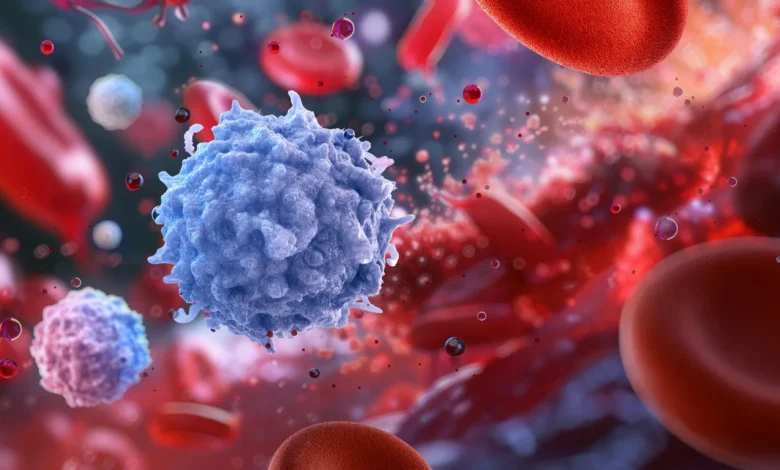
For more than three decades, the scientific community has been puzzled by a biological paradox: how does the immune system launch a devastating chemical attack on pathogens without simultaneously destroying the very healthy tissue it is sworn to protect? A groundbreaking study from the Memorial Sloan Kettering Cancer Center (MSK), published October 7 in the journal Nature, has finally provided the answer. By identifying a long-sought enzyme and mapping its function, researchers have discovered that the same molecular signaling pathway responsible for calling immune cells to the front lines of infection also acts as a sophisticated biological shield, protecting healthy cells from "friendly fire."
This discovery marks the culmination of a quest that began in 1992, when researchers at McGill University first identified a fatty signaling molecule known as 5-oxoETE. This molecule, a key component of the body’s inflammatory response, acts as a chemical beacon to guide white blood cells toward sites of injury or infection. While its role in triggering inflammation was clear, the genetic identity of the enzyme responsible for regulating this process remained an enigma for over 30 years.
A Three-Decade Scientific Enigma
In the early 1990s, scientists were able to observe the enzyme’s activity—its ability to synthesize and break down 5-oxoETE—but they lacked the genetic map to pinpoint its origin. Without identifying the specific gene, researchers were effectively blind, unable to manipulate the pathway in a controlled environment to understand its implications in disease. This missing genetic data became a significant hurdle in immunology and cell biology.
The breakthrough at MSK was spearheaded by Yanan Ma, PhD, a postdoctoral researcher at the Sloan Kettering Institute, who utilized a systematic genetic screening approach. By working with cultured human cells and methodically disabling candidate genes, Dr. Ma identified the elusive culprit: the gene DHRS7. Once this gene was silenced, the associated enzyme activity ceased, confirming that DHRS7 was the missing link researchers had been searching for since the early 1990s.
The Zebrafish Advantage
The success of the MSK team was largely attributed to their strategic shift away from traditional rodent models. While mice and rats account for the vast majority of biomedical research due to their high genetic similarity to humans—sharing approximately 80% of their genome—they proved inadequate for this specific study.
"Mice and rats are the primary model used in biomedical research, and in most cases, that works perfectly well," says Dr. Ma, a 2023 Marie-Josée Kravis WISE Fellow. "However, mice lack the specific immune cell receptor capable of recognizing 5-oxoETE. Because that receptor is absent in rodents, the entire signaling pathway is essentially broken. You cannot study a mechanism that doesn’t exist in your model."
Zebrafish, conversely, possess the intact biological machinery required for 5-oxoETE signaling. By leveraging this model, the MSK team was able to observe the pathway’s function in a living, breathing organism, leading to the startling realization that the pathway was not merely an alarm system, but a dual-purpose protective mechanism.
The Paradox of Inflammation
The research gained significant momentum through the work of Miklos Lengyel, MD, PhD, who was simultaneously investigating colitis in zebrafish. Dr. Lengyel’s findings provided the "eureka" moment that bridged the gap between basic biochemistry and clinical pathology.
When Dr. Lengyel removed the receptor for 5-oxoETE in his zebrafish models, he expected a reduction in inflammation, as the immune system’s "call to action" was effectively severed. Instead, he observed the opposite: the fish developed spontaneous and severe intestinal inflammation, even in the absence of any external infection.
"If you remove the receptor that detects the signal, you’d expect less inflammation, not more," Dr. Lengyel notes. "It made absolutely no sense at first. I had to run the experiment using multiple, rigorous methodologies before I was convinced that the pathway was not just initiating inflammation, but also suppressing the collateral damage that usually accompanies it."
The Immune System’s Hidden Shield
The study revealed that the 5-oxoETE pathway functions as a regulatory checkpoint. When immune cells arrive at a site of infection, they release reactive, toxic substances to neutralize bacteria. This is a high-stakes form of "chemical warfare." The 5-oxoETE pathway ensures that the healthy, neighboring cells are equipped with protective measures—specifically by activating NUDIX hydrolase enzymes. These enzymes work to scrub away the metabolic "trash" and damaged DNA building blocks that accumulate during intense inflammatory responses.
When the pathway is disabled, these healthy cells are left defenseless against the stress of their own immune system’s defense mechanisms. Consequently, the cells die, which then triggers a secondary wave of inflammation. This explains why the removal of an "inflammatory" signal resulted in even greater tissue destruction.
"As it turns out, this signal isn’t just an alarm; it’s also a shield," says Philipp Niethammer, PhD, lead investigator of the laboratory. "The organism has evolved a truly elegant way to balance the need to kill pathogens with the absolute requirement to preserve the integrity of healthy tissue."
Broader Implications for Human Health
The identification of DHRS7 and its role in the 5-oxoETE pathway has immediate and profound implications for clinical research, particularly in the fields of oncology and autoimmune diseases.
In human biology, mutations in DHRS7 and OXER1—the human receptor for 5-oxoETE—have been observed in patients with various gastrointestinal and uterine cancers. Furthermore, lower levels of 5-oxoETE have been linked to poorer clinical outcomes in patients suffering from Inflammatory Bowel Disease (IBD).
The potential for therapeutic intervention is significant. If researchers can find ways to "turn up" or stabilize this protective pathway, they may be able to increase the resilience of healthy tissues in cancer patients. For example, enhancing this signaling mechanism could theoretically protect the gut lining during the harsh physical toll of radiation therapy or chemotherapy, potentially reducing the severity of common, debilitating side effects.
A Multi-Stress Integration Model
The research also touched upon the physical aspects of cellular injury. Doctoral student Zaza Gelashvili, a co-author of the study, highlighted how the body integrates mechanical and metabolic stress. In a related study published in Nature Communications, Gelashvili demonstrated that physical trauma to a cell membrane releases arachidonic acid, the precursor to 5-oxoETE.
This confirms that the body uses a unified signaling system to interpret different types of danger. Physical injury, metabolic stress, and infection are not treated as isolated events; rather, the DHRS7-mediated pathway acts as an integrator, consolidating these inputs into a single, coordinated response that manages the tradeoff between defense and preservation.
Future Directions
While the discovery is monumental, the team remains cautious. "More research is needed, but there’s a possibility that activating the pathway could increase the resilience of the gut to oxidative stress," Dr. Lengyel says.
The next phase of investigation will likely involve testing these findings in more complex human-derived organoid models. The goal is to determine whether synthetic activators of the 5-oxoETE pathway can safely dampen the collateral damage seen in chronic conditions like asthma or IBD without interfering with the immune system’s ability to clear actual infections.
As the medical community digests these findings, the work serves as a reminder of the complexity of human biology. What was once seen as a straightforward "on-switch" for inflammation is now understood to be a nuanced, protective regulatory system. By solving a 30-year-old mystery, the researchers at MSK have not only rewritten a chapter of immunology textbooks but have also opened a new door for potential treatments in cancer, inflammatory diseases, and beyond. The findings underscore the importance of foundational, curiosity-driven science in identifying the mechanisms that keep the human body in a constant state of delicate, life-sustaining equilibrium.