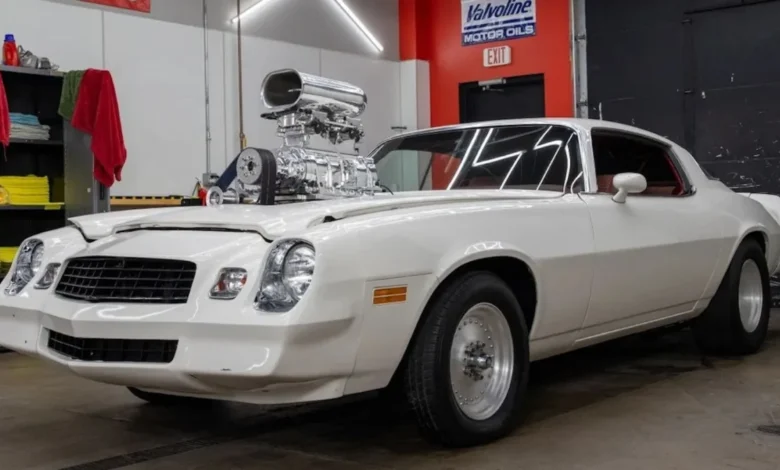
The second-generation Chevrolet Camaro stands as a definitive icon of the American automotive landscape, marking a pivotal transition from the sharp-edged, aggressive styling of the 1960s to the more fluid, European-influenced aesthetics that dominated the late 1970s. While the platform was initially designed to compete directly with the Ford Mustang, it eventually evolved into a canvas for extreme engineering, culminating in high-performance variants like the ZL1. However, beyond the factory-sanctioned performance tiers, the Camaro has long served as a primary vessel for the American "restomod" and drag-racing subcultures. A prime example of this extreme evolution is currently capturing attention on the auction platform Bring a Trailer: a 1978 Camaro Type LT that has been transformed from a modest cruiser into a 543-cubic-inch supercharged beast.
A Chronology of the Second-Generation Evolution
The second-generation Camaro, produced from 1970 to 1981, represented a significant departure from the original F-body architecture. During this era, General Motors shifted its design philosophy toward a lower, wider stance. By 1978, the model had undergone several cosmetic updates, including the introduction of integrated bumpers and a more refined front fascia. In its stock configuration, the 1978 Type LT was equipped with a 350-cubic-inch small-block V8, producing a modest 170 horsepower.
The vehicle currently under auction serves as a stark rebuttal to those factory-rated power figures. Acquired by its current owner in 2005, the car underwent a comprehensive mechanical overhaul that essentially stripped away its grand-touring aspirations in favor of raw, straight-line performance. The project represents a nearly two-decade-long evolution, prioritizing displacement and forced induction over the original vehicle’s factory specifications.
Engineering the Beast: Under the Hood
The centerpiece of this modification is an enormous 543-cubic-inch big-block V8 engine. To ensure the intake of massive volumes of air, the builder integrated a polished 8-71 Roots-style supercharger, topped with an unmistakable "bug catcher" intake that protrudes through a custom-cut hood. This configuration is not merely for aesthetic bravado; it is a mechanical statement of intent.
Supporting the forced-induction system are Brodix RFD aluminum cylinder heads, which provide the structural integrity necessary to handle the increased compression and heat. Fuel delivery is managed by Holley Sniper EFI throttle bodies, modernizing the engine’s performance while maintaining the classic look of a roots-blown setup. The exhaust gasses are evacuated through a custom side-exit system, a choice that further signals the vehicle’s departure from street-legal refinement toward a dedicated, albeit unconventional, drag-strip aesthetic.
Power is transferred to the rear wheels via a GM Turbo Hydra-Matic 400 (TH400) three-speed automatic transmission. While purists often favor manual gearboxes for driver engagement, the TH400 is legendary in the drag racing community for its robustness and ability to handle high-torque applications. The driver utilizes a Hurst Quarter Stick shifter, emphasizing the vehicle’s functional transition toward a dedicated track-use profile.
Chassis Dynamics and Safety Considerations
The modifications extend well beyond the engine bay. To manage the immense power output, the vehicle is equipped with a Positraction limited-slip differential, ensuring that both rear wheels provide traction under load. The suspension setup has been augmented with CalTracs traction bars, a staple in the drag-racing community designed to prevent wheel hop and improve launch consistency. Up front, the vehicle features lowering springs, and the braking system has been upgraded to discs at all four corners, a necessary addition given the car’s vastly increased power-to-weight ratio.
Despite these performance-oriented upgrades, the vehicle presents a curious paradox regarding safety. In an era where high-performance builds are typically accompanied by roll cages, multi-point racing harnesses, and fire-suppression systems, this Camaro remains largely minimalist. The interior appears largely consistent with its original era, save for the presence of a fire extinguisher mounted in the passenger footwell. This lack of a roll cage or professional-grade safety restraints suggests that the vehicle, while mechanically capable of high-speed runs, occupies a unique space between a show car and a track machine, requiring a measured approach from any potential operator.
Broader Implications: The Market for Custom Muscle
The auction of this 1978 Camaro highlights a recurring trend in the automotive secondary market: the valuation of heavily modified "pro-street" vehicles. As the original manufacturer-built muscle cars continue to appreciate in value—often becoming inaccessible to the average enthusiast—the market for highly customized, non-original builds has expanded.
Data from the Bring a Trailer auction shows a current bid of $10,000, a figure that reflects the specialized nature of the build. Unlike "numbers-matching" classics that are prized for their historical provenance, this Camaro is valued based on the cost of its components and the labor involved in its fabrication. The absence of verified dyno numbers or official quarter-mile times has become a focal point of discussion among potential bidders, illustrating the demand for empirical performance data in the modern collector market.
The Cultural Significance of the Camaro
The Chevrolet Camaro remains a cultural touchstone in the United States. Historically, it was the primary antagonist to the Mustang, and its impact on American car culture is reflected in its prevalence in media and its high rate of theft—a phenomenon that saw the ZL1 variant cited as being significantly more prone to theft than the average consumer vehicle.
This specific 1978 model, with its unapologetic "in-your-face" styling, represents the pinnacle of the 2000s-era "over-the-top" modification culture. By opting for a towering supercharger and a hood-mounted intake, the builder effectively eliminated the possibility of blending into traffic. It is a vehicle designed for a specific sub-segment of enthusiasts who value the aggressive, loud, and visceral experience of a big-block engine over the comfort and subtlety of a stock restoration.
Analysis of the Build’s Future
As the auction progresses, the vehicle faces a market that is increasingly sophisticated. Collectors today look for documentation, build sheets, and safety certifications. The owner’s decision to maintain the vehicle without a roll cage or racing harness limits its utility for sanctioned drag strip events, effectively categorizing it as an exhibition or "cars and coffee" vehicle.
However, the quality of the components—specifically the 543-cubic-inch block and the Brodix heads—suggests a level of investment that exceeds the current bid. For a buyer looking for a starting point to build a competitive drag machine, the foundation provided by the TH400 transmission and the reinforced rear end offers significant value. Conversely, for a casual enthusiast, the vehicle offers an immediate, high-impact presence that is difficult to replicate without years of fabrication work.
The story of this 1978 Chevrolet Camaro Type LT is a testament to the enduring appeal of the F-body platform. Whether it is being used for track performance or as a conversation piece in a garage, the vehicle serves as a reminder of the era when mechanical excess was the ultimate goal of automotive modification. As Chevrolet moves toward an electric future, the market for these gasoline-guzzling, supercharged relics is likely to remain robust, driven by enthusiasts who prioritize the raw, analog experience of a high-displacement engine.
Ultimately, this build serves as a bridge between the factory designs of the late 1970s and the extreme performance expectations of the 21st-century car community. While it may not possess the refinement of a modern performance vehicle, it succeeds in its primary mission: to command attention and deliver a driving experience that is as loud and forceful as its appearance suggests. Potential buyers will need to balance the thrill of the 543-cubic-inch engine against the realities of maintaining such a specialized machine, but one thing remains certain: in the world of high-performance muscle, this Camaro is anything but subtle.
Related posts: