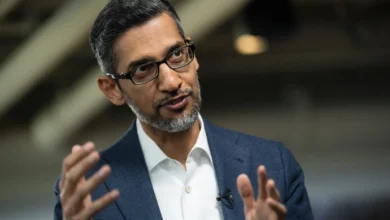
Microsoft CEO Satya Nadella Predicts AI Agents Will Fundamentally Reshape Internet Economics and Advertising Models


The economic architecture of the modern internet stands at a profound precipice as artificial intelligence transitions from an assistant tool into autonomous agents capable of navigating, transacting, and interacting on behalf of human users. Speaking before an audience of industry leaders, policymakers, and journalists at The New York Times DealBook Summit, Microsoft Chief Executive Officer Satya Nadella delivered a sweeping forecast regarding the future of the digital economy. According to Nadella, the rise of sophisticated AI agents will fundamentally disrupt the traditional "human web," rendering legacy business models built around ad-supported traffic, eyeball aggregation, and directory portals increasingly obsolete.
The remarks arrive at a critical juncture in the evolution of artificial intelligence. As foundational models mature into agentic systems—software that does not merely answer queries but executes multi-step workflows, books travel, negotiates purchases, and manages digital tasks autonomously—the foundational plumbing of the internet is being forced to adapt. Nadella’s thesis suggests that the economic value chain, long dominated by companies that monetize human attention through banner advertisements and search engine optimization, will shift toward transactional efficiency, programmatic cost-per-click mechanisms, and platforms that readily interoperate with autonomous software agents.
The Evolution of the Web: From Portals to Search, and Now to Agents
To understand the magnitude of the shift predicted by the Microsoft chief, it is instructive to examine the historical transformations that have previously defined the commercial internet. In the late 1990s and early 2000s, the web was governed by portals such as Yahoo, AOL, and MSN. These platforms acted as digital gateway keepers, organizing directories of websites and capturing user attention through curated content, email services, and early banner advertising. The primary economic engine was real estate: commanding the user’s homepage meant commanding ad revenue.
The advent of algorithmic search engines, spearheaded by Google, dismantled the portal era. Instead of navigating a curated directory, users relied on targeted queries to find precise information. This shift created an entirely new multi-billion-dollar advertising ecosystem centered on search engine marketing (SEM) and search engine optimization (SEO). Companies fought fiercely for top-ranking organic and paid search placements, paying aggregators for the privilege of routing human eyeballs to their digital storefronts.
Now, Nadella argues, the industry is poised for a third structural transformation: the transition from the human-centric web to the agentic web. In this emerging paradigm, humans will increasingly delegate digital interactions to software agents. Instead of a human user opening a browser, navigating to a retail site, comparing prices across five tabs, reading reviews, and manually entering credit card information, an AI agent will execute these tasks in milliseconds, operating via application programming interfaces (APIs) or direct browser automation.
Consequently, the entities that have historically profited from human browsing habits—such as content publishers relying on programmatic display ads and aggregator sites that serve as middle-men—will face severe economic pressure. "The current aggregators who have a business model which was for the human web will get, in some sense, reshuffled," Nadella stated during the summit. "And if you were monetizing ads because of the eyeballs, you now have to probably get down to essentially maybe CPC wins; maybe it’s more transactional."
The Battleground Over Access: Wall Gardens Versus Open Ecosystems
As AI agents grow more capable, a fierce corporate battle is already brewing over whether these autonomous programs should be permitted to access proprietary digital real estate. The friction between platform protectionism and agentic interoperability highlights a central dilemma for modern tech giants: how to protect proprietary ecosystems and monetization funnels while remaining relevant in an automated world.
A prime case study in this emerging conflict involves retail giant Amazon. Recently, reports have highlighted Amazon’s aggressive measures to block third-party AI agents from scraping its product catalogs, querying its inventory, and executing transactions on behalf of users. For a company that generates substantial revenue from on-site advertising, sponsored product placements, and direct customer engagement, allowing an AI agent to bypass the user interface—and potentially steer shoppers toward cheaper alternatives elsewhere—represents a direct threat to its core business model.
Nadella warned that companies attempting to erect artificial barriers against AI agents do so at their own peril. By insulating legacy business models from technological progress, established firms risk creating strategic vulnerabilities that agile competitors can exploit. He pointed to alternative e-commerce frameworks, such as Shopify, as examples of platforms that might embrace agentic integration, thereby capturing market share from walled gardens that stubbornly lock their doors to automation.

"I think this is going to be interesting," Nadella remarked, addressing the strategic tension between incumbent defense and innovation. "It’s the same thing that’s happening in other categories, right? Which is, if you’re in love with a particular business model, you have to kind of scramble… And so if you don’t accept the agent, somebody else will."
Economic Implications for Publishers, Advertisers, and Platforms
The economic fallout of an agent-driven internet extends far beyond retail, touching every sector that relies on digital distribution and monetization. For digital publishers, news organizations, and content creators, the implications are profound. For decades, the implicit social contract of the web has been straightforward: publishers produce content, search engines and social media networks aggregate traffic, and humans view the pages, thereby exposing themselves to advertisements that fund the journalism and entertainment.
If AI agents begin answering user queries directly—synthesizing information from across the web and presenting a unified response without requiring the user to visit the source website—the traditional traffic-to-ad-revenue pipeline breaks down. This phenomenon, often referred to as "zero-click searches" on steroids, threatens to starve content creators of the web traffic necessary to sustain their operations.
To survive, publishers and platforms will likely need to negotiate new commercial frameworks with AI developers, ranging from licensing agreements and micropayment APIs to revenue-sharing models tied to agent-led transactions. Rather than competing for human eyeballs, digital properties may find themselves optimizing their backend infrastructure to be easily readable, parsable, and transacted with by automated software agents.
Furthermore, the advertising industry will be forced to reinvent its measurement metrics. Traditional key performance indicators such as impressions, viewability, and click-through rates were designed for human psychology—designed to catch a wandering eye or entice a curious click. An AI agent, however, is immune to emotional appeals, striking imagery, and persuasive copywriting. Agents operate on logic, pricing parameters, delivery timelines, and programmatic efficiency. Consequently, ad tech will need to evolve from persuasion engineering to algorithmic optimization, where brands market directly to the preferences programmed into consumer agents.
Strategic Positioning in the AI Era
Nadella’s commentary at the DealBook Summit underscores Microsoft’s aggressive positioning in the artificial intelligence landscape. Through its multi-billion-dollar partnership with OpenAI, Microsoft has sought to embed agentic capabilities across its entire product portfolio, from Windows and Office 365 to Azure cloud infrastructure and the Bing search engine. By championing the agentic web, Microsoft is strategically leaning into a future where traditional search and browser monopolies—particularly those held by competitors like Google—are fundamentally disrupted.
Other technology titans are navigating similar calculations. Apple has introduced Apple Intelligence, focusing heavily on on-device agentic workflows designed to maintain user privacy while executing cross-app tasks. Google is racing to integrate generative AI and autonomous capabilities into its search and Android ecosystems while carefully balancing its enormous advertising revenue streams. Meanwhile, open-source developers and independent startups are rapidly deploying agent frameworks that bypass corporate gatekeepers entirely.
Conclusion: Adapting to the Agentic Horizon
The transition from a human-driven internet to an agent-driven internet represents the most significant structural evolution in digital commerce since the commercialization of the World Wide Web. As Satya Nadella articulated, legacy business models anchored in human attention metrics and walled-garden aggregators are facing an inevitable reckoning.
Companies that embrace openness, API-driven interoperability, and transactional efficiency will likely define the next era of digital prosperity. Conversely, those that attempt to freeze time by locking out autonomous agents risk finding themselves marginalized by an ecosystem that moves faster, operates autonomously, and answers to algorithms rather than human browsing habits. As the technological foundations of the internet continue to shift, businesses across all sectors must reevaluate their strategies, ensuring they are prepared to conduct commerce not just with human consumers, but with the intelligent software agents that represent them.