Rivian CEO RJ Scaringe Confirms Upcoming R3 Crossover Will Be Materially Cheaper Than R2 With R4 Set to Push Prices Even Lower


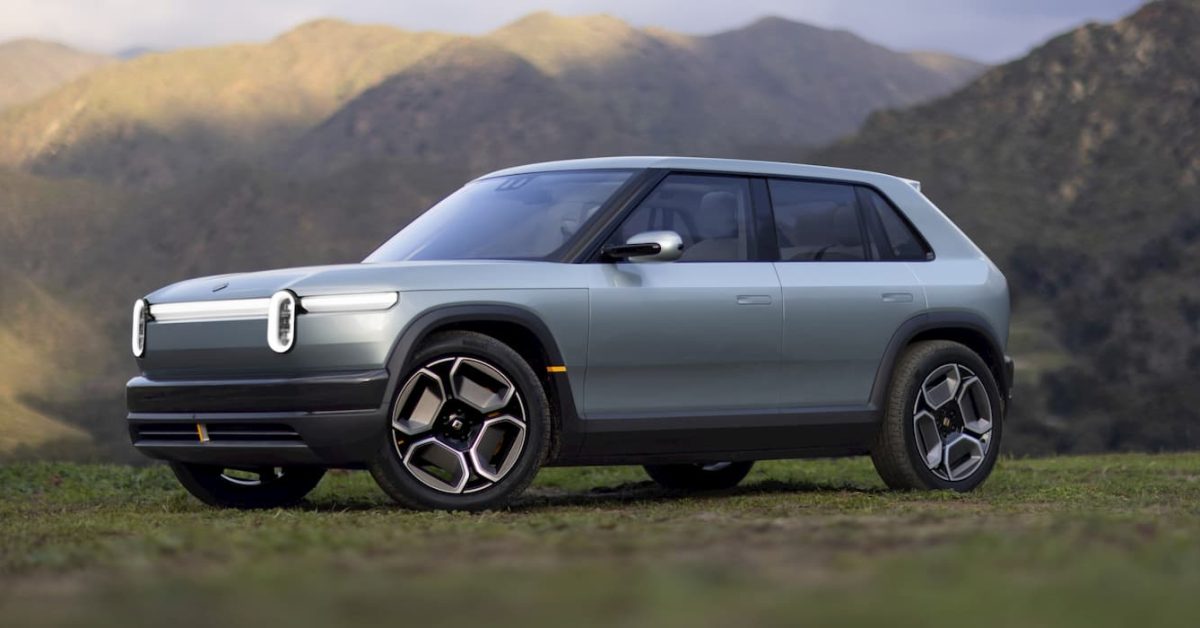
Rivian Automotive is charting a clear trajectory toward the mainstream electric vehicle market, with company leadership confirming that upcoming additions to its product portfolio will significantly lower the barrier of entry for consumers. In a recent comprehensive interview with major media outlets, Chief Executive Officer RJ Scaringe outlined the automaker’s long-term pricing strategy, revealing that the highly anticipated R3 crossover will debut at a price point "materially lower" than the R2 SUV. Furthermore, Scaringe indicated that a subsequent model, tentatively designated as the R4, will compress vehicle pricing even further as the company expands its manufacturing footprint and achieves greater supply chain economies of scale.
While specific pricing figures for the R3 have not yet been officially finalized or released to the public, Scaringe’s comments provide the clearest indication to date regarding Rivian’s roadmap. The company intends to systematically transition its vehicle lineup from luxury-tier adventure vehicles toward the absolute heart of the global automotive market, mirroring the proven lifecycle strategies employed by early pioneers in the electric vehicle sector.
The Evolution of Rivian’s Pricing Strategy: From Flagship to Volume Production
To understand the strategic significance of the R3 and the forthcoming R4, it is necessary to examine Rivian’s foundational business model. When the company initially entered the market, it deployed a traditional "top-down" product development playbook. Launching with the high-end R1T pickup truck and R1S SUV, Rivian established its brand identity, engineering capabilities, and product reliability in the premium segment.
However, as an unproven startup entering an industry dominated by legacy manufacturers, Rivian faced severe early-stage disadvantages. Without established procurement volume or long-standing supplier relationships, the company lacked commercial leverage. Industry analysts note that during the initial rollout of the R1 platform, Rivian was forced to absorb substantial premiums—sometimes estimated at 40 to 50 percent above standard supplier pricing—just to secure necessary components.
Over the years, that dynamic has experienced a fundamental reversal. As Rivian has scaled its operations, improved its manufacturing prowess, and demonstrated sustained market demand, supply chain executives have actively sought out partnerships with the automaker. This maturation has provided Rivian with the financial flexibility and structural leverage required to engineer and manufacture smaller, more cost-effective vehicles without compromising on safety or technological innovation.
Unpacking the R2 Baseline and the R3 Timeline
The discussion surrounding affordability introduces a layer of complexity when evaluating Rivian’s current catalog. Public perception often frames the upcoming R2 SUV as a $45,000 vehicle, a figure frequently cited in market analyses. However, a closer examination of Rivian’s rollout schedule reveals a phased introduction of trim levels and pricing tiers.
When Rivian detailed the comprehensive R2 lineup, the initial phase prioritized higher-end variants. The Performance launch edition, carrying a price tag of $57,990, was scheduled as the vanguard of the release. This is followed by the Premium variant at $53,990, the Standard Long Range model at $48,490, and finally, the base Standard Rear-Wheel Drive (RWD) variant priced at $45,000.
Because the R2 pricing spans a considerable range, Scaringe’s assertion that the R3 will be "materially lower" than the R2 requires contextualization. Previous statements from the CEO have pointed toward an expected pricing window in the mid-to-high $30,000 range for the R3. This strategic positioning would place the compact crossover squarely in direct competition with mass-market crossovers, significantly expanding Rivian’s total addressable market.
However, consumers eagerly awaiting the R3 must exercise patience. Rivian has slated the production of the R3 for its upcoming manufacturing facility located in SKD, Georgia. Groundbreaking for the multibillion-dollar facility took place in late 2025, with commercial production currently targeted to commence in 2028. The facility is meticulously designed to achieve an eventual annual production capacity of 400,000 units spread across two distinct operational phases, serving as the industrial backbone for both the R2 and R3 vehicle lines.

Meanwhile, the R4 remains in the preliminary conceptual phase. Scaringe has previously indicated that the R4 and R5 are envisioned as sibling vehicles that will utilize an entirely new, next-generation platform. Because dedicated engineering teams have not yet been assigned to these far-term projects, the R4 currently represents a strategic pricing direction rather than a vehicle with a definitive production timeline.
Financial Momentum and Current Market Performance
Rivian’s strategic pivot toward affordability comes at a crucial juncture in the company’s financial maturation. The commercial introduction of the R2 platform has already begun delivering tangible operational results, providing the revenue momentum necessary to sustain long-term capital-intensive infrastructure projects like the Georgia manufacturing plant.
Following the commencement of R2 deliveries, Rivian upwardly revised its full-year delivery guidance, projecting between 65,000 and 70,000 total vehicle deliveries—a substantial increase compared to the roughly 42,000 units delivered in the previous fiscal year. Despite this positive volume growth, the company continues to navigate transitional financial headwinds as it scales production lines. Financial disclosures indicate an anticipated adjusted EBITDA loss ranging between $1.8 billion and $2 billion for the current fiscal year, underscoring the immense capital expenditures required to transition from a boutique luxury manufacturer to a high-volume global automaker.
Industry analysts observe that Rivian’s current financial trajectory bears strong similarities to the historical growth path of other pure-play electric vehicle manufacturers. By establishing brand equity and high margins with flagship products before aggressively scaling downmarket, the company has managed to build a resilient foundation capable of withstanding macroeconomic pressures, fluctuating interest rates, and intensifying global competition.
Broader Market Implications and Competitive Landscape
The introduction of vehicles priced in the $35,000 to $45,000 bracket represents a vital milestone for the broader adoption of electric mobility in North America. While the luxury EV segment has experienced steady growth, mass-market saturation has historically been hindered by high initial purchase prices, limited charging infrastructure, and macroeconomic uncertainty affecting consumer financing.

By systematically introducing the R2, followed by the lower-priced R3 and eventually the R4, Rivian is positioning itself to capture a diverse demographic of consumers who desire zero-emission transportation without the financial commitment of a luxury-tier purchase. This multi-tiered product strategy allows the company to insulate itself against market fluctuations in specific segments while building long-term brand loyalty among younger and more budget-conscious buyers.
Furthermore, as the United States automotive market continues to navigate regulatory shifts, domestic manufacturing incentives, and evolving consumer preferences, the presence of a robust, independent American EV manufacturer provides a stabilizing competitive force. Unlike legacy automakers that must simultaneously manage complex internal combustion engine supply chains alongside fledgling EV divisions, dedicated electric vehicle manufacturers retain the agility required to pivot rapidly in response to technological breakthroughs and shifting market demands.
Fact-Based Market Analysis and Outlook
The long-term success of Rivian’s downmarket expansion hinges on several critical operational factors. First and foremost is the timely and efficient construction of the Georgia manufacturing facility. Any delays in plant commissioning or supply chain disruptions could impact the projected 2028 timeline for the R3, potentially leaving a gap in the company’s product cadence.
Additionally, manufacturing efficiency and battery cost reductions will dictate whether Rivian can achieve profitability at lower price points. As battery chemistry continues to evolve—with the broader industry shifting toward lithium-iron-phosphate (LFP) cells and advanced structural pack designs—the cost per kilowatt-hour is projected to decline steadily over the remainder of the decade. These technological efficiencies will be paramount in ensuring that vehicles priced in the mid-$30,000 range can be manufactured profitably.
Ultimately, Rivian’s methodical approach—transitioning from high-margin halo vehicles to high-volume mass-market crossovers—demonstrates a mature understanding of modern automotive economics. If the company successfully executes its manufacturing roadmap in Georgia and maintains rigorous cost discipline, the rollout of the R3 and R4 could cement Rivian’s status as a permanent, profitable pillar of the global electric vehicle ecosystem.