Chronic Absenteeism Stalls Academic Recovery as National Attendance Trends Face Dangerously Slowing Improvement

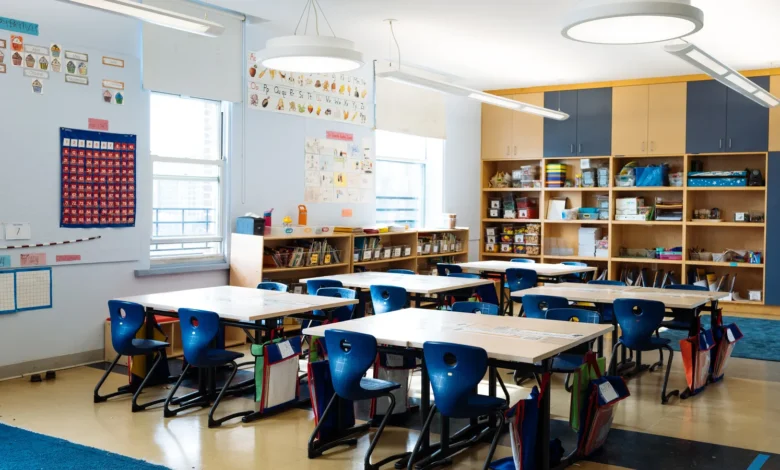
The correlation between physical presence in the classroom and academic achievement has never been more starkly illustrated than in the wake of the COVID-19 pandemic. According to recent research from NWEA and the American Enterprise Institute (AEI), consistently high rates of chronic absenteeism have become the primary anchor dragging down efforts to restore student proficiency to pre-pandemic levels. While the initial years following the return to in-person learning showed some promise of a return to normalcy, new data suggests that the momentum for attendance recovery is "slowing dangerously," creating a permanent "new normal" of empty desks that threatens the educational trajectory of millions of American students.
The findings, released in mid-2026, highlight a bifurcated recovery process. While school districts across the country have invested billions in federal relief funds toward tutoring, summer school, and curriculum overhauls, these interventions are rendered largely ineffective when students are not present to receive them. The NWEA analysis, which examined MAP Growth data for grades 3-8 across 2,000 U.S. school districts, reveals that academic achievement in 2024 remained significantly below 2019 averages, with absenteeism serving as the most reliable predictor of a district’s failure to rebound.
The Deceleration of Attendance Gains
According to the AEI’s Return to Learn tracker, the initial urgency to return to school has plateaued. After chronic absenteeism peaked in 2022—a year in which nearly 30% of K-12 students were missing at least 10% of the school year—the rate of improvement has diminished annually. In 2023, the national rate declined by approximately 3 percentage points. This was followed by a 2 percentage point drop in 2024 and a meager decline of less than 1 percentage point in 2025.
By the 2024-25 school year, the chronic absenteeism rate across 39 states and the District of Columbia remained stalled at 23%. This figure is a far cry from the pre-pandemic baseline of 2018 and 2019, when only about 15% of students were chronically absent. The data suggests that the "culture of attendance" has undergone a fundamental shift, with families and students increasingly viewing school attendance as optional or less critical than it was a decade ago.
Nat Malkus, senior fellow and deputy director of Education Policy Studies at AEI, warns that without a concerted national effort, the education system may inadvertently accept these high rates as the status quo. Malkus notes that it would take a monumental cultural shift—similar in scale to the one caused by the pandemic itself—to return to the attendance norms seen just seven years ago. The concern is that if these trends are not reversed, the education system will have effectively normalized half of the pandemic-related increase in absenteeism.
A Timeline of the Absenteeism Crisis
To understand the current crisis, one must look at the trajectory of student engagement over the last eight years:
- 2018–2019 (The Baseline): Approximately 15% of public school students were chronically absent. Education policy focused primarily on "truancy" as a disciplinary issue rather than "absenteeism" as a systemic health and engagement issue.
- 2020–2021 (The Disruption): The pandemic forced a shift to remote and hybrid learning. Attendance tracking became inconsistent, but disengagement began to take root as students struggled with technology gaps and social isolation.
- 2022 (The Peak): As schools fully reopened, chronic absenteeism skyrocketed to 28.5%. This was driven by a combination of continued health concerns, a breakdown in school-going habits, and increased mental health challenges among youth.
- 2023–2024 (The Stagnation): Despite the sunsetting of many COVID-19 protocols, absenteeism remained stubbornly high. Districts began to notice that academic recovery was directly tied to how many days students spent in the classroom.
- 2025–2026 (The Warning): Data confirms that the rate of improvement is slowing. Federal ESSER (Elementary and Secondary School Emergency Relief) funds have largely been exhausted, leaving districts with fewer resources to fund home-visit programs and attendance officers.
The Disproportionate Impact on High-Poverty Districts
The NWEA research highlights a troubling equity gap in the recovery process. The study found that for low-poverty districts, academic recovery did not vary significantly based on absenteeism levels. These districts often have more resources—such as private tutoring, highly educated parents, and stable internet access—to supplement learning when a child misses school.
However, for high-poverty districts, the story is radically different. High-poverty districts with high absenteeism rates were found to be 40% further from recovery in mathematics compared to districts that maintained high attendance throughout the pandemic. This "math gap" is particularly concerning because mathematics is a cumulative subject that relies heavily on sequential classroom instruction. Unlike reading, which can be reinforced through everyday activities and home environments, math proficiency is almost entirely dependent on formal schooling.
Sofia Postell, a research analyst at NWEA and co-author of the study, emphasized that these findings provide a clearer picture of why post-COVID recovery has been so uneven. "While educators have long understood that attendance matters, these findings add to our understanding of the complexities of academic recovery post-COVID," Postell stated. She urged districts to integrate attendance data directly into their academic recovery plans, treating absenteeism not just as a logistical hurdle, but as a core academic deficit.

Defining the Thresholds of Absence
Part of the challenge in addressing the crisis is the varying definitions of what constitutes "missing school."
- Chronic Absenteeism: The standard definition used by most states and the AEI is missing 10% of the school year—roughly 18 days—for any reason, including excused and unexcused absences.
- High Chronic Absenteeism: NWEA uses a more stringent metric, defining high chronic absenteeism as missing at least 20% of the school year, or nearly 40 days of instruction.
- Consistently High Absenteeism: This classification applies to districts that reported high chronic absenteeism rates across three consecutive post-pandemic years (2022, 2023, and 2024).
The NWEA report suggests that it is this last category—districts where high absence has become "baked into" the system—that faces the most significant risk of long-term academic decline.
The "50% Challenge" and Official Responses
In response to the alarming data, advocacy groups and policy organizations have launched a national call to action. Attendance Works, EdTrust, and AEI have challenged states and districts to set a formal goal of cutting their 2022 chronic absenteeism rates in half by the year 2027.
As of mid-2026, 18 states have formally adopted this target. These states are implementing a variety of strategies, including:
- Early Warning Systems: Using data dashboards to identify students who miss just two or three days in the first month of school, which is a high predictor of chronic absence later in the year.
- Relational Home Visits: Moving away from punitive measures and instead sending teachers or counselors to homes to build relationships with families and identify barriers to attendance (such as transportation or chronic illness).
- Public Awareness Campaigns: Re-educating parents on the cumulative impact of "just a few days" of missed school.
- Incentive Programs: Creating school environments that students want to attend, focusing on extracurricular activities, mental health support, and peer connectivity.
Broader Implications and the Long-Term Outlook
The implications of sustained chronic absenteeism extend far beyond the classroom. Education experts warn of a "lost generation" of students who may enter the workforce without the foundational skills necessary for high-growth industries. There is a documented correlation between chronic absenteeism in middle and high school and lower graduation rates, higher rates of involvement with the criminal justice system, and lower lifetime earnings.

Furthermore, the "dangerously slow" recovery of attendance suggests that schools are fighting a battle against a shifting social contract. The pandemic proved that "school" can happen anywhere, but the data proves that for the vast majority of students, it only works when it happens in person.
"It will take substantial, sustained effort to accelerate improved attendance to avoid normalizing or accepting half of the pandemic-related increase in absenteeism over the long term," wrote Malkus. He argues that the current effort is not enough; districts must treat the attendance crisis with the same level of urgency as they would a natural disaster or a budgetary collapse.
As school boards and state legislatures look toward the 2027 deadline for the "50% Challenge," the focus must remain on the most vulnerable populations. The NWEA’s finding that high-poverty districts are 40% further from math recovery due to absences serves as a roadmap for where resources must be deployed. Without targeted intervention in these specific communities, the academic gaps exacerbated by the pandemic may never close, leading to a permanent widening of the achievement gap in the United States.