From Boys Prep School to Environmental Pioneer: The Rise, Fall, and Rebirth of Vermont’s Sterling College

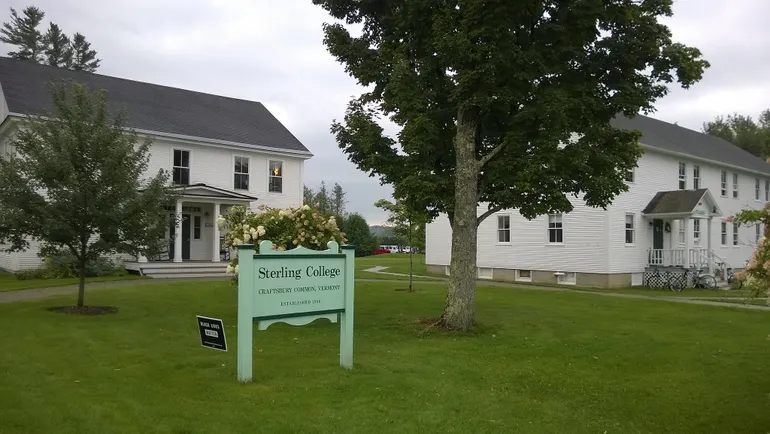
The closure of higher education institutions across the United States has accelerated over the past decade, driven by demographic shifts, economic pressures, and changing student preferences. Among the casualties of this modern academic landscape is Sterling College, a unique environmental institution nestled within the Green Mountains of Craftsbury, Vermont. After officially concluding its final academic term in the spring of 2026, the college shuttered its doors following years of post-COVID enrollment declines and insurmountable financial headwinds. However, rather than fading completely into history, the legacy of Sterling College is currently undergoing a remarkable transformation, with stakeholders and community organizations working vigorously to resurrect its distinctive educational model through a newly proposed institute.
Main Facts of the Closure
Sterling College operated as a private, nonprofit institution with a deeply focused mission: to advance ecological thinking and action through affordable experiential learning. For decades, it stood as a rare example of a "work college," one of only ten federally recognized institutions in the United States requiring resident students to dedicate significant hours to manual labor as a core component of their curriculum. In its final years, students were required to complete 80 hours of work per semester, seamlessly integrating campus farm management, food preparation, and ecological restoration into their daily studies.
Despite its unique pedagogical approach, the college succumbed to severe economic vulnerabilities. By the fall of 2024, institutional enrollment plummeted to a meager 57 students—down significantly from historical norms that typically hovered around 150 students. Operating with thin financial margins and a cash reserve of less than $2 million, the college could no longer sustain the heavy administrative overhead required to maintain accreditation, financial aid operations, and campus infrastructure for such a minute student body. In November 2025, leadership officially announced that the institution would close following the spring 2026 term, putting up its historic campus real estate and sprawling 300-acre holdings on the open market.
A Chronological History: From the Northeast Kingdom to Environmental Higher Ed
The institutional history of Sterling College spans nearly seven decades, evolving through distinct eras defined by regional and national educational shifts.
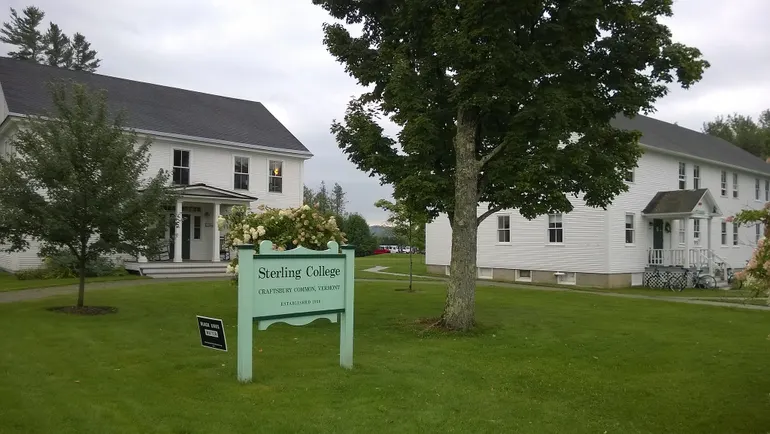
1958 to Early 1970s: The Preparatory School Era
The institution originated in 1958 as a boys’ preparatory school located in Vermont’s remote Northeast Kingdom. Students during this era wore coats and ties, studied traditional subjects such as French, history, and mathematics, and participated in rigorous outdoor expeditions. By the early 1970s, however, the prep school faced a deep financial and demographic decline, with enrollment dropping below 20 students.
Mid-1970s to 1983: The Grassroots Transition
Anticipating demographic shifts as the Baby Boomer generation moved past K-12 schooling, educational leaders intervened to pivot the failing school toward higher education. William Manning was recruited to lead the Grassroots Project in 1974, introducing a one-year environmental and outdoor curriculum that utilized the rural Vermont landscape as an active laboratory.
1983 to 2023: Establishment and Evolution as a College
Sterling officially became a two-year degree-granting institution in 1983, later expanding to offer bachelor’s degrees. Throughout this period, the college cemented its identity around physical work and wilderness exploration. Programs like "Bounder"—a rigorous winter expedition requiring students to navigate snowshoes and build makeshift shelters—became legendary hallmarks of the student experience. In 2023, in a preemptive bid to streamline operations against mounting financial pressures, the college consolidated its academic offerings into a single major focused exclusively on environmental studies.
2024 to 2026: The Final Decline and Shuttering
Pandemic-era travel restrictions severely damaged recruitment efforts, as prospective students could not easily visit the remote Vermont campus. Consecutive years of double-digit enrollment drops culminated in a fall 2024 headcount of just 57 students. Unable to secure a merger or external partnership, the board of trustees voted to close the institution after the spring 2026 semester.
Supporting Data and Demographic Realities
Sterling College’s trajectory offers a classic case study of the structural vulnerabilities facing small liberal arts colleges during the ongoing "demographic cliff." According to data from the Western Interstate Commission for Higher Education (WICHE), the population of high school graduates in the Northeast fell by 4% between 2012 and 2024, dropping to 612,000. Furthermore, WICHE projects that Vermont will experience a steep 15% decline in high school graduates by 2041 compared to 2023 levels.
These macro-trends exposed the fatal flaw in Sterling’s operating model: a complete lack of financial buffers and economies of scale. Higher education consultants note that while large universities easily absorb minor fluctuations in student enrollment, tiny institutions face existential threats when even a handful of students choose elsewhere. Between 2021 and 2023 alone, Sterling’s enrollment tumbled by 38.1%, falling to 78 students before dropping further to 57 in 2024.
Operating costs remained disproportionately high. Maintaining compliance, federal financial aid distribution, and institutional accreditation demands identical fixed administrative expenses whether a college serves 57 students or 5,000. With an operating surplus of just over $300,000 in fiscal year 2023 and minimal cash reserves, the college lacked the capital necessary to pivot toward digital infrastructure—a strategy that successfully saved other niche institutions like Unity Environmental University in Maine through massive online enrollment growth.
Official Responses and Stakeholder Perspectives
College leadership and affiliated educators have been candid regarding the external pressures that forced the closure, while simultaneously emphasizing their pride in the institution’s historical impact.
"Our size has been definitely a weakness in some ways, where we’ve had to do all the same things that a normal institute of higher education has to do," remarked Seth Hayden, the college’s former director of operations, highlighting the unsustainable burden of carrying institutional compliance costs for fewer than 100 students.
Laura Spence, who served as dean of academics starting in 2018, pointed out the inherent financial realities of running an intensive, hands-on agricultural program. "There’s not much money to be made in outdoor, experiential education," Spence noted, emphasizing that virtual campus visits during pandemic lockdowns were wholly inadequate for conveying the tactile, place-based value of a remote Vermont education.
Hannah Rushing, the former director of advancement, explained that while multiple higher education institutions expressed initial interest in partnerships or satellite campus models, the broader economic climate made potential suitors overly risk-averse. "We heard from all the schools it wasn’t the right time for them," Rushing stated. "It was a challenging external environment."
Broader Impact, Implications, and the Path to Rebirth

The closure of Sterling College carries significant implications for rural New England communities, where small colleges frequently serve as critical economic anchors, cultural hubs, and major local employers. The sudden wind-down required complex logistical maneuvers, notably the relocation of the campus livestock—including 18 ewes, 15 lambs, 80 egg-laying hens, and two cows—that formed the literal and figurative foundation of the campus agricultural curriculum.
However, the story of Sterling College does not end with a locked gate. In a testament to the resilience of its academic community, former administrators, faculty, and local leaders have aggressively moved to preserve its educational ethos. William Manning and other key stakeholders have spearheaded the creation of the Sterling Institute for Conservation and Community Leadership. This nascent organization aims to pivot away from traditional tuition-dependent models by housing self-sustaining commercial and educational enterprises—such as regional food service programs and environmental restoration hubs—that generate income while training young people in conservation and the trades.
Crucially, the physical campus may soon find new life. In September, the Headwaters Community Trust signed a purchase and sale agreement for the Sterling campus, with final due diligence and acquisition expected to close by the end of the year. Headwaters has publicly signaled its intention to collaborate with former Sterling faculty and staff interested in establishing new educational programming on the property.
As traditional higher education continues to reckon with shifting demographics and economic realities, the shuttering of Sterling College serves as both a cautionary tale and a blueprint for reinvention. While traditional metrics declare the college closed, its architects and advocates remain defiant. As William Manning summarized: "The story I want to emerge from this is the launch of the institute. All the statistics on the colleges that are closing, especially small colleges—well, guess what: This one isn’t."