Deepest Known Animal Colony Discovered in Mariana Trench Challenges Understanding of Life in Earth’s Hadal Zones

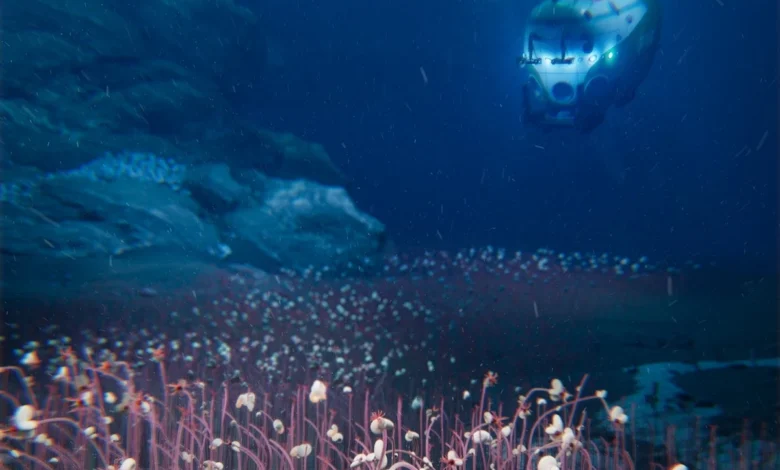
A team of international researchers led by the Chinese Academy of Sciences has announced the discovery of the deepest and most extensive animal communities ever recorded on Earth. Located nearly six miles beneath the ocean’s surface within the Mariana Trench and other hadal zones, these thriving colonies of mollusks and worms exist in total darkness, sustained not by sunlight, but by a complex chemical process known as chemosynthesis. The findings, published in the journal Nature, provide a radical new perspective on the resilience of life and the biological diversity of the planet’s least explored environments.
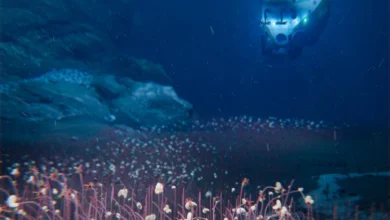
The discovery was made during a series of expeditions utilizing the Fendouzhe (Striver), a state-of-the-art manned submersible capable of reaching the ocean’s deepest points. Researchers identified thousands of organisms, including siboglinid polychaetes (tubeworms) and bivalve mollusks, living at depths ranging from 3.6 to 5.92 miles (approximately 5,800 to 9,500 meters). These communities represent a significant departure from previous scientific assumptions, which often characterized the deepest parts of the ocean as desolate, "alien" landscapes with minimal biomass.
The Fendouzhe Expeditions: A Chronology of Discovery
The breakthrough is the result of intensive deep-sea exploration conducted throughout 2024 and 2025. The Fendouzhe submersible, operated by the Institute of Deep-sea Science and Engineering (IDSE), completed 23 successful dives into the Mariana Trench alone. The mission’s primary objective was to map the seafloor and collect biological and geological samples from the "hadal zone"—the region of the ocean deeper than 6,000 meters.
During these descents, the crew navigated the western Pacific’s Mariana Trench, as well as the Kuril–Kamchatka Trench and the western Aleutian Trench. The timeline of the discovery highlights a steady progression of findings:
- Early 2024: Initial dives in the Kuril–Kamchatka region identified high concentrations of methane-rich fluids along tectonic fault lines.
- Mid-2024: The Fendouzhe began focused biological sampling in the Mariana Trench, identifying the first clusters of large bivalve colonies.
- Late 2024 – Early 2025: Isotopic analysis of water and sediment samples confirmed that these communities were sustained by microbially produced methane.
- July 2025: The full findings were compiled and published, documenting a continuous belt of chemosynthetic life spanning over 1,550 miles (2,500 kilometers) across multiple trench systems.
The Science of Survival: Chemosynthesis in the Hadal Zone
The primary significance of this discovery lies in the mechanism of survival for these deep-sea organisms. In the upper layers of the ocean, the food web is driven by photosynthesis, where sunlight provides the energy for plants and phytoplankton to convert carbon dioxide into organic matter. However, at depths of six miles, sunlight is nonexistent.
Instead, the newly discovered communities rely on chemosynthesis. This process involves the oxidation of inorganic molecules, such as hydrogen sulfide or methane, to produce energy. The study revealed that the communities are situated near faults where tectonic activity allows fluids rich in hydrogen sulfide and methane to seep through the sediment.
"These communities are sustained by hydrogen sulfide-rich and methane-rich fluids that are transported along faults traversing deep sediment layers," the researchers noted in their report. Isotopic analysis further suggested that the methane in these regions is produced microbially from organic matter deposited over millennia, creating a self-sustaining "vibrant oasis" in what was previously thought to be a desert-like environment.
The diversity of life observed was unexpected. Beyond the dominant tubeworms and clams, the researchers recorded:
- Siboglinid Polychaeta: Tubeworms reaching lengths of up to one foot, often clustering around snow-like microbial mats.
- Bivalvia: Large mounds of clams and other mollusks.
- Mobile Invertebrates: Free-floating marine worms, spiky crustaceans, and various species of sea cucumbers and sea lilies.
Challenging Historical Perceptions of the Deep
The discovery stands in stark contrast to previous accounts of the Mariana Trench. In 1960, the Trieste bathyscaphe made the first manned descent to the bottom of the trench, but the brief duration of the stay limited biological observation. In 2012, filmmaker and explorer James Cameron reached the Challenger Deep in the Deepsea Challenger submersible, famously describing the environment as "desolate" and "very lunar."
While Cameron’s observations were accurate for the specific site he visited, the Fendouzhe missions suggest that life in the trenches is not uniform. The presence of life appears to be dictated by geological features—specifically, the presence of faults that act as conduits for chemical energy.

Mengran Du, a marine geochemist with the Institute of Deep-sea Science and Engineering and a co-author of the study, emphasized that the abundance of life was the most shocking factor. "What makes our discovery groundbreaking is not just its greater depth—it’s the astonishing abundance and diversity of chemosynthetic life we observed," Du stated. "Unlike isolated pockets of organisms, this community thrives like a vibrant oasis in the vast desert of the deep sea."
Implications for Global Carbon Cycling and Marine Biology
The existence of such large-scale biological communities at these depths forces a reevaluation of current models of the Earth’s carbon cycle. Traditionally, scientists believed that carbon in the deep ocean was primarily sourced from "marine snow"—the detritus of dead organisms sinking from the surface.
However, the findings in the Mariana and Kuril–Kamchatka trenches suggest a significant "bottom-up" contribution to the carbon cycle. The microbial production of methane and its subsequent consumption by complex animal communities indicate that the deep-sea floor is a much more active participant in the global carbon budget than previously realized.
Furthermore, the study suggests that these communities may be widespread. Lead author Xiatong Peng noted that because many hadal trenches share similar geological characteristics, chemosynthesis-based ecosystems could exist in every deep-sea trench across the globe. This hypothesis implies that the total biomass of the Earth’s interior oceans has been significantly underestimated.
The Debate Over Deep-Sea Mining
The timing of this discovery is particularly relevant as the international community debates the future of deep-sea mining. Several nations and private corporations have expressed interest in mining the seafloor for valuable minerals, such as cobalt, nickel, and copper, which are essential for the production of green energy technologies like electric vehicle batteries.
The International Seabed Authority (ISA) is currently in the process of drafting regulations for deep-sea mining. However, environmentalists and marine scientists have raised alarms, arguing that the seafloor is home to fragile, slow-growing ecosystems that could be irreversibly destroyed by industrial activity.
The discovery of extensive animal colonies in the hadal zones provides fresh ammunition for those advocating for a moratorium on deep-sea mining. Scientists argue that we cannot protect what we do not yet understand. If the deepest parts of the ocean harbor "vibrant oases" of life that play a role in carbon sequestration, the environmental impact of mining could extend far beyond the localized destruction of the seafloor, potentially affecting global climate regulation.
Future Research and Exploration
The Fendouzhe expeditions represent a milestone in "hadal science," but researchers stress that they have only scratched the surface. The vast majority of the world’s 30-plus deep-sea trenches remain unexplored.
Future missions will likely focus on the genetic makeup of these deep-sea organisms to understand how they survive the crushing pressures of the abyss—which can exceed 1,000 times the atmospheric pressure at sea level. There is also significant interest in the "microbial mats" found near the methane seeps, as these microbes may hold secrets to biotechnological advancements or provide clues about the origins of life on Earth and other planets.
As Xiatong Peng and his team concluded, the discovery proves that the limits of life are much further than once thought. The deep-sea trenches, once viewed as the "final frontier" of biological emptiness, are now being reimagined as critical, living components of the Earth’s biosphere. The transition from viewing these areas as "alien" and "desolate" to "vibrant" and "essential" marks a turning point in oceanography that will likely influence environmental policy and scientific inquiry for decades to come.