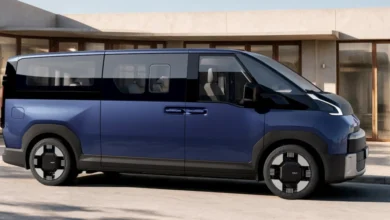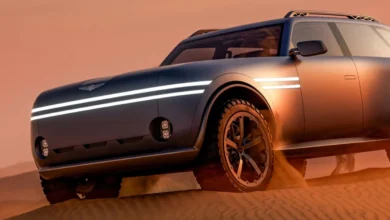
The sighting of a manufacturer-plated Faraday Future FX Super One in Southern California has reignited discussions regarding the viability and persistence of one of the electric vehicle industry’s most controversial startups. Despite years of financial instability, leadership transitions, and production delays, Faraday Future (FF) appears to be moving forward with the development of its "FX" brand, a secondary line of vehicles intended to complement its ultra-luxury FF 91 flagship. The FX Super One, a minivan that leans heavily on established Chinese automotive architecture, represents a strategic pivot for the company as it attempts to establish a foothold in the North American market through a "Global AI EV" bridge strategy.
The Recent Sighting and Vehicle Specifications
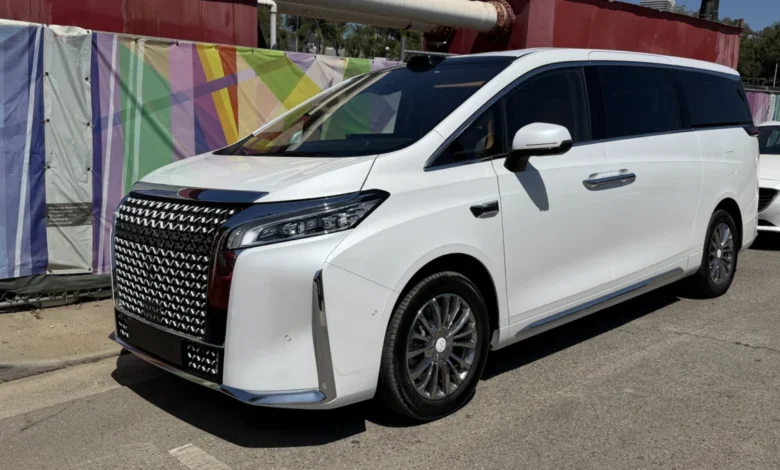
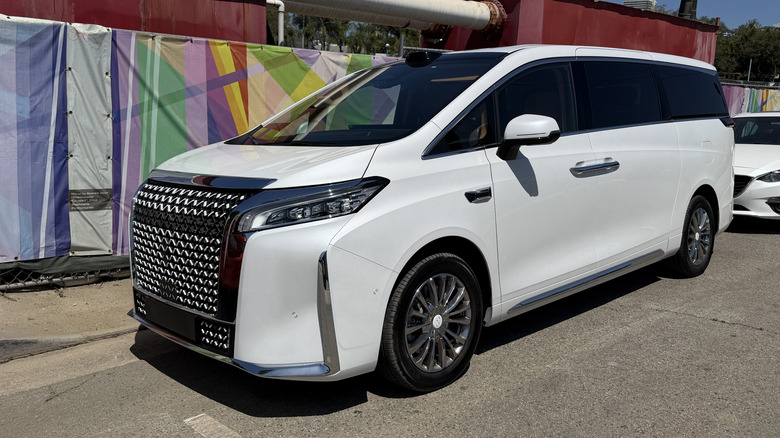
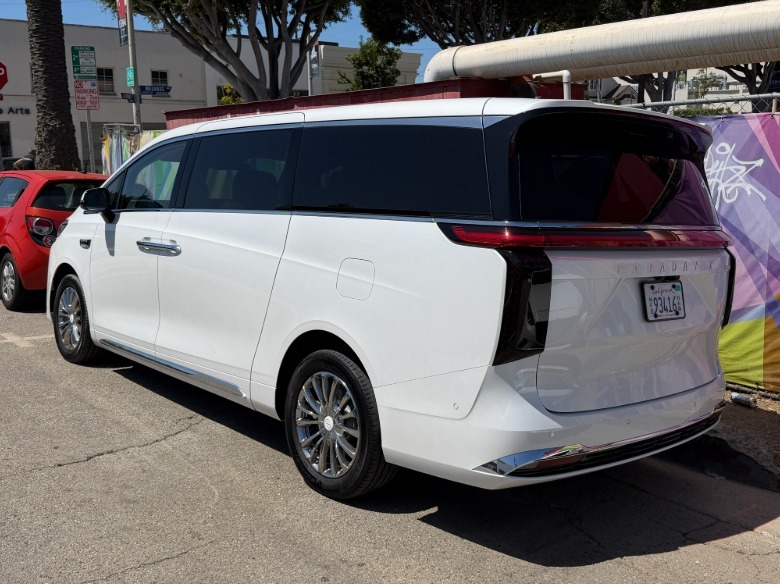
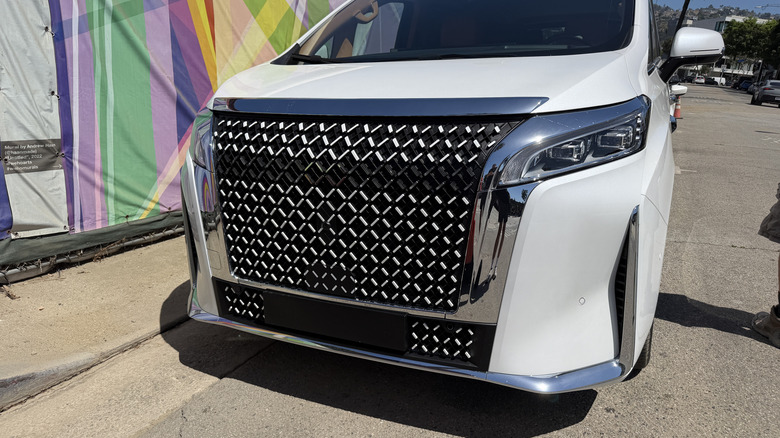
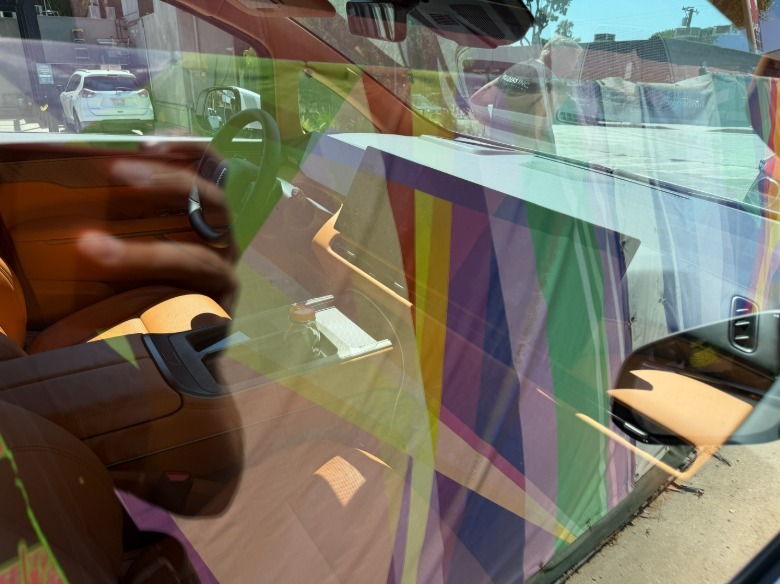
In late 2024, a white FX Super One test mule was observed operating on public roads in West Hollywood and surrounding areas. The vehicle, while bearing Faraday Future’s manufacturer plates, revealed significant details about the current state of its development. Notably, the test vehicle lacked the "F.A.C.E." (Faraday Future AI-enhanced Concept Exterior) screen—a prominent feature showcased during the vehicle’s initial reveal. Instead, the nose of the vehicle featured a traditional grille with a mesh pattern composed of repeating Faraday Future logos.
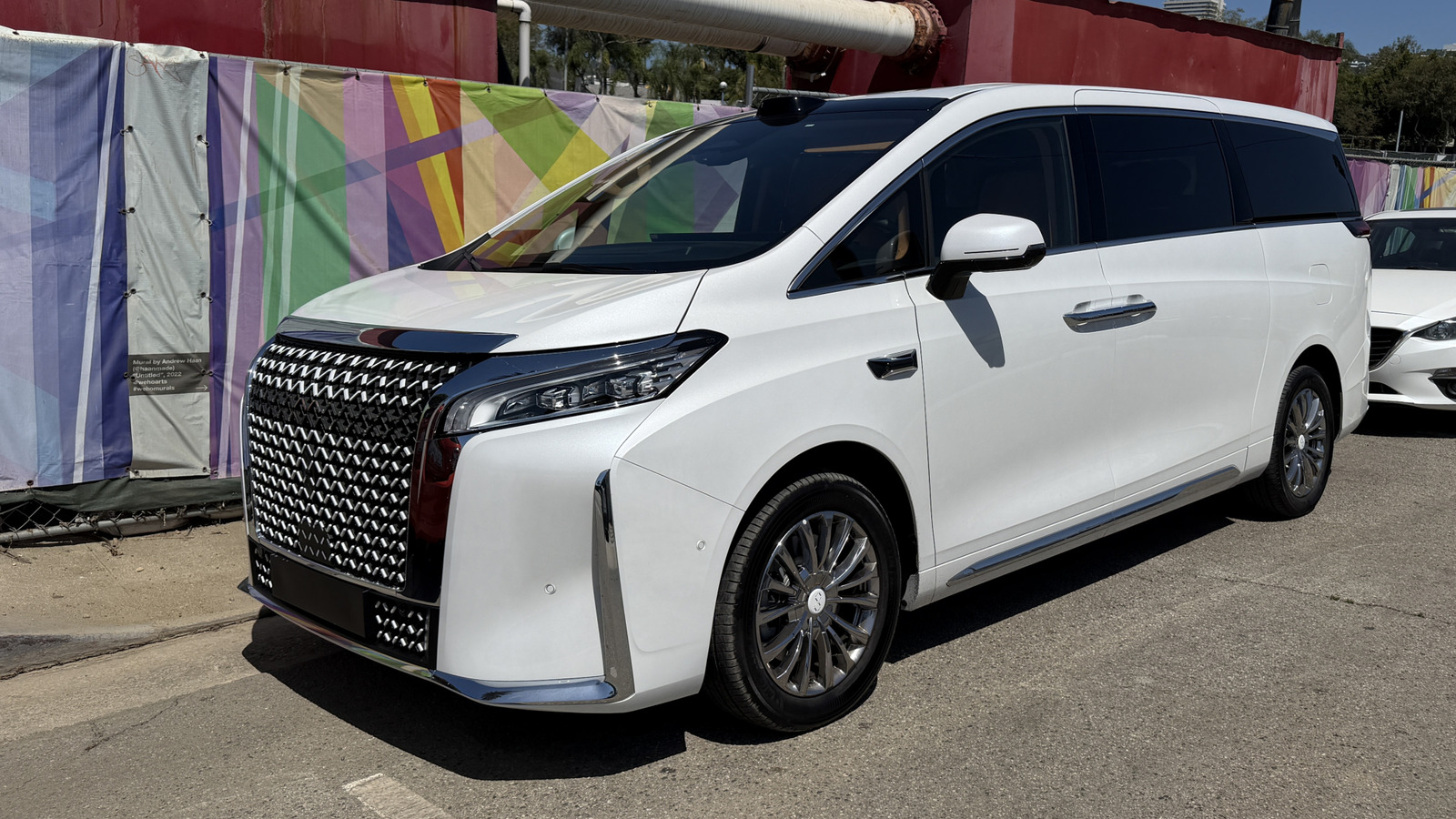
The FX Super One is widely recognized within the industry as a rebadged version of the Wey Gaoshan, a luxury multi-purpose vehicle (MPV) produced by Great Wall Motor (GWM) in China. Observers noted that the test vehicle retained several original GWM components, including chrome accents and wheels that appeared to be standard Gaoshan equipment with Faraday Future branding applied over the original logos. Most tellingly, the interior of the test vehicle reportedly still featured the Wey logo on the steering wheel, suggesting that the current phase of testing is focused on powertrain integration and local road compliance rather than final aesthetic refinement.
The Strategic Pivot: The FX Brand and the Bridge Strategy
Faraday Future officially launched the FX brand in September 2024, positioning it as a "Value Luxury" alternative to the FF 91. The brand’s mission is to provide "Global AI EVs" at more accessible price points, targeting the $20,000 to $50,000 range for entry-level models, though the FX Super One is expected to sit at the higher end of that spectrum.
The company’s "Global AI EV Bridge Strategy" involves partnering with established Chinese original equipment manufacturers (OEMs) like Great Wall Motor to source vehicle platforms and major components. By importing these components and performing final assembly in the United States, Faraday Future aims to bypass some of the logistical and regulatory hurdles associated with importing fully built Chinese vehicles. However, this strategy faces significant headwinds due to evolving trade policies, including the 100% tariffs recently imposed by the U.S. government on Chinese-made electric vehicles and certain battery components.
Technical Evolution: 800V Architecture and Range Extenders
While the FX Super One was initially conceptualized as a pure battery electric vehicle (BEV), Faraday Future has recently announced technical shifts to improve the vehicle’s marketability and performance. The company is reportedly transitioning the vehicle to an 800-volt electrical architecture, which allows for significantly faster charging times and improved thermal management compared to standard 400-volt systems.
Furthermore, in a move to address range anxiety—a primary concern for the American minivan demographic—Faraday Future recently filed patents for a range-extender system specifically designed for the FX platform. This system would utilize a small internal combustion engine to act as a generator, charging the battery while the vehicle is in motion. This "Extended-Range Electric Vehicle" (EREV) configuration has seen massive success in the Chinese domestic market, pioneered by brands like Li Auto, and Faraday Future appears to be betting that a similar solution will resonate with U.S. buyers.
A Chronology of Faraday Future’s Challenges
To understand the significance of the FX Super One’s testing, one must look at the turbulent decade-long history of Faraday Future:
- 2014: Founded by Jia Yueting with the goal of rivaling Tesla.
- 2017: The FF 91 is unveiled at CES in Las Vegas, promising 1,050 horsepower and a revolutionary "user-centric" interior.
- 2018–2020: The company faces severe liquidity crises, leading to the departure of several high-profile executives and a restructuring that saw Jia Yueting step down as CEO.
- 2021: Faraday Future goes public via a SPAC merger with Property Solutions Acquisition Corp, raising approximately $1 billion.
- 2023: After years of delays, the first "production" FF 91 2.0 Futurist Alliance models are delivered to a handful of "user-collectors," including high-profile celebrities.
- 2024: The company announces the FX brand and its partnership-heavy bridge strategy to avoid total insolvency and address the mass market.
Throughout this timeline, the company has survived multiple "going concern" warnings from auditors and narrowly avoided delisting from the Nasdaq on several occasions. The testing of the FX Super One is seen by some analysts as a desperate attempt to show tangible progress to potential investors as the company seeks new funding rounds.
The AI Integration: F.A.C.E. and Humanoid Robotics
Faraday Future continues to market itself as an AI company as much as an automotive manufacturer. The "F.A.C.E." system, which stands for "Vehicle Embodied Agent," is intended to be a centerpiece of the FX Super One. The company describes this as an integrated AI assistant capable of perceiving and communicating with the outside world through external displays and advanced voice recognition.
In addition to vehicle-based AI, Faraday Future has recently pivoted toward the development of humanoid robots. The company claims that the software stack developed for its autonomous driving and AI assistant features can be translated into robotic applications. While critics view this as a distraction from the company’s core mission of delivering vehicles, Faraday Future maintains that the synergy between AI EVs and AI Robotics is essential for the future of the brand.
Regulatory and Economic Hurdles
The path to production for the FX Super One remains fraught with obstacles. Beyond the aforementioned 100% tariffs on Chinese EV technology, the company must navigate the stringent Federal Motor Vehicle Safety Standards (FMVSS). Converting a vehicle designed for the Chinese market, such as the Wey Gaoshan, to meet U.S. crash test and safety requirements is a costly and engineering-intensive process.
Financially, Faraday Future remains in a precarious position. In its recent financial filings, the company acknowledged that it requires significant additional capital to fund the production of the FX brand and to continue the low-volume manufacturing of the FF 91. The company has explored various funding avenues, including investment from Middle Eastern entities and additional equity offerings, but a stable, long-term capital partner has yet to be finalized.
Market Position and Competition
If the FX Super One reaches the market, it will enter a unique niche. The American minivan market is currently dominated by the Toyota Sienna (hybrid), the Chrysler Pacifica (plug-in hybrid), and the Honda Odyssey (gasoline). While there are currently no fully electric minivans widely available in the U.S. (with the exception of the Volkswagen ID. Buzz), the FX Super One’s luxury positioning and AI-heavy features would likely place it at a much higher price point than traditional family haulers.
Industry analysts remain skeptical. "Faraday Future has a history of over-promising and under-delivering," says an independent automotive consultant. "The strategy of rebadging a Chinese MPV is a shortcut, but in the U.S. market, shortcuts often lead to regulatory dead ends. Without a massive infusion of cash and a clear manufacturing plan that avoids tariff traps, the FX Super One remains a long shot."
Conclusion: The Survival Instinct
The presence of the FX Super One on the streets of California serves as a testament to Faraday Future’s remarkable, if improbable, survival instinct. While the test mule appears to be a work-in-progress—lacking the high-tech screens and refined branding promised at launch—it represents a physical manifestation of the company’s latest pivot.
As the company continues to refine its 800V architecture and range-extender technology, the automotive world will be watching to see if Faraday Future can finally transition from a startup defined by press releases and prototypes to a legitimate manufacturer. For now, the FX Super One is a reminder that in the volatile world of electric vehicle startups, a company is never truly gone as long as there is a test car on the road and a patent in the system. Whether this leads to a showroom floor or remains a footnote in automotive history depends entirely on the company’s ability to secure its elusive next round of funding.