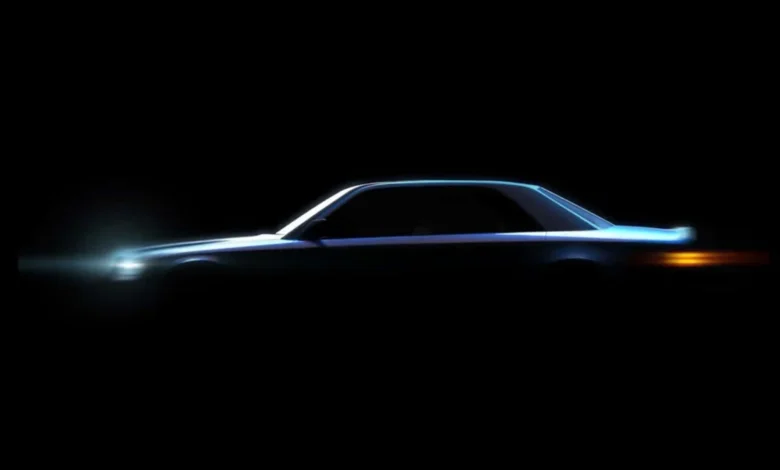
The automotive world is bracing for a potential revival of one of the most significant performance vehicles in history: the Mercedes-Benz AMG Hammer. HWA AG, the renowned German engineering firm led by individuals with deep-rooted ties to Mercedes-Benz’s racing pedigree, has released initial teasers suggesting a comprehensive restomod project based on the iconic W124 chassis. This development marks a significant moment for enthusiasts, as it signals the potential return of a platform that effectively transformed AMG from a boutique tuning shop into a global powerhouse of high-performance engineering.
The Origins of the Hammer: A Paradigm Shift in Performance
To understand the weight of HWA’s latest project, one must examine the historical context of the original Hammer. Developed in the mid-1980s, the AMG Hammer was not a factory-built Mercedes-Benz; it was a radical re-engineering of the 300E sedan. During this era, AMG operated as an independent entity, pushing the boundaries of what a luxury executive sedan could achieve.
The project centered on replacing the 300E’s standard 3.0-liter inline-six engine with a bespoke 5.5-liter or 6.0-liter M117 V8. The engineering required was extensive. AMG did not simply drop a larger engine into the bay; they meticulously balanced, polished, and reinforced the internal components to ensure long-term reliability under extreme stress. The result was a vehicle that produced approximately 355 horsepower and 388 pound-feet of torque—figures that were considered astronomical in 1986. With a top speed of 186 miles per hour, the Hammer outperformed contemporary supercars from Ferrari and Lamborghini, cementing its reputation as a "wolf in sheep’s clothing."
The Hammer’s success was not merely about speed. It was about the integration of chassis refinement, including upgraded suspension geometry, aerodynamic bodywork, and wider tires to manage the massive power output. This holistic approach to performance tuning defined the AMG philosophy for decades to come, eventually leading to Mercedes-Benz’s full acquisition of the division.
HWA: A Legacy of Engineering Excellence
The firm behind this proposed revival, HWA AG, is uniquely positioned to honor the Hammer’s legacy. Founded in 1998 by Hans Werner Aufrecht—the very same man who co-founded AMG in 1967—the company was established to manage Mercedes-Benz’s DTM (Deutsche Tourenwagen Masters) racing program. The name "HWA" is an acronym for Hans Werner Aufrecht.
Over the past quarter-century, HWA has evolved into an independent engineering powerhouse. They have been responsible for the development of some of the most advanced racing machinery in the world, including the Mercedes-Benz CLK GTR and various championship-winning DTM cars. More recently, HWA has pivoted toward the "restomod" market, applying modern engineering standards to classic German iron. Their recent work on the "HWA Evo," a reimagining of the Mercedes-Benz 190E 2.5-16 Evolution II, has garnered significant critical acclaim for its blend of period-correct aesthetics and cutting-edge performance. By leveraging decades of motorsport data and advanced manufacturing techniques, HWA has demonstrated that it possesses the technical capability to modernize a classic vehicle without diluting its original character.
Teasing the Future: The W124 Restomod
The teaser imagery released by HWA confirms that the project will utilize the W124 platform. While specific technical specifications have yet to be disclosed, the industry anticipates a vehicle that adheres to the spirit of the original Hammer: high-displacement, naturally aspirated or forced-induction power, paired with a chassis that has been reinforced to handle modern tire compounds and braking capabilities.
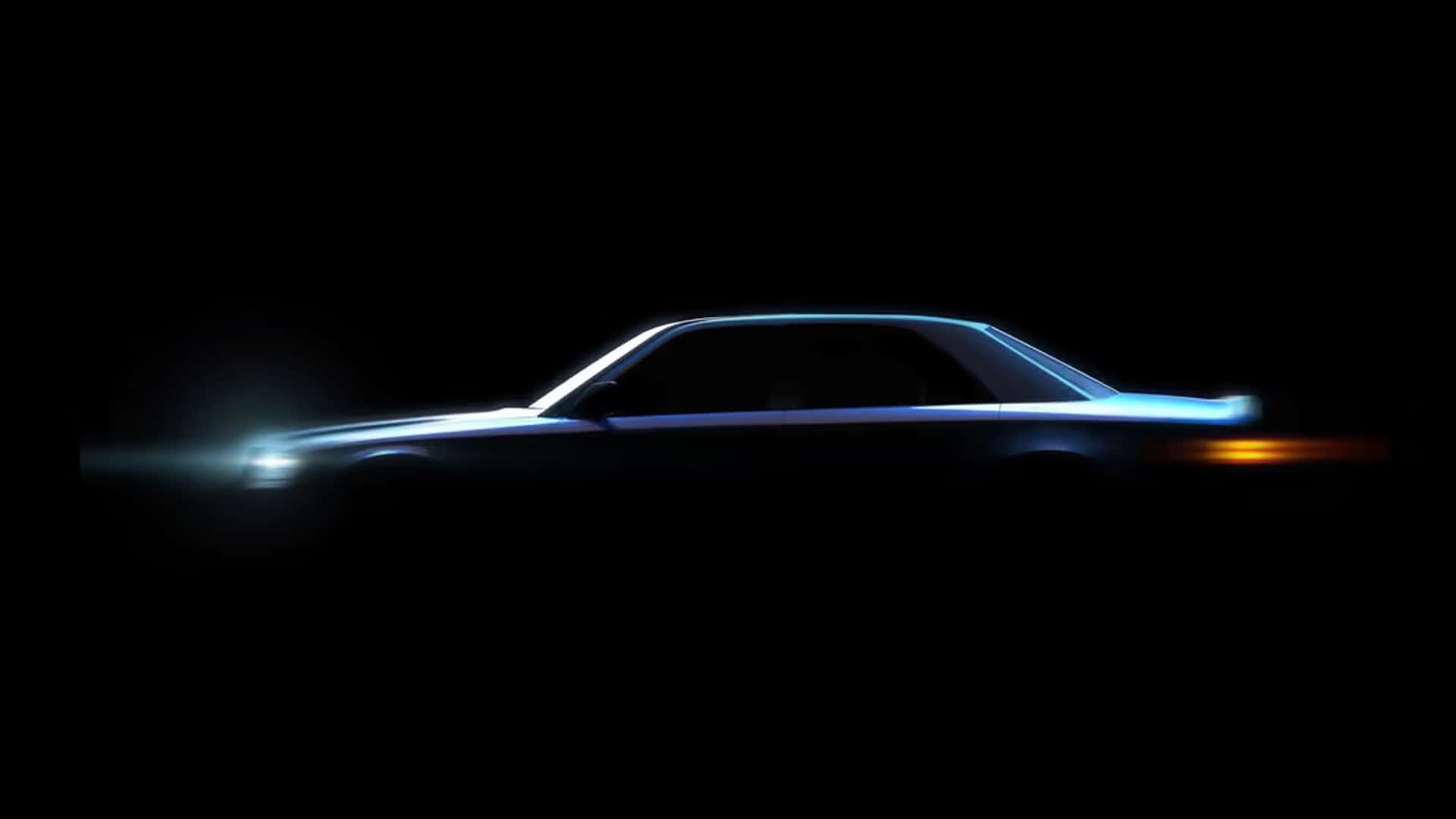
A restomod of this magnitude requires a delicate balance. Fans of the original Hammer are notoriously protective of the W124’s understated design language. Consequently, HWA faces the challenge of integrating modern carbon-fiber components and chassis stiffening while maintaining the silhouette that made the original 300E an icon of the "Golden Era" of German automotive design. Based on HWA’s work with the Evo project—which features a widened track, bespoke carbon fiber body panels, and a modern engine management system—it is highly probable that the new Hammer will offer a driving experience that feels both visceral and precise.
Market Context and Implications
The decision to develop a Hammer restomod arrives during a peak in the market for high-end, limited-production vehicles. As the automotive industry transitions toward electrification, there is an observable surge in demand for internal-combustion vehicles that celebrate the mechanical purity of the late 20th century. Collectors are increasingly seeking out restomods that provide the reliability and performance of modern engineering wrapped in a nostalgic aesthetic.
For HWA, this project serves as a demonstration of their technical independence. It showcases their ability to act as an Original Equipment Manufacturer (OEM) of sorts, utilizing Mercedes-Benz heritage to capture a high-net-worth demographic. From a broader industrial perspective, this project reinforces the trend of small-batch, high-performance manufacturing. Unlike mass-produced vehicles, these restomods are often limited to a few dozen examples, ensuring high residual values and exclusivity.
Official Stance and Future Expectations
While HWA has been careful not to reveal the full scope of the project, their track record suggests a methodical, multi-stage development process. Typically, HWA initiates these projects with a "concept demonstrator" to gauge public and investor interest before moving into a limited production run. The timing of this teaser, appearing shortly after the HWA Evo’s debut at the Goodwood Festival of Speed, indicates that the firm is prepared to capitalize on the momentum of its previous successes.
Industry analysts suggest that if the HWA Hammer follows the pricing structure of the Evo—which sits comfortably in the seven-figure range—it will be targeted exclusively at the ultra-luxury collector market. This is not a mass-market product, but rather a bespoke piece of automotive art designed for those who prioritize engineering pedigree and historical significance.
Conclusion
The potential return of the Mercedes-Benz AMG Hammer under the stewardship of HWA is a significant development in the automotive landscape. It bridges the gap between the raw, mechanical performance of the 1980s and the sophisticated, high-precision engineering of the modern day. By honoring the vision of Hans Werner Aufrecht, HWA is not merely building a car; they are paying tribute to the very foundation of performance-oriented luxury.
As further details regarding the powertrain, chassis, and production numbers emerge, the industry will be watching closely. Whether the new iteration can capture the same lightning-in-a-bottle success as the original 1986 Hammer remains to be seen, but given HWA’s history, the project is undoubtedly one of the most anticipated automotive developments of the year. For enthusiasts, the prospect of a modernized, high-performance W124 is a welcome testament to the enduring appeal of the "Hammer" moniker and the legacy of the engineering house that brought it to life.
Related posts: