Max Verstappen’s Future Options Beyond Red Bull Are Justified, According to Sky Sports F1 Pundit Naomi Schiff

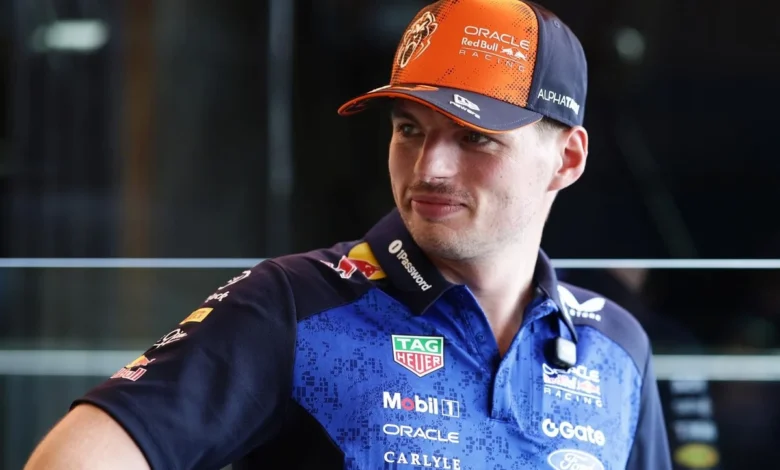
The enduring speculation surrounding Max Verstappen’s long-term commitment to Red Bull Racing has become a dominant narrative in the Formula 1 landscape, with Sky Sports F1 pundit Naomi Schiff asserting that the reigning world champion is entirely within his rights to explore alternative career avenues. While Verstappen himself has maintained a characteristically stoic silence regarding his future, the rumour mill has been relentless, consistently linking him with potential moves to powerhouse teams such as Mercedes and McLaren. These whispers are amplified by the existence of a contractual clause, widely understood to grant Verstappen the prerogative to depart the Milton Keynes-based outfit should he find himself outside the top two positions in the drivers’ standings by the mid-season summer break, a juncture that is now mere races away.
Despite having committed to Red Bull for the 2026 season, a decision made in anticipation of the significant regulatory overhaul set to reshape the sport, Schiff posits that Verstappen’s perceived "wandering eye" is a natural and logical consequence of the team’s current performance trajectory. The once seemingly unassailable dominance of Red Bull has shown discernible cracks in the current season, with rivals demonstrating a stronger and more consistent challenge. This shift in the competitive balance has understandably prompted questions about the long-term appeal of the team for a driver of Verstappen’s calibre and ambition.
A Strategic Re-evaluation Amidst Shifting Fortunes
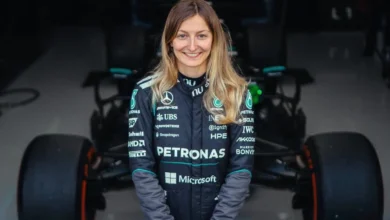
Naomi Schiff articulated her perspective during the recent Belgian Grand Prix coverage on Sky Sports F1, stating, "Why wouldn’t he be looking around?" She elaborated on the strategic considerations that likely underpin such an evaluation. "There was a real sense that he was looking around last season, but he made the right decision to stick with Red Bull and see what these regulations provide in terms of who’s quick and who’s not." This suggests that Verstappen’s initial decision to remain with Red Bull was predicated on the expectation of continued competitiveness, particularly with the advent of new technical regulations. However, the reality of the current season appears to have prompted a re-evaluation of that commitment.
Schiff further highlighted the paradox of Red Bull’s situation: "Red Bull have the best engine on paper but don’t have a competitive package, or at least not one that is consistently quick." This observation points to a potential disconnect between the team’s powertrain performance and its overall aerodynamic and chassis efficiency. While the Honda-developed power unit is theoretically potent, it is not translating into the consistent on-track dominance that characterized previous seasons. This variability in performance, coupled with the resurgent form of rivals like McLaren and Ferrari, and the looming presence of Mercedes seeking to regain its championship footing, creates an environment ripe for strategic consideration by a driver of Verstappen’s caliber.
The Exit Clause: A Ticking Clock for Red Bull
The contractual escape clause in Verstappen’s agreement with Red Bull is a critical element in this ongoing saga. This provision, reportedly allowing him to leave if he is not in contention for the championship by the summer break, introduces a tangible deadline to the speculation. As of the first nine rounds of the current season, Verstappen finds himself seventh in the drivers’ standings with 76 points, a significant 103 points adrift of the championship leader, Kimi Antonelli. This points deficit, while not insurmountable in the grand scheme of a full season, places him outside the stipulated top-two positions, thereby activating the potential for his departure.
Verstappen’s commitment to Red Bull for 2026 was a significant announcement, signaling his belief in the team’s future potential under the new regulations. However, the current season’s performance has seemingly cast a shadow over this long-term vision. For a driver who has consistently expressed a desire to experience different facets of motorsport and not extend his F1 career indefinitely, maximizing his current competitive window is paramount. Schiff’s analysis underscores this point: "I can understand why Max wants to look around. He’s always said he won’t spend another 10 years in Formula 1 – he wants to go on and do other things, so he wants to make the most of the time that he’s here." This suggests a pragmatic approach from Verstappen, focused on securing his legacy and maximizing his opportunities for further success and varied experiences.
Limited Options: A Squeeze in the Driver Market
Despite the apparent grounds for Verstappen to explore his options, the reality of the current Formula 1 driver market presents a significant hurdle. The landscape of top-tier F1 seats is remarkably stable, with most leading teams already having their driver lineups firmly established for the foreseeable future. This scarcity of prime opportunities significantly complicates any potential exit strategy for the Dutch superstar.
"Unfortunately, there are not a lot of open doors in this paddock," Schiff candidly observed. This statement highlights the unique predicament Verstappen finds himself in. While his talent is undeniable and his marketability immense, the limited availability of competitive machinery at rival teams means that his choices are, by necessity, constrained. The established partnerships at teams like Ferrari, McLaren, and even the struggling yet historically significant Mercedes, leave few obvious landing spots that would demonstrably improve his immediate competitive prospects.

The primary contenders for Verstappen’s signature, should he choose to leave Red Bull, are generally understood to be Mercedes and McLaren. Mercedes, under the leadership of Toto Wolff, has been actively seeking a high-profile driver to spearhead their resurgence following a period of decline. The departure of Lewis Hamilton to Ferrari at the end of 2024 has created a significant vacancy, and Verstappen has long been considered their dream replacement. However, the current performance of the Mercedes W15 chassis has been a cause for concern, raising questions about whether it would offer Verstappen the immediate championship challenge he would undoubtedly seek.
McLaren, on the other hand, has undergone a remarkable transformation, evolving from a midfield contender to a consistent podium challenger and even race winner. The rapid development of their MCL38 car, coupled with the impressive performances of Lando Norris and Oscar Piastri, has positioned them as a highly attractive proposition. A move to McLaren would offer Verstappen the chance to partner with Norris, a driver who has emerged as one of F1’s elite talents, and compete at the sharp end of the grid. However, the team’s ability to sustain this level of performance and fend off the challenges from Red Bull, Ferrari, and potentially others in the long term remains to be seen.
Background and Context: The Verstappen-Red Bull Dynasty
The current speculation stands in stark contrast to the period of unprecedented success that Max Verstappen and Red Bull Racing have enjoyed. Since his promotion to the senior Red Bull team in 2016, Verstappen has been a pivotal figure in their resurgence. His maiden championship in 2021, a dramatic and controversial victory over Lewis Hamilton in the Abu Dhabi Grand Prix, marked the beginning of a new era. The subsequent two seasons, 2022 and 2023, saw Verstappen and Red Bull utterly dominate the sport, securing back-to-back drivers’ and constructors’ championships with an astonishing win rate.
This period of dominance was built on a foundation of exceptional engineering, strategic prowess, and the unparalleled talent of Verstappen himself. The RB16B, RB17, and RB18 cars were widely regarded as the most potent and well-rounded packages on the grid, allowing Verstappen to consistently extract maximum performance and secure victories. His driving style, characterized by aggression, precision, and an uncanny ability to manage tires, made him a formidable opponent.
However, the current season has introduced an element of unpredictability. While Red Bull still possesses a potent engine and a chassis that can be quick on certain circuits, its overall competitiveness has been challenged by the significant advancements made by McLaren and the consistent performance of Ferrari. The team has struggled to find a consistent setup that works across a variety of track types, and its development trajectory appears to have plateaued relative to its closest rivals. This has led to a series of races where Verstappen has had to rely on his exceptional driving skill to salvage results, rather than having a dominant car at his disposal.
The Broader Impact and Implications
The outcome of Max Verstappen’s contract deliberations will undoubtedly have profound implications for the entire Formula 1 grid. A move to Mercedes would signal a seismic shift in the driver market, potentially reshaping the competitive order for years to come. It would also represent a significant challenge for Mercedes to integrate a driver of Verstappen’s stature and to deliver a car capable of meeting his demands.
Conversely, a transfer to McLaren would solidify their position as a genuine championship contender and provide a fascinating internal battle with Lando Norris. It would also raise questions about the future of Oscar Piastri, who has impressed immensely in his nascent F1 career.
Should Verstappen ultimately remain with Red Bull, it would signal a strong belief in the team’s ability to overcome its current challenges and return to its dominant form. It would also provide a degree of stability to the F1 landscape, though the underlying questions about the team’s competitiveness would persist.
Ultimately, Naomi Schiff’s assessment rings true: Max Verstappen’s exploration of his options is not a sign of disloyalty, but rather a testament to his ambition and his desire to maximize his career at its peak. The coming weeks and months will be crucial in determining the direction of one of Formula 1’s most captivating narratives, with the sport’s premier driver potentially on the move. The contractual clause serves as a stark reminder to Red Bull that retaining their star driver requires not only a competitive car but also a clear vision for sustained success in an increasingly competitive era of Formula 1.