Methane: The Invisible Climate Accelerant and the Urgent Global Imperative for Emission Reductions

Methane, a colorless and odorless hydrocarbon, has emerged as a central focus of international climate policy due to its dual status as a potent greenhouse gas and a short-term driver of global temperatures. While carbon dioxide ($CO_2$) remains the most significant long-term contributor to the climate crisis, methane ($CH_4$) is responsible for approximately one-third of the global warming experienced since the Industrial Revolution. As the primary component of natural gas, which currently generates roughly 25 percent of the world’s electricity, methane is deeply embedded in the global energy infrastructure. However, its atmospheric behavior and heat-trapping capabilities present a unique set of challenges and opportunities for climate stabilization.
The Scientific Profile of Methane
Chemically, methane consists of one carbon atom bonded to four hydrogen atoms. It is formed through two primary pathways: geological and biological. Geologically, methane is produced when organic matter is subjected to intense heat and pressure over millions of years deep within the Earth’s crust, forming the fossil fuel deposits extracted today. Biologically, the gas is produced via methanogenesis—a form of anaerobic respiration conducted by microorganisms known as archaea. These microbes thrive in oxygen-poor environments, such as the digestive tracts of ruminant animals, waterlogged wetlands, and the depths of landfills.

The significance of methane in the climate crisis lies in its Global Warming Potential (GWP). Although methane remains in the atmosphere for a relatively short duration—approximately 12 years, compared to the centuries-long residence of $CO_2$—it is far more effective at trapping heat during its lifespan. Over a 20-year period, methane is 86 times more potent than carbon dioxide on a per-mass basis. Over a 100-year horizon, its potency is rated at 28 times that of $CO_2$. This high intensity means that reducing methane emissions can provide an almost immediate "braking" effect on the rate of global warming, offering a critical window for longer-term $CO_2$ reduction strategies to take effect.
Advancements in Measurement and the Rise of Satellite Monitoring
Accurately quantifying methane emissions has historically been a challenge for scientists and regulators. Traditionally, researchers relied on "bottom-up" inventories, which estimate total emissions by multiplying the number of known sources (such as the number of cattle or oil wells) by an average emission factor. However, recent studies have revealed significant discrepancies in this data. A landmark study found that direct measurements of U.S. oil and gas methane emissions were 60% higher than estimates provided by the U.S. Environmental Protection Agency (EPA).
To bridge this gap, the scientific community has increasingly turned to "top-down" measurement methods involving airplanes, high-altitude sensors, and sophisticated satellite arrays. In 2024, the launch of MethaneSAT—a satellite designed to track and quantify methane leaks with unprecedented precision—marked a turning point in climate transparency. These technologies have identified "super-emitters," which are specific facilities or incidents responsible for disproportionately large volumes of gas. Data suggests that just 5% of leaks in the natural gas industry are responsible for more than half of the sector’s total leakage volume. In 2022, satellite imaging detected over 1,000 super-emitter events globally, including a massive leak in Turkmenistan that spewed methane at a rate equivalent to the hourly emissions of the entire nation of France.

Primary Sources of Human-Caused Emissions
Approximately 60 percent of atmospheric methane is attributed to human activities, while the remaining 40 percent originates from natural sources. Anthropogenic emissions are dominated by three sectors: agriculture, fossil fuels, and waste management.
Agriculture and Livestock
Agriculture is the largest source of human-caused methane, accounting for roughly 40 percent of emissions. Within this sector, livestock—specifically ruminants like cows, sheep, and goats—are the primary contributors. Through enteric fermentation, microbes in the animals’ digestive systems break down food and release methane as a byproduct. As global demand for meat and dairy continues to rise, these emissions are projected to increase significantly by 2030. Additionally, rice cultivation contributes roughly 8 percent of human-caused methane, as the flooded paddies required for growth create ideal anaerobic conditions for methanogenic archaea.
Fossil Fuel Extraction and Distribution
The energy sector is responsible for 35 percent of anthropogenic methane. During the extraction of oil and gas, methane is often intentionally released through "venting" or "flaring" (burning off gas) when infrastructure is insufficient to capture it. Accidental leaks during transport through pipelines and distribution networks further exacerbate the problem. Coal mining is another significant factor; methane trapped within coal seams is released during the mining process or continues to seep from abandoned mines. Underground mines are particularly problematic, accounting for 70 percent of coal-related methane emissions.

Waste Management
Landfills and wastewater treatment systems contribute approximately 20 percent of human-caused methane. As organic waste decomposes in the oxygen-deprived environment of a landfill, it generates "landfill gas," which is roughly 50 percent methane. With global solid waste production expected to rise by 73 percent by 2050, waste-related emissions represent the fastest-growing source of methane in many developing regions.
Natural Feedback Loops and Tipping Points
Natural sources of methane, led by wetlands, are increasingly influenced by the warming climate, creating dangerous "positive feedback loops." Wetlands currently account for about one-third of total global methane emissions. However, rising temperatures and altered precipitation patterns are causing tropical and Arctic wetlands to expand and release gas at accelerated rates.
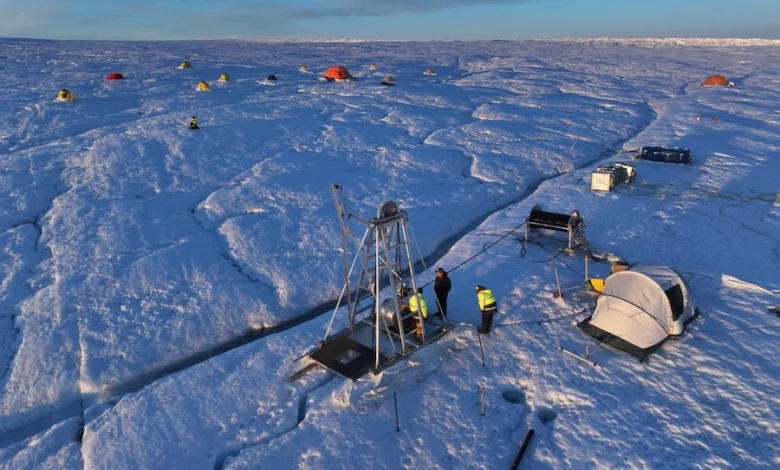
The thawing of Arctic permafrost represents one of the most concerning climate tipping points. The permafrost contains vast quantities of organic matter and methane hydrates—ice-like structures trapped in the soil and on the seafloor. As the Arctic warms at nearly four times the global average, this frozen carbon is beginning to thaw. The region currently holds 2.5 times more carbon than is present in the entire atmosphere. Scientists warn that if a significant portion of this is released as methane, it could trigger an irreversible acceleration of global heating that would be impossible to contain through human intervention alone.

The "Bridge Fuel" Controversy and LNG Exports
For years, natural gas was marketed as a "bridge fuel" that could facilitate the transition from coal to renewables. Proponents argued that burning natural gas produces roughly half the $CO_2$ of coal per unit of energy. However, this narrative has come under intense scrutiny as the full extent of methane leakage has come to light.
Research conducted in 2023 suggests that if as little as 0.2 percent of methane leaks during the production and transport of liquefied natural gas (LNG), its total climate impact becomes equal to that of coal. Some studies now indicate that LNG may actually have a 33% greater global warming potential than coal over a 20-year period when upstream leaks are factored in. This is particularly relevant as the United States has become the world’s leading exporter of LNG. Critics argue that the continued expansion of LNG infrastructure threatens to lock in decades of high emissions, potentially neutralizing the progress made in the deployment of wind and solar energy.
Public Health Implications Beyond Warming
The impacts of methane extend beyond temperature increases. Methane is a primary precursor to the formation of ground-level ozone (smog), a hazardous air pollutant. Unlike the protective ozone layer in the stratosphere, ground-level ozone is toxic to humans and vegetation.

Exposure to methane-generated ozone is linked to approximately 500,000 premature deaths annually worldwide. It triggers respiratory illnesses, exacerbates asthma, and causes permanent lung damage. Furthermore, ozone reduces agricultural productivity by inhibiting plant growth. Experts estimate that for every million metric tons of methane reduced, the world could prevent 1,430 annual deaths from respiratory and heart disease and save 145,000 metric tons of essential crops like wheat and soy.
Pathways to Mitigation and Global Policy
The Intergovernmental Panel on Climate Change (IPCC) has stated that methane emissions must be reduced by 34 percent by 2030 to remain on a pathway to limiting global warming to 1.5 degrees Celsius. Achieving this requires a multi-faceted approach:
- Technical Fixes in Energy: The International Energy Agency (IEA) reports that 70% of methane emissions from the oil and gas sector could be eliminated using existing technology, with 40% of those reductions achieved at no net cost through the sale of captured gas.
- Agricultural Innovation: Solutions include changing livestock diets with supplements like seaweed (which can reduce enteric methane by over 80%), improving manure management through anaerobic digesters, and adopting "alternate wetting and drying" techniques in rice farming.
- Circular Economy: Diverting organic waste from landfills toward composting and biogas capture can drastically reduce the footprint of the waste sector.
- Direct Removal: Emerging research is exploring "methane removal" technologies, such as utilizing methanotrophic bacteria in tree bark or atmospheric geoengineering using iron salt aerosols, though these remain in the experimental stages.
On the policy front, the Global Methane Pledge, launched at COP26 in 2021, now includes over 150 nations committed to a collective 30% reduction in methane emissions by 2030. While the pledge represents a significant diplomatic milestone, implementation remains uneven. As of 2023, only 13 percent of global methane emissions were covered by enforceable national policies.

Conclusion and Outlook
Methane represents both a significant threat to climate stability and one of the most effective levers available to policymakers to slow the rate of warming in the near term. The transition from viewing methane as a "cleaner" fossil fuel alternative to recognizing it as a high-priority pollutant marks a fundamental shift in climate science. While individual actions—such as adopting plant-based diets and improving home energy efficiency—play a role, systemic change in the energy and agricultural sectors is paramount. The coming decade will be decisive in determining whether global efforts to curb this invisible gas can prevent the crossing of irreversible climate tipping points.