President Trump Initiates Nearly 1 Billion Dollar Rescission of Congressional Spending in Rare Constitutional Showdown

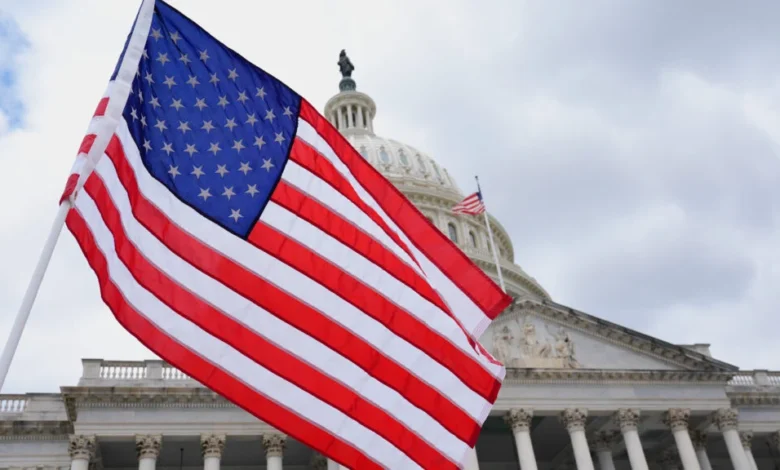
In a significant escalation of the ongoing struggle for control over the federal purse strings, the White House announced on Friday the cancellation of nearly $1 billion in congressionally approved spending. The administration, led by the Office of Management and Budget (OMB), has categorized these funds as "harmful government spending," specifically targeting programs related to immigrant services, diversity-focused initiatives, and international research grants. This move marks the latest application of a controversial budgetary maneuver known as a "pocket rescission," a tactic that effectively bypasses the legislative branch’s constitutional authority to allocate federal resources.
The Scope and Targets of the Rescission
The administration’s directive primarily impacts the Department of Health and Human Services (HHS), specifically programs designed to assist refugees and unaccompanied minors. According to official communications from the White House, the administration contends that these funds are redundant, citing data that suggests illegal border crossings have declined significantly, thereby rendering the infrastructure and services previously approved by Congress unnecessary.
Beyond immigrant-focused services, the rescissions encompass a diverse array of federal programs:
- Department of Education: Funding for specific migrant student support programs.
- Department of Justice: The office tasked with mediating and reducing racial tensions.
- Minority Entrepreneurship: Business development initiatives aimed at underrepresented demographics.
- Housing and Urban Development (HUD): Targeted housing counseling services.
- International Education: Approximately $70 million rescinded from programs characterized by the administration as "woke" or ideologically driven.
- Climate-Related Debt Relief: $9 million withheld from foreign nations linked to climate change policy initiatives.
The administration’s press release accompanying the announcement framed the move as an effort to eliminate waste, specifically noting that several of the organizations receiving these grants are led by individuals who served during the Obama administration. This framing suggests a deliberate effort to pivot federal funding away from programs viewed as ideologically misaligned with the current administration’s policy priorities.
The Mechanics of a Pocket Rescission
Under the Impoundment Control Act of 1974, the president is required to submit a rescission request to Congress, which then has 45 days to review and approve the cuts. If Congress does not act, the money must be released. However, by announcing these cuts with only five days remaining in the fiscal year—and with the House of Representatives currently in recess until after the November elections—the administration has created a scenario where the 45-day review period is functionally impossible to observe.
The Government Accountability Office (GAO), the non-partisan investigative arm of Congress, has historically deemed this specific maneuver illegal. By failing to provide Congress the window mandated by law to act, the executive branch is effectively unilaterally overriding the legislature’s appropriations power. This "pocket rescission" strategy creates a constitutional vacuum, as the executive branch prevents the legislative branch from fulfilling its oversight role.
Historical Context and Legal Precedent
This is not the first time the Trump administration has utilized this controversial tool. One year ago, the administration successfully blocked $4.9 billion in foreign aid using the same mechanism. In that instance, the Supreme Court declined to intervene, with the majority opinion suggesting that the president’s authority over foreign policy granted him broader latitude to withhold funds.
However, legal scholars point out that the current action differs significantly because it targets domestic spending rather than foreign affairs. The last time a pocket rescission was attempted—excluding the 1977 instance involving Jimmy Carter, which the administration argues was legally distinct due to the timing of the proposal—was during the mid-20th century. The 1977 Carter action is often cited as a benchmark; however, the current administration’s interpretation of the law remains a point of intense debate among constitutional law experts who argue that the Impoundment Control Act was specifically designed to prevent this type of executive overreach.
Congressional Reactions and the Constitutional Divide
The response from Capitol Hill has been swift and sharply divided along both party lines and institutional loyalties. Senator Susan Collins of Maine, chair of the Senate Appropriations Committee, expressed profound frustration with the lack of consultation. "Not only is the delay itself an impoundment that was not reported to Congress, but also it is a usurpation of Congress’s appropriations powers," Collins stated. "OMB is an agency of the executive branch. It does not get to decide which programs are worth funding."
Senator Patty Murray of Washington, the lead Democrat on the Appropriations Committee, took an even harder line, characterizing the move as "theft from the American people." Murray noted that during recent bipartisan spending negotiations, Democrats had attempted to include "anti-impoundment" language to prevent the White House from exercising this power, but noted that many Republican colleagues declined to support those protections. "While Trump spends tax dollars on ads promoting himself, Congress needs to reassert its powers to help people, and it’s past time Republicans join us in that fight," she added.
Broader Implications for the Separation of Powers
The move is viewed by many political analysts as part of a broader, systemic effort by the Trump administration to consolidate power across the federal government. This trend has been characterized by the aggressive use of executive orders, the firing of civil servants, the imposition of tariffs without congressional authorization, and the initiation of military actions in Iran without a formal declaration of war or specific legislative approval.
By consistently testing the boundaries of the judiciary and the legislature, the administration is forcing a long-term re-evaluation of the separation of powers. The fundamental question now facing the judicial branch is whether the president possesses inherent executive authority to nullify the will of Congress in domestic policy, or if the "power of the purse"—the most significant check held by the legislative branch—is inviolable.
Economic and Social Impact
The economic consequences of these cuts are expected to be felt across several sectors. For instance, the elimination of housing counseling services at HUD could impact thousands of low-income families attempting to navigate the volatile real estate market. Furthermore, the cancellation of research grants at the Department of Health and Human Services risks stalling ongoing scientific studies that may have long-term implications for public health.
The administration maintains that the "diminished" nature of border crossings justifies the cuts to migrant-focused services. Yet, humanitarian organizations argue that the needs of unaccompanied minors and refugees remain high, and that the sudden withdrawal of funds will create a logistical and ethical crisis in the short term. As the fiscal year closes, the uncertainty surrounding these funds places many grant recipients in a precarious position, unable to plan for the upcoming quarter without knowing if their federal support will be restored or permanently lost.
Looking Ahead
With the federal government in the final days of the fiscal year, the immediate impact of the rescission is likely to be a freeze in the disbursement of the targeted $1 billion. Whether the courts will intervene or whether Congress will attempt to override the administration’s actions remains to be seen.
The battle over the rescission is expected to become a central issue in the post-election congressional session. Should the administration successfully maintain these cuts, it could establish a precedent that significantly weakens the role of the legislative branch in the federal budgetary process for years to come. Conversely, a successful legal or legislative challenge would reassert the importance of the constitutional checks and balances that have defined the American political system since its inception. For now, the executive branch continues to push the boundaries of its perceived authority, setting the stage for a protracted conflict that will likely reach the highest levels of the federal judiciary.