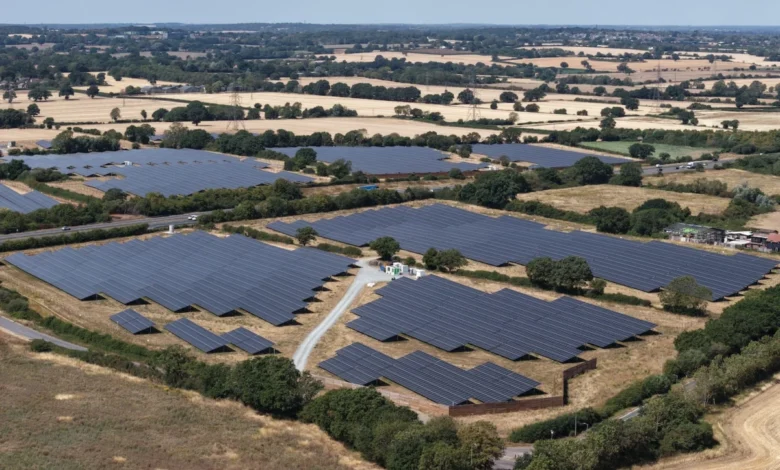
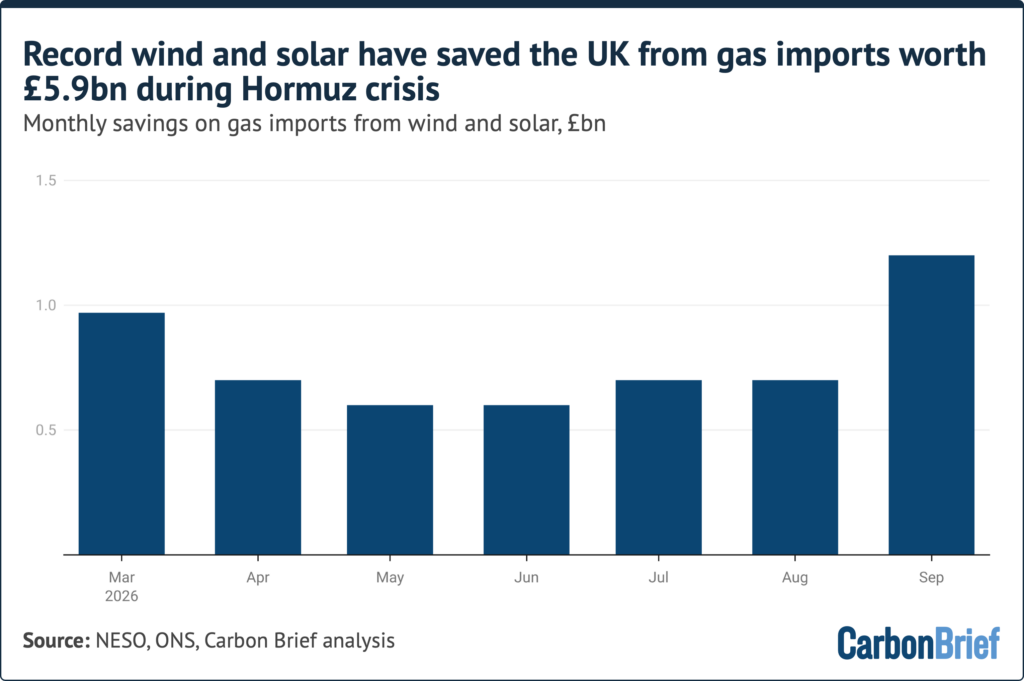
The United Kingdom has successfully avoided an estimated £5.9 billion in natural gas import costs since the onset of the Hormuz crisis in early 2026, a milestone directly attributed to a record-breaking surge in wind and solar power generation. As geopolitical instability in the Middle East continues to roil global energy markets, forcing prices to levels not observed since the height of the 2022 energy crisis, the UK’s transition to a decarbonized grid has provided a vital economic buffer. Analysis from Carbon Brief indicates that wind and solar assets provided a record 41% of the nation’s electricity requirements in 2026 to date, significantly outpacing the 25% share contributed by gas-fired generation.
The Geopolitical Trigger: A Chronology of Instability
The current energy volatility is rooted in the escalation of tensions in the Strait of Hormuz, a critical maritime chokepoint through which a significant portion of the world’s liquefied natural gas (LNG) and crude oil flows. The crisis intensified in February 2026 following the outbreak of armed conflict between the United States and Iran. This disruption immediately constrained global energy supplies, sending shockwaves through commodity markets.
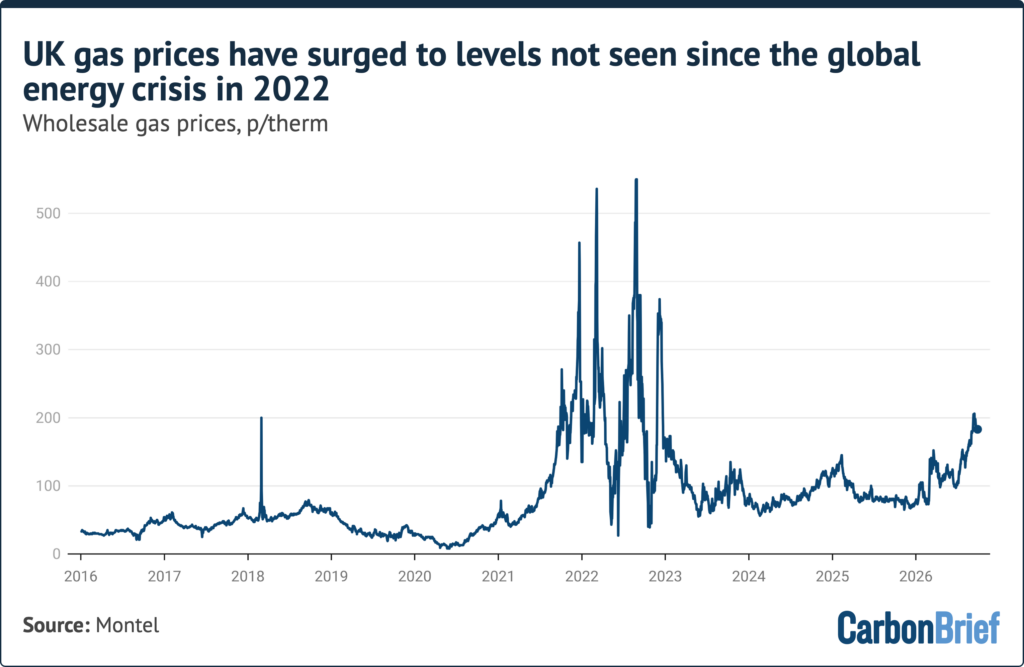
By March 2026, the ripple effects were already being felt across the UK, as wholesale gas prices began a sharp, sustained climb. Throughout the summer of 2026, as the conflict showed no signs of de-escalation, gas prices surged to an average of 134p per therm—nearly four times the pre-crisis levels seen in 2019. By September, the situation reached a critical juncture, with average prices hitting 189p per therm, the highest sustained level since the Russian invasion of Ukraine in 2022 fundamentally altered European energy security.
Renewable Infrastructure as an Economic Shield
The UK’s ability to withstand these price shocks rests on a 14% year-on-year increase in wind and solar output. This unprecedented adoption of clean technology has effectively dampened the nation’s reliance on the volatile international LNG market. Had the UK not achieved this level of renewable penetration, it would have been forced to procure the equivalent of over 100 additional large-scale LNG tanker deliveries to maintain grid stability and meet consumer demand.
In September 2026 alone, the economic benefit of this transition was valued at approximately £1.3 billion. This figure is the product of high wind and solar output—amounting to nearly 10 terawatt hours (TWh) for the month—coupled with the high market price of gas that the nation successfully avoided paying. This performance builds upon a trajectory established earlier in the year, with March and May 2026 reports already signaling the significant fiscal protections offered by the expansion of home-grown energy.
The Divergence of Household Energy Costs
The impact of this energy transition is becoming increasingly visible at the domestic level. While the UK’s wholesale gas market is heavily influenced by the global crisis, the electricity market is showing signs of decoupling. According to data from the thinktank Nesta, household gas bills—which are tied more directly to the rising cost of imported fuel—are set to rise by 33% starting October 1, 2026, amounting to an increase of roughly £200 per year for a typical household.
Conversely, electricity bills are projected to see a marginal increase of only 4% during the same period. This discrepancy underscores the efficacy of the government’s shift toward renewables. Andrew Sissons, director for sustainable future at Nesta, noted that the historical link between electricity and gas pricing is beginning to fracture as the grid becomes less reliant on gas-fired thermal plants to meet peak load. This shift is a fundamental change in the UK’s economic resilience, suggesting that the cost of electricity is increasingly dictated by the capital costs of wind and solar infrastructure rather than the unpredictable spot prices of global gas markets.
Official Responses and Future Policy Direction
The UK government has acknowledged the severity of the crisis and the strategic necessity of accelerating the energy transition. During the 2026 Labour Party Conference, Prime Minister Andy Burnham emphasized that the government’s primary strategy for stabilizing the economy involves regaining control over energy prices through massive investment in renewables and nuclear power.
Energy Secretary Miatta Fahnbulleh echoed these sentiments, noting that the UK’s vulnerability stems from its historical exposure to global fossil-fuel markets. She has been tasked by the Prime Minister to prioritize the "breaking of the link" between international gas pricing and domestic electricity costs. By insulating the power sector from these global price spikes, the government aims to mitigate the cost-of-living crisis that has disproportionately affected low- and middle-income households.
Broader Implications for Global Fossil Fuel Markets
The UK’s experience reflects a broader global phenomenon. European nations, collectively, have faced an estimated €100 billion in additional costs for fossil fuel imports since the crisis began. The scarcity of natural gas has created a competitive environment where Europe must vie with Asia for limited LNG cargoes, keeping prices elevated for all major importers.
Furthermore, the impact extends beyond gas to the transport sector. With diesel prices reaching record highs of approximately £2 per litre in the UK, the shift toward electrification is being accelerated by simple market economics. Recent analyses confirm that the total cost of ownership for electric vehicles (EVs) is now up to nine times lower than that of internal combustion engine vehicles, a trend that is likely to see further adoption as fuel prices remain stubbornly high.

Analysis: A Shift in Energy Security
The events of 2026 have underscored a fundamental transition in the definition of national security. Energy independence is no longer merely a matter of domestic extraction but of diversifying the generation mix. The 41% share of electricity provided by wind and solar represents a critical threshold; once the grid exceeds this level, the marginal influence of gas-fired power plants on price setting begins to wane.
However, challenges remain. The intermittent nature of wind and solar energy requires significant investment in long-duration energy storage and grid modernization. While the current record generation has provided a £5.9 billion reprieve, the path toward total energy security requires continuous investment in storage technologies to ensure that clean power can be utilized during periods of low wind or solar availability.
Furthermore, the reliance on international supply chains for the materials needed to build these renewable assets presents a new set of complexities. As the UK moves toward a more localized, renewable-based energy system, policy focus will likely shift from simply increasing capacity to ensuring the resilience of the manufacturing and supply chain infrastructure that sustains it.
Conclusion: The Path Forward
The data from 2026 provides a clear argument for the continued expansion of renewable energy. By reducing the volume of imported gas required to keep the lights on, the UK has shielded its economy from the most acute impacts of the Hormuz crisis. As winter approaches, demand for heating will increase, putting further pressure on global gas supplies. The government’s commitment to expanding home-grown renewables is not merely an environmental imperative but an urgent economic necessity. The ability to decouple domestic electricity prices from the global gas market will remain the defining challenge for energy policy in the coming decade. As the nation prepares for the winter months, the performance of the wind and solar sectors will be the primary metric for assessing the success of the UK’s broader energy and economic strategy.