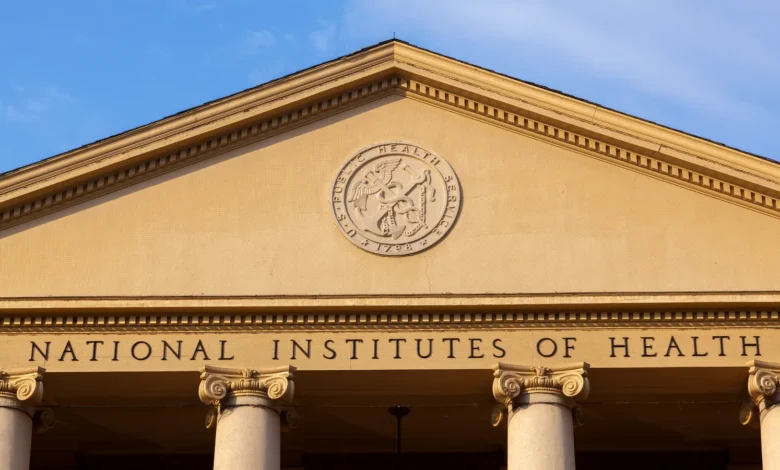
The American scientific research community is once again locked in a high-stakes legal battle with the federal government following allegations that the National Institutes of Health has revived mass grant cancellations based on political viewpoints. According to a newly filed federal lawsuit, the agency has bypassed earlier court setbacks by implementing updated administrative directives under NIH Director Jay Bhattacharya. These policies allegedly target and penalize studies touching upon diversity, equity, and inclusion, gender-affirming care, racial disparities in healthcare, climate change, and vaccine hesitancy.
The fresh wave of litigation underscores a deepening crisis at the intersection of federal scientific funding and partisan politics. Plaintiffs in the lawsuit argue that the government’s systematic screening of research portfolios constitutes an ideological litmus test, directly violating the First Amendment and undercutting decades of empirical progress. With tens of millions of dollars in academic funding hanging in the balance, universities and independent research institutions find themselves grappling with chilled speech, mandatory project renegotiations, and preemptive self-censorship.
The Genesis of the Federal Grant Crackdown
The friction between the federal scientific establishment and the executive branch originated early in the administration of President Donald Trump, when a series of executive orders mandated a sweeping review of federal spending. These directives explicitly prioritized the elimination of funding for initiatives deemed misaligned with the administration’s policy goals. By mid-2025, the NIH had initiated a broad campaign to terminate or freeze active grants touching upon sensitive cultural and public health topics.
The initial rollout of these cancellations provoked immediate pushback from academic associations, civil rights groups, and affected researchers. Plaintiffs argued that the abrupt defunding of peer-reviewed projects breached administrative law standards and trampled on academic freedom. As the policy took effect, numerous long-running studies—ranging from longitudinal investigations into high-risk dementia populations to demographic analyses of kidney disease rates across racial lines—were thrown into disarray.
Legal Battles and Judicial Intervention
The conflict quickly migrated to federal courts, where the administration faced significant legal hurdles. In late 2025, U.S. District Judge William Young delivered a major blow to the administration’s strategy by striking down internal NIH guidance that had authorized staff to terminate grants conflicting with administration priorities. Judge Young issued a sweeping injunction ordering the NIH to reinstate the abruptly canceled research projects.
The legal victory for the scientific community, however, was short-lived and procedurally fractured. The U.S. Supreme Court subsequently intervened, blocking the portion of Judge Young’s order that required the federal government to actively restore the canceled grants. Crucially, however, the nation’s highest court allowed the vacatur of the original NIH guidance to stand, effectively leaving the administration without its primary policy justification for the ongoing cancellations.
Rather than abandoning the effort, the administration pivoted. According to the new legal complaint, the NIH responded to the judicial setbacks by issuing a fresh round of policy memos and strategic guidance under the signature of Director Jay Bhattacharya. Plaintiffs assert that these new documents function as a rebranded mechanism designed to achieve the exact same political objectives while attempting to insulate the agency from judicial review.
Shifting Guidance and Targeted Keywords
The evolution of the NIH’s internal policies reflects a tactical adaptation to ongoing litigation. In August 2025, Director Bhattacharya issued guidance asserting that research evaluating the potential harms associated with puberty suppression, hormone therapy, and surgical interventions for gender dysphoria held higher scientific promise than studies investigating those modalities as legitimate treatments.
Facing intense criticism and potential legal vulnerability, the NIH modified its tone in a July update. The revised text softened some of the explicit phrasing regarding gender-affirming care. However, the lawsuit contends that this rhetorical adjustment was merely cosmetic, masking an unyielding implementation strategy that continues to disadvantage scientific inquiries yielding conclusions unfavorable to the administration.
A similar pattern emerged regarding research into systemic racism and its public health implications. The August 2025 guidance acknowledged that historical practices such as housing redlining could measurably impact minority health outcomes. Yet, the subsequent July update stripped out these recognitions entirely, directing agency staff that references to systemic racism should be omitted from prospective research proposals.
To enforce these unwritten or newly codified priorities, NIH operating units have instituted automated and manual keyword screening protocols. Internal agency reviews now flag grant applications containing terms such as "gender," "racist," "climate change," "vaccine refusal," and "systemic inequality." This digital dragnet mirrors methodologies revealed in parallel litigation brought by University of California researchers, which exposed the widespread use of algorithmic keyword filters to systematically purge federal portfolios of disfavored topics.
The Chilling Effect on Academic Freedom and Research Integrity
The implications of the NIH’s screening procedures extend far beyond terminated grants, exerting a pervasive chilling effect on the entire pipeline of American scientific inquiry. According to the complaint, researchers whose active projects are flagged face an unenviable ultimatum: radically renegotiate the scope, methodology, and language of their studies to secure continued funding, or face total termination.
For scientists currently drafting applications for future funding cycles, the climate of uncertainty has fostered widespread preemptive self-censorship. Investigators report scrubbing standard academic terminology from their proposals to avoid algorithmic flags, even when doing so compromises the clarity, precision, or transparency of their scientific aims. Legal advocates argue that forcing researchers to alter their professional vocabulary to appease political appointees violates core constitutional protections.
"This isn’t just illegal, it hurts every person served by this research and unravels years of work by the scientific community," stated Shalini Goel Agarwal, special counsel at Protect Democracy, one of the public interest groups representing the plaintiffs.
Adding to this sentiment, Grayce Zelphin, senior staff attorney at the American Civil Liberties Union of Northern California, emphasized the constitutional dimensions of the dispute. "The NIH’s new policies, which are essentially a political litmus test, violate the First Amendment, undermine science and education, and have cost universities tens of millions of dollars in cancelled grants," Zelphin said in a statement.
Legal Demands and Class Action Structure
In response to these developments, the plaintiffs are asking the federal court to certify two distinct classes of affected individuals to ensure comprehensive legal relief.
The first proposed class encompasses all researchers and academic institutions whose existing grants have been prematurely terminated under the contested policies since their inception. The second class is designed to capture a broader array of impacted professionals, including those whose grant applications have been outright denied under the guidance, those forced to undergo coercive renegotiations or linguistic alterations of their project scopes, and qualified researchers who chose to forgo applying for federal grants altogether out of fear of political retaliation.
Official Agency Stance and Broader Implications
When approached for comment regarding the newly filed lawsuit, representatives for the National Institutes of Health stated Friday that the agency maintains a consistent policy of declining to comment on ongoing litigation.
As the case proceeds through the federal judiciary, policy analysts note that the outcome could establish a critical legal boundary defining the extent of executive branch control over scientific grantmaking. Historically, federal research funding has been distributed primarily through peer-review systems designed to evaluate scientific merit, methodological rigor, and public health relevance rather than ideological alignment.
The pivot toward using federal grant portfolios as instruments of executive policy alignment threatens to destabilize the longstanding partnership between the federal government and research universities. With billions of dollars in medical, sociological, and environmental research hanging in the balance, the academic community looks to the courts to determine whether political litmus tests can constitutionally dictate the boundaries of American science.