New Lawsuit Alleges National Institutes of Health Continues Mass Grant Terminations Using Politically Motivated Keyword Filters and Directives

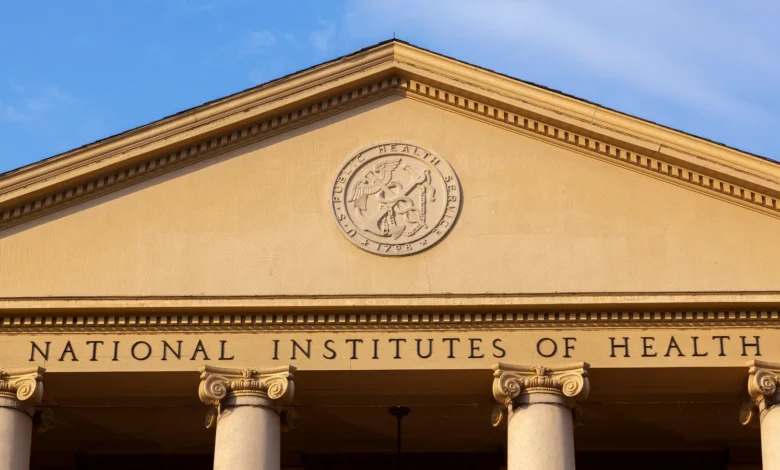
The landscape of federally funded scientific inquiry in the United States faces unprecedented disruption as a coalition of researchers and civil rights organizations launches a comprehensive legal challenge against the National Institutes of Health. According to a recently filed federal lawsuit, the nation’s premier medical research agency has systematically resurrected policies designed to cancel, restrict, or reshape scientific grants based on ideological criteria. The complaint asserts that despite earlier judicial setbacks suffered by the executive branch, the NIH has implemented a sophisticated system of keyword surveillance and administrative mandates to target research touching on diversity, equity, and inclusion, reproductive health, climate change, and various other topics disfavored by the current administration.
Legal representatives for the plaintiffs argue that these directives function as a political litmus test, fundamentally compromising the integrity of American science. The lawsuit highlights how years of meticulous research have been abruptly halted, jeopardizing critical studies that investigate complex public health challenges ranging from early-onset dementia to racial disparities in kidney disease. As academic institutions and individual investigators grapple with sudden funding freezes and mandatory project renegotiations, the legal battle brings to the forefront a fierce constitutional debate over federal authority, scientific independence, and First Amendment protections in academic research.
The Chronology of Policy Shifts and Judicial Battles
The roots of the current controversy trace back to a series of executive orders signed by President Donald Trump, which directed federal agencies to review and curtail spending on programs deemed contrary to administration priorities. Throughout the early phases of these directives, federal grant terminations surged, causing widespread alarm across major research universities and medical centers. However, the momentum behind these mass cancellations experienced a temporary slowdown in the fall of 2025 as the administration encountered significant resistance in federal courts.
A pivotal moment in the judicial pushback occurred when U.S. District Judge William Young issued a landmark ruling striking down internal NIH guidance that had instructed agency staff to terminate grants falling outside official policy lines, particularly those involving diversity, equity, and inclusion (DEI) initiatives and vaccine hesitancy. Judge Young ordered the agency to restore the canceled grants to their previous standing.
The legal tug-of-war intensified when the case reached the U.S. Supreme Court. The nation’s highest court ultimately blocked the specific element of Judge Young’s order that mandated the immediate restoration of the canceled funds. Nevertheless, the Supreme Court left intact the portion of the ruling that officially vacated the NIH’s controversial internal guidance.
Rather than halting the review process, the administration adapted. According to the new lawsuit, the agency replaced the invalidated policies with updated directives issued by NIH Director Jay Bhattacharya. These new guidelines continued to target specific areas of research through modified language, prompting plaintiffs to argue that the underlying intent—to defund projects exploring disfavored viewpoints—remained completely unchanged.
Evolving Guidance and Targeted Scientific Fields
The complaint details a shifting bureaucratic vocabulary designed to circumvent previous legal challenges while maintaining strict ideological oversight. In August 2025, Director Bhattacharya issued guidance asserting that research investigating the potential harms caused by puberty suppression, hormone therapy, or surgical intervention for gender dysphoria held greater scientific promise than studies examining those same interventions as beneficial treatments.
While the NIH later moderated this specific language in a July policy update, the lawsuit contends that this adjustment was largely cosmetic and failed to alter how the agency actually evaluates and implements grant awards. The legal filing describes the modification as an implicit recognition that funding only hypotheses aligned with executive preferences while starving opposing viewpoints of resources is both legally dubious and scientifically unsound.
Beyond gender-affirming care, the guidance cast a wide net over public health research addressing systemic inequalities. The initial August 2025 framework acknowledged that historical practices such as housing discrimination and redlining can measurably impact the health outcomes of minority populations. However, subsequent revisions removed these concessions, explicitly instructing researchers to omit references to systemic racism from their funding proposals. Consequently, the NIH began rejecting studies that attributed health disparities in specific demographic groups to systemic factors, steering investigators toward individual-level explanations approved by the administration.
The Mechanics of Keyword Surveillance and Self-Censorship
Central to the plaintiffs’ allegations is the widespread deployment of automated keyword screening. Units across the NIH have been instructed to audit existing grant portfolios and incoming applications using expansive lists of restricted terms. According to evidence brought to light in separate litigation initiated by University of California researchers, federal agencies have utilized comprehensive keyword algorithms to scan billions of dollars in research proposals.
The targeted terminology spans a broad spectrum of scientific and social discourse, including words such as "gender," "racist," "climate change," and "vaccine refusal." Researchers whose ongoing projects are flagged by these digital filters face a difficult ultimatum: they must renegotiate the core scope and language of their studies to strip away offending terminology, or risk total termination of their funding.
For scholars applying for new grants, the chilling effect has transformed the preparation of research proposals. Investigators are increasingly engaging in preemptive self-censorship, scrubbing their applications of critical terminology even when doing so obscures the true focus or diminishes the methodological clarity of their work. Grant writers report walking a tightrope between maintaining scientific accuracy and ensuring their proposals escape automated ideological detection.
Voices from the Legal Front and Institutional Reactions
Representatives for the plaintiffs have expressed profound concern over the long-term damage these policies inflict on the scientific enterprise. Shalini Goel Agarwal, special counsel at Protect Democracy—one of the advocacy groups representing the affected researchers—emphasized the human and systemic toll of the administration’s actions.
"This isn’t just illegal, it hurts every person served by this research and unravels years of work by the scientific community," Agarwal stated.
Echoing these sentiments, Grayce Zelphin, senior staff attorney at the American Civil Liberties Union of Northern California, underscored the constitutional implications of the agency’s framework.
"The NIH’s new policies, which are essentially a political litmus test, violate the First Amendment, undermine science and education, and have cost universities tens of millions of dollars in cancelled grants," Zelphin said in a statement.
When contacted for comment regarding the ongoing litigation, representatives for the National Institutes of Health maintained the agency’s standard policy of declining to comment on active legal proceedings. Internally, however, career scientists and administrative officials have expressed mounting frustration over the administrative burden and ethical dilemmas posed by continuous policy reversals.
Broader Implications for American Research and Public Health
The ongoing litigation highlights a deep structural conflict between executive branch policymaking and the traditional independence of federal scientific funding agencies. For decades, institutions like the NIH have relied on peer-review panels composed of expert scientists to evaluate grant applications based on methodological rigor, innovation, and potential public health benefit. Introducing political screening criteria fundamentally alters this merit-based ecosystem.
Academic institutions, which rely heavily on federal overhead and grant funding to support laboratories, graduate students, and clinical trials, face severe financial instability as a result of sudden terminations. Tens of millions of dollars in research capital have already been lost or frozen, forcing universities to absorb shortfalls or scale back essential research programs. Furthermore, international observers and domestic scientific societies warn that politicizing medical research damages the global reputation of the United States as a bastion of objective, evidence-based inquiry.
In their current legal filing, the plaintiffs are seeking class-action status to encompass two distinct groups of affected academics. The first class includes all researchers whose active grants have been terminated under the contested directives. The second class comprises individuals whose grant applications have been summarily denied, who have been forced to renegotiate and rephrase their project proposals under duress, or who have chosen to forgo applying for federal funding altogether out of fear of political retaliation.
As the case proceeds through the federal court system, the outcome is expected to establish a vital precedent regarding the limits of executive power over independent scientific agencies. Whether the judiciary will step in to halt the administration’s keyword screening mechanisms and restore traditional peer-review standards remains one of the most critical legal questions facing the American scientific community in decades.