The Digital Mirror How Generative AI and Social Media Filters are Redefining the Realities of Modern Rhinoplasty

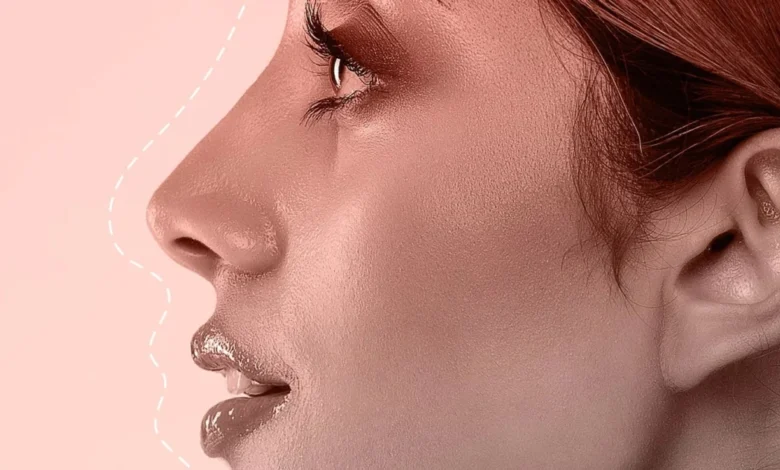
The landscape of cosmetic surgery is undergoing a profound transformation as artificial intelligence (AI) and sophisticated augmented reality (AR) filters reshape how patients perceive their own faces. For decades, individuals seeking rhinoplasty—commonly known as a "nose job"—arrived at consultations clutching magazine clippings of celebrities. Today, that trend has shifted toward a more personal, albeit digitally altered, reference: an AI-generated version of themselves. This evolution from aspirational beauty to "self-idealization" is creating a new set of challenges for board-certified plastic surgeons who must bridge the gap between algorithmic perfection and biological possibility.
The Evolution of Visual Communication in Plastic Surgery
To understand the current impact of AI on rhinoplasty, it is essential to view the trajectory of surgical planning tools over the last half-century. In the pre-digital era, surgeons relied on physical sketches, hand-drawn overlays on printed photographs, and eventually, basic 2D imaging software to communicate potential outcomes. These tools were rudimentary, serving primarily as a rough guide rather than a precise prediction.
By the early 2000s, the rise of digital photography allowed for more "Photoshopping" of patient images. However, the most significant shift occurred with the advent of social media. The mid-2010s saw the introduction of "beauty filters" on platforms like Snapchat and Instagram. Initially cartoonish, these filters evolved rapidly into the "Bold Glamour" and "AI Portrait" era of the 2020s, which utilizes generative adversarial networks (GANs) to produce hyper-realistic alterations in real-time.
According to data from the American Society of Plastic Surgeons (ASPS), rhinoplasty consistently ranks among the top five most requested cosmetic surgical procedures globally. The integration of AI into the pre-operative phase marks a paradigm shift; patients are no longer asking to look like someone else, but rather a filtered, "optimized" version of their own likeness.
Consumer AI Filters vs. Clinical Simulation Software
A critical distinction exists between the AI filters found on smartphones and the medical-grade simulation technology used in clinical settings. Consumer-facing apps, such as Facetune, Meitu, and various TikTok filters, operate on algorithms designed for maximum aesthetic appeal on a two-dimensional screen. These tools do not account for the three-dimensional complexities of human anatomy.
"The consumer filters are essentially a beauty app that applies a generic, idealized nose algorithmically with no knowledge of your bone structure, skin thickness, or airway, and no concept of what’s medically feasible," explains Dr. Krishna Vyas, a board-certified plastic surgeon. He notes that while a filter is designed for screen-based aesthetics, surgical planning must be rooted in safety and structural integrity.
In contrast, professional platforms such as Crisalix and VECTRA utilize high-resolution 3D scans of the patient’s actual face. These systems allow surgeons to manipulate the digital model within the constraints of the patient’s specific skin elasticity, cartilage strength, and bone structure. Dr. Goretti Ho Taghva, a board-certified plastic surgeon, emphasizes that the difference lies in the foundation: one is a tool for medical planning, while the other is a tool for digital trend-following.
The Psychological Shift: From Aspiration to Personal Expectation
The psychological impact of AI filters is perhaps more significant than the technological leap itself. When patients brought in photos of celebrities like Bella Hadid or Jennifer Aniston, there was an inherent understanding that they were looking at a different person’s anatomy. The "celebrity nose" was an inspiration, not a blueprint.
However, when a patient presents an AI-filtered version of their own face, the expectation changes. "It’s harder to talk someone out of [an unrealistic goal] because it feels personal rather than aspirational," says Dr. Taghva. Because the image is of the patient themselves, the emotional attachment to the result is heightened. This phenomenon, often referred to by psychologists as "Snapchat Dysmorphia," can lead to a distorted sense of self where the digital avatar becomes the baseline for "normalcy."
Dr. Michael Bassiri-Tehrani, a board-certified plastic surgeon, notes that while these images provide a concrete starting point for discussion, they frequently require a "reality check." The AI often creates a version of the nose that ignores the limitations of the patient’s tissue, particularly in cases of thick skin or previous trauma.
The "Halo Effect" of AI Filtering
One of the reasons AI-generated results appear so convincing—and so difficult to replicate surgically—is the "halo effect" of the software. When an AI filter reshapes a nose, it rarely stops there. To create a "balanced" look, the algorithm simultaneously performs a suite of subtle edits across the entire face.
Surgeons observe that these filters typically:
- Smooth skin texture and remove pores.
- Brighten and tighten the under-eye area.
- Subtly refine the jawline and chin.
- Even out skin tone and reduce redness.
- Slightly enlarge the eyes.
When a patient looks at the filtered image, they credit the improved appearance entirely to the new nose. "Patients credit the nose alone for an improvement that’s actually five or six subtle edits working together," Dr. Taghva explains. A surgeon can perform a rhinoplasty, but they cannot surgically alter skin quality or achieve the instantaneous "glow" of a digital filter through a single procedure. This discrepancy often leads to post-operative dissatisfaction, even if the surgical result is technically perfect.
The Functional Risk: Prioritizing Aesthetics Over Airflow
The most pressing concern among the medical community is the potential for AI-influenced desires to compromise nasal function. A nose is not merely a decorative feature; it is a vital organ responsible for humidifying, filtering, and directing the air we breathe.
AI filters frequently default to a "homogenized" ideal: a very narrow bridge, a highly refined tip, and a significant "slope." Achieving this look in reality often requires aggressive removal of bone and cartilage. Dr. Vyas warns that such aggressive narrowing can weaken the internal and external nasal valves. "A beautiful nose you can’t breathe through is a surgical failure," he asserts.
The medical reality is that the internal structures—the septum, turbinates, and valves—must be supported. Over-refining the tip to match a digital filter can lead to "alar collapse," where the nostrils close inward during inhalation. Data suggests that functional issues are one of the leading causes for revision rhinoplasty, a more complex and costly procedure required when the initial surgery fails to meet aesthetic or respiratory needs.
Data and Industry Trends
The influence of digital imaging is reflected in industry statistics. A survey by the American Academy of Facial Plastic and Reconstructive Surgery (AAFPRS) found that 75% of facial plastic surgeons reported seeing patients who sought cosmetic procedures to look better in selfies and on social media. Furthermore, the global facial rejuvenation market, which includes rhinoplasty, is projected to grow significantly as AI-driven "virtual try-on" tools become more accessible to the general public.
However, surgeons are increasingly calling for "ethical AI" in the cosmetic space. This involves transparency from app developers regarding the anatomical impossibility of certain filters and a commitment from surgeons to use AI as an educational tool rather than a guarantee of results.
The Role of the Surgeon as the "Anatomical Captain"
As AI technology continues to advance, the role of the plastic surgeon is shifting from a simple executor of requests to a critical interpreter of digital data. Dr. Bassiri-Tehrani emphasizes that every surgery is shaped by factors AI cannot yet quantify, including the patient’s occupation, personality, and even their height.
"Everything is a factor in rhinoplasty… AI filters are a useful tool, but they still need a captain at the helm to guide the results," he says. The consensus among experts is that while AI can help patients articulate their desires, it cannot replace the clinical judgment of a human who understands how living tissue heals, how scars form, and how cartilage remodels over years of aging.
Conclusion: Navigating the Future of Facial Aesthetics
The rise of AI in rhinoplasty consultations represents a double-edged sword. On one hand, it has democratized the "preview" process, allowing patients to explore possibilities and feel more empowered in their decision-making. On the other, it risks fostering a culture of unattainable perfection that ignores the biological and functional realities of the human body.
The future of the field likely lies in a hybrid approach: utilizing high-end, anatomically-accurate 3D simulations to set realistic expectations, while maintaining a rigorous focus on the "functional airway." As the digital and physical worlds continue to blur, the goal of plastic surgery remains unchanged: to achieve a result that is harmonious, natural, and—most importantly—sustainable in the real world, not just on a screen. Surgeons advise that while a filter can be a starting point for a conversation, the final surgical plan must always be written in the language of anatomy, not algorithms.