Electric Truck Maker Harbinger Secures $240 Million in Series D Funding Following Landmark FedEx Contract and Military Expansion

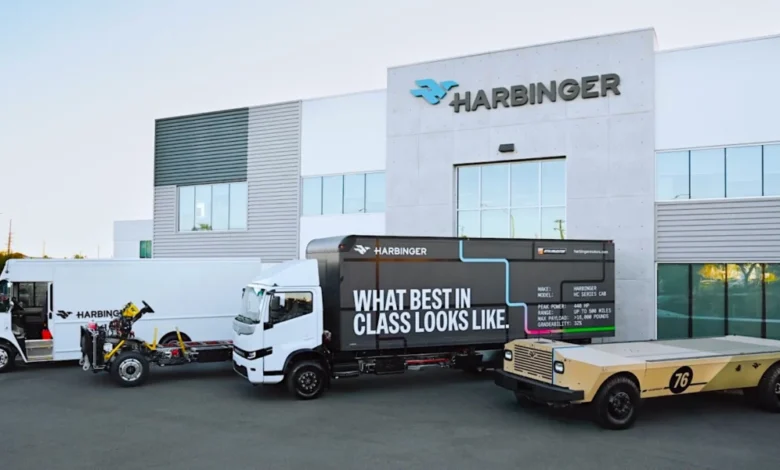
The commercial electric vehicle sector has reached a significant financial and operational milestone as Harbinger, an emerging manufacturer of medium- and heavy-duty electric trucks, successfully closed a $240 million Series D funding round. This latest injection of capital arrives on the heels of major commercial and defense victories for the company, most notably a historic $300 million procurement agreement with global logistics titan FedEx and a specialized technology contract with the United States military.
Co-led by prominent investment firms Tiger Global, the Capricorn Technology Impact Fund, and Ridgeline, the Series D round brings Harbinger’s total fundraising efforts to more than $650 million since its inception in 2021. The fresh capital is earmarked to accelerate the company’s ambitious expansion strategy, which includes scaling up its primary manufacturing capabilities, advancing proprietary autonomy software, and venturing into adjacent technological domains such as stationary energy storage systems and power generation applications.
The Commercial Catalyst: The FedEx Partnership and Fleet Decarbonization
The momentum behind Harbinger’s latest funding round is heavily tied to its breakthrough agreement with FedEx, finalized earlier in the year. Under the terms of the $300 million contract, Harbinger is set to supply 2,000 medium-duty electric delivery trucks to the shipping conglomerate. Industry analysts regard the agreement as one of the largest binding orders for medium- or heavy-duty commercial electric vehicles in transportation history.

For logistics operators like FedEx and competitors such as Amazon, the transition to fully electric fleets is no longer driven solely by corporate sustainability mandates or carbon reduction targets. Escalating and unpredictable diesel fuel prices have transformed fleet electrification into an urgent economic necessity. Internal financial projections released by FedEx indicate that the substantial upfront investment in electric commercial vehicles is expected to yield approximately $800 million in long-term operational savings by phasing out costly diesel consumption and reducing routine mechanical maintenance.
Fleet operators have historically faced severe roadblocks when attempting to electrify commercial vans and trucks, primarily due to the limitations of existing commercial chassis architectures. Traditional internal combustion engine vehicles converted to electric powertrains often suffer from compromised payload capacities, restricted driving ranges, and exorbitant upfront acquisition costs. Harbinger’s value proposition centers on its clean-sheet, purpose-built electric vehicle architecture, designed explicitly from the ground up to meet the rigorous duty cycles of commercial delivery fleets without sacrificing utility or financial viability.
Executive Vision and First-Principles Engineering
John Harris, Co-Founder and Chief Executive Officer of Harbinger, emphasized that the company’s core mission extends far beyond simply offering an alternative powertrain to legacy fleet operators.
"Harbinger exists to challenge what industry has learned to accept, and reinvent the critical systems the world depends on," Harris stated following the funding announcement. "By rethinking critical systems from first principles, we aim to unlock better performance, greater reliability, safer operations, and more room to grow. Electrification is at the core of everything we do, and increasingly, electrification is at the core of industry, defense, mobility, and AI. Harbinger’s role is not simply to give customers another option. It is to reset expectations for what critical systems should deliver."

By applying first-principles engineering, Harbinger has developed proprietary electric vehicle components—including custom battery packs, electric motors, and chassis layouts—specifically tailored to the high-wear demands of commercial use. This vertically integrated approach has allowed the manufacturer to bypass supply chain bottlenecks that have historically plagued automotive startups, enabling faster delivery timelines and tighter cost controls.
Strategic Growth and Diversification into Defense and Energy
While medium-duty delivery trucks remain the foundational product line for Harbinger, the newly acquired $240 million in Series D funding will enable the company to diversify its business model across several high-growth sectors.
A significant portion of the capital will be dedicated to scaling manufacturing output at the company’s production facilities to meet the overwhelming demand generated by the FedEx order and anticipated future municipal and private contracts. However, the company is concurrently positioning itself as a diversified energy and technology solutions provider.
- Defense Applications: Harbinger’s engineering capabilities have already caught the attention of federal defense agencies. Earlier this year, the company secured a specialized defense contract with the US military to develop autonomous electric transport solutions. The Series D funding will accelerate research and development for ruggedized, autonomous military trucks designed to operate reliably in contested or infrastructure-poor environments.
- Energy Storage and Power Generation: Leveraging its proprietary battery architecture, Harbinger plans to expand into stationary energy storage systems and mobile power generation units. As commercial fleet operators and industrial facilities face increasing strain on local electrical grids, the ability to deploy modular, high-capacity energy storage systems represents a lucrative secondary market for commercial EV manufacturers.
- Autonomy Software: The integration of advanced driver-assistance systems (ADAS) and autonomous navigation software is becoming standard requirement specifications for modern commercial fleets. Harbinger is heavily investing in software development to ensure its medium-duty chassis are fully compatible with Level 4 autonomy packages, positioning the company’s vehicles for future unmanned logistical operations.
Chronology of Growth: A Rapid Ascent Since 2021
Harbinger’s journey from a clean-sheet startup to a multi-hundred-million-dollar commercial manufacturer highlights the rapid transformation occurring within the heavy-transportation sector:

- 2021: Harbinger is founded with a mission to design and build medium- and heavy-duty electric vehicle platforms from the ground up, avoiding the compromises of retrofitted diesel chassis.
- 2023–2024: The company refines its proprietary EV architecture, unveiling customized battery systems and specialized commercial chassis designed for high-utilization fleet environments.
- Early 2026: Harbinger secures a high-profile military contract to develop autonomous electric transport platforms, validating the durability and adaptability of its technology for defense applications.
- Late 2026 (October): FedEx commits to a historic $300 million procurement order for 2,000 medium-duty electric delivery trucks, citing long-term diesel cost savings and fleet decarbonization goals.
- November 2026: Harbinger successfully closes its Series D funding round, raising $240 million co-led by Tiger Global, the Capricorn Technology Impact Fund, and Ridgeline, bringing total historical funding to over $650 million.
Industry Implications and Market Outlook
The successful closure of Harbinger’s Series D financing round underscores a broader macroeconomic shift in venture capital and institutional investment. While consumer electric vehicle adoption has faced localized headwinds and fluctuating demand curves, the commercial and industrial EV segment continues to attract robust capital inflows. Fleet operators face unavoidable regulatory pressures to reduce greenhouse gas emissions, combined with the volatile economics of fossil fuel pricing, creating a guaranteed baseline demand for reliable commercial electrification.
Furthermore, Harbinger’s expansion into defense contracting and stationary energy storage illustrates a sophisticated risk-mitigation strategy. By diversifying away from pure-play commercial truck manufacturing into energy infrastructure and autonomous software, the company is insulating its business model against cyclical downturns in the logistics sector.
As Harbinger deploys its $240 million in new capital, industry observers will be closely monitoring the company’s ability to execute on its massive FedEx delivery backlog while simultaneously scaling its defense and energy initiatives. If the company successfully meets its production milestones, Harbinger is well-positioned to transition from an ambitious industry challenger into an established pillar of modern commercial transportation and industrial energy infrastructure.