Lea Michele Pays Emotional Tribute to Late Songwriter and Composer Duncan Sheik Following His Tragic Death at Age 56

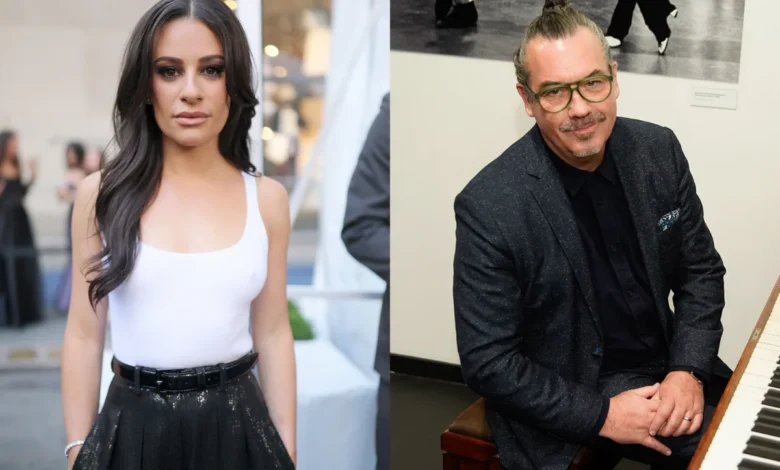
The entertainment industry is mourning the loss of Duncan Sheik, the Grammy- and Tony Award-winning singer, songwriter, and composer widely celebrated for his revolutionary contributions to contemporary pop music and musical theater. Sheik passed away on Thursday at the age of 56 due to organ failure, leaving behind a legacy that fundamentally reshaped the landscape of Broadway. Among the countless colleagues, fans, and friends expressing their profound grief is actress and singer Lea Michele, who rose to international prominence starring in Sheik’s groundbreaking rock musical, Spring Awakening.
The confirmation of Sheik’s passing was provided by his mother, Suzanne Sheik, to major media outlets, concluding a week of grave concern from the artistic community. Earlier in the week, representatives and family members disclosed that the composer had been hospitalized and was receiving intensive medical treatment for an unspecified health issue, placing him in critical but stable condition. Despite the efforts of medical professionals, his condition deteriorated, leading to his untimely death.
Chronology of a Creative Partnership
The artistic relationship between Duncan Sheik and Lea Michele spans more than two decades, beginning long before either achieved mainstream commercial success. Michele, who would later become a household name through her starring role in the television series Glee, was introduced to Sheik’s visionary work as a teenager auditioning for regional and developmental workshops of what would become a cultural phenomenon.
In a poignant tribute shared on her social media platforms, Michele reflected on their enduring history. "I met Duncan when I was 14 years old," the actress wrote, accompanying her words with a nostalgic photograph of the pair. She recalled listening to an early cassette tape demo of Sheik singing compositions from Spring Awakening outside her middle school prior to her very first professional audition.
The bond formed during those formative years translated into a powerful collaborative synergy on stage. Michele’s Instagram tribute also featured archival footage of the pair in a rehearsal space, capturing a young Michele singing the emotionally charged number "Mama Who Bore Me" while Sheik accompanied her on acoustic guitar. "I’m at a loss for words. This one hurts and does not seem real," Michele continued in her statement. "Thank you for everything you gave us. And for the time we had together. Sending all my love and prayers now to Nora, Ines, and Duncan’s family."
A Singular Talent and Musical Legacy
Duncan Sheik first captured national attention in the mid-1990s as a singer-songwriter, achieving mainstream success with his platinum-selling, self-titled debut album released in 1996. The record featured the ubiquitous, Grammy-nominated hit single "Barely Breathing," a melodic and introspective track that dominated adult contemporary and alternative radio formats for months, anchoring itself in the pop-culture lexicon of the decade.
While "Barely Breathing" established Sheik as a formidable commercial force in pop music, his creative ambitions extended far beyond traditional radio hits. For nearly a decade, Sheik collaborated with librettist and lyricist Steven Sater on developing a musical adaptation of Frank Wedekind’s controversial 1891 expressionist play, Spring Awakening. The resulting musical explored themes of adolescent sexuality, rebellion, mental health, and adult hypocrisy through an electrifying contemporary rock score that contrasted sharply with the traditional, orchestral conventions of standard Broadway fare.
When Spring Awakening officially opened on Broadway in 2006, it became an immediate critical and commercial triumph. The production captured the zeitgeist of a new generation of theatergoers and swept the 2007 Tony Awards, securing eight trophies overall. Sheik personally claimed two prestigious Tony Awards: Best Original Score (shared with Steven Sater) and Best Orchestrations. Furthermore, the show’s original cast album won the Grammy Award for Best Musical Show Album in 2008, cementing Sheik’s status as a rare crossover artist capable of conquering both the pop charts and the Broadway stage.
Official Statements and Public Outpouring
Following the announcement of his death, official channels representing Sheik released a formal statement acknowledging the magnitude of the loss felt across the cultural landscape.
"It is with profound sadness that we confirm the passing of Duncan Sheik. The world has lost a singular talent, and deeply influential voice in music and theater," the statement posted to his social media accounts read on Friday. "Duncan was a father, husband, son, brother, and friend. He will be remembered for his sensitivity, wit, intelligence, and depth of spirit he brought to those who knew and loved him."
The artistic community responded with an overwhelming outpouring of condolences. Former cast members, directors, playwrights, and fellow musicians shared anecdotes highlighting Sheik’s gentle demeanor, sharp intellect, and unwavering generosity as a mentor and collaborator. Colleagues noted that despite his immense accolades, Sheik remained remarkably humble, consistently championing emerging artists and pushing the boundaries of theatrical composition.
Broader Impact and Cultural Implications
Duncan Sheik’s contributions to modern theater cannot be overstated. Before the arrival of Spring Awakening, contemporary rock and pop idioms were frequently viewed with skepticism by traditional Broadway gatekeepers. Sheik, alongside contemporaries like Jonathan Larson (Rent) and later Lin-Manuel Miranda (Hamilton), helped dismantle the rigid stylistic boundaries that separated commercial radio from musical theater storytelling.
By infusing a 19th-century German drama with modern acoustic-rock sensibilities, Sheik demonstrated that complex theatrical narratives could effectively resonate with younger, diverse audiences through contemporary musical vocabularies. The success of Spring Awakening paved the way for a wave of subsequent rock- and pop-infused musicals, fundamentally modernizing the Broadway soundscape for the twenty-first century.
Moreover, the musical served as a crucial launchpad for a generation of performers who have since become industry leaders. Aside from Lea Michele, the original Broadway production featured future stars such as Jonathan Groff and John Gallagher Jr., all of whom have frequently credited Sheik’s intricate, emotionally demanding compositions with shaping their artistic trajectories.
As tributes continue to pour in from across the globe, the enduring resonance of Duncan Sheik’s catalog remains a testament to his creative genius. Whether through the reflective melancholy of his solo singer-songwriter material or the explosive emotional catharsis of his theatrical scores, Sheik’s work established a permanent imprint on contemporary American music. He is survived by his family, including his wife and children, and an artistic community forever altered by his profound melodic voice.
Related posts: