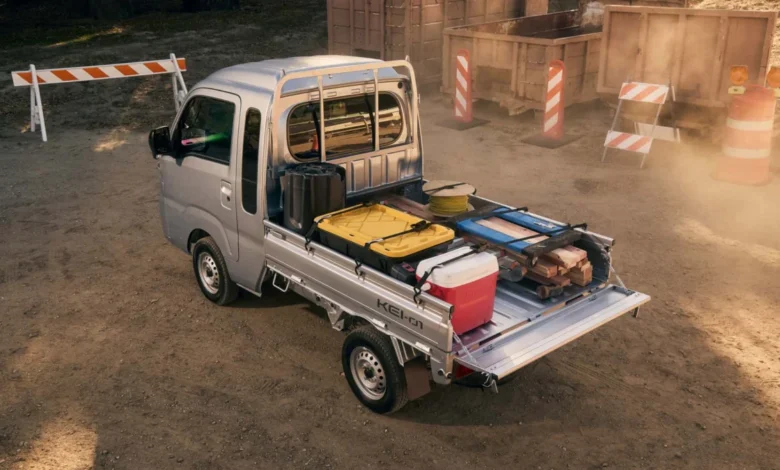
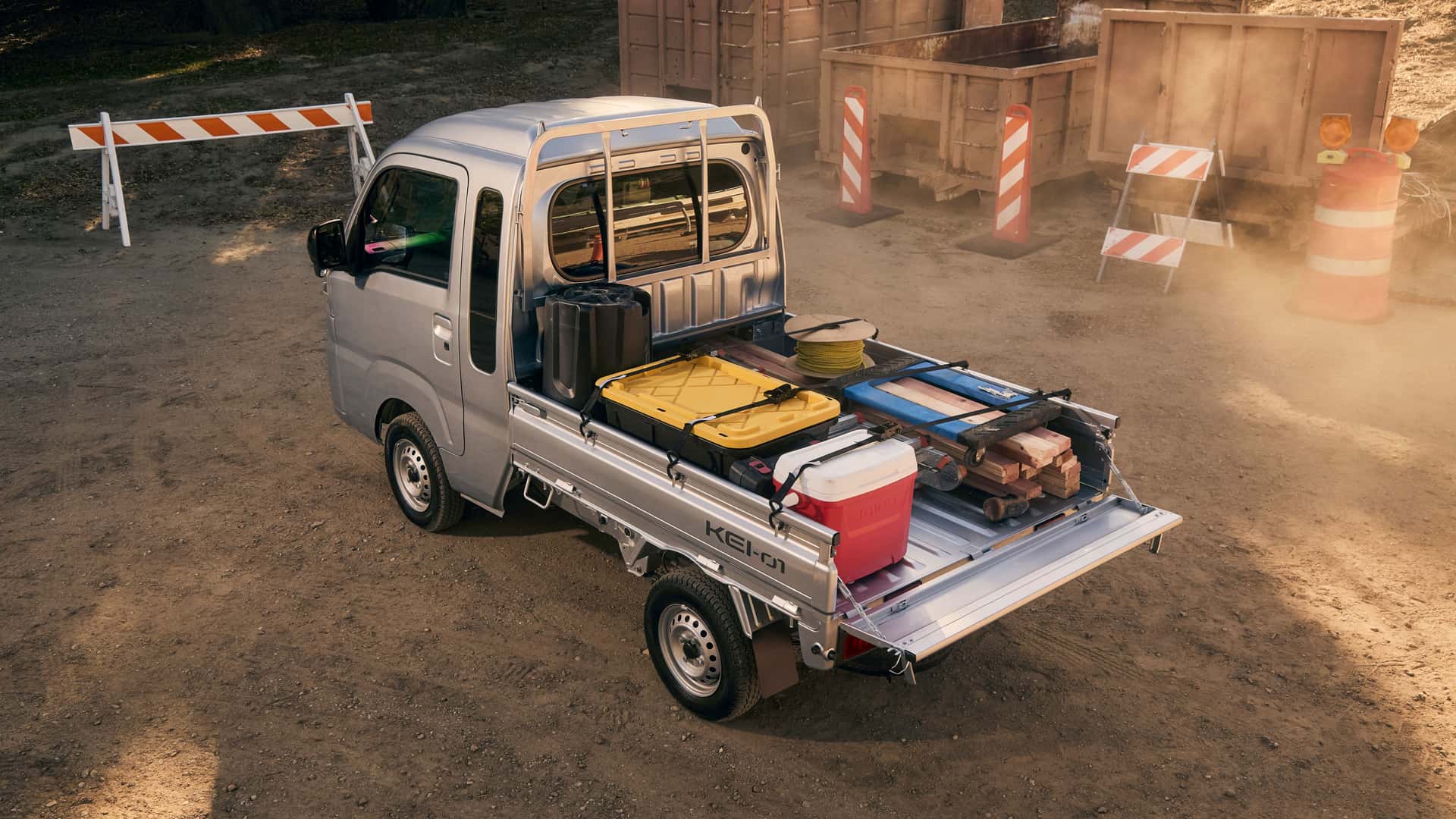
The automotive landscape in the United States is poised for a significant shift as Toyota officially announces the resurrection of its defunct sub-brand, Scion, now rebranded as "Scion by Toyota." The cornerstone of this revival is the KEI-01, a micro-utility vehicle inspired by the iconic Japanese Kei truck segment. While the announcement has generated substantial excitement among enthusiasts who have long clamored for the introduction of these diminutive, highly utilitarian vehicles to the American market, the reality of the KEI-01 is tempered by stringent federal regulations governing low-speed vehicles.
The Genesis of the KEI-01 Project
The decision to reintroduce the Scion nameplate under the Toyota umbrella represents a strategic pivot toward niche, specialized mobility solutions. The KEI-01 is fundamentally a purpose-built vehicle designed to bridge the gap between traditional light-duty pickups and specialized utility task vehicles (UTVs). Measuring just over 11 feet in length and under five feet in width, the vehicle is engineered for maneuverability in dense urban environments, industrial complexes, and large-scale agricultural or campus settings.
Under the hood, the KEI-01 utilizes a 660-cc three-cylinder engine, a hallmark of the Japanese Kei-car philosophy, which prioritizes efficiency and compact dimensions. Toyota has paired this internal combustion unit with a continuously variable transmission (CVT) and a four-wheel-drive system, ensuring that the vehicle maintains functionality despite its small footprint. The cargo bed features folding sides to facilitate rapid loading and unloading, supporting a payload capacity of up to 600 pounds.
Regulatory Constraints and Market Positioning
Prospective buyers must manage their expectations regarding the KEI-01’s operational capabilities. Because the vehicle must comply with current United States Low-Speed Vehicle (LSV) regulations, it is electronically governed to a top speed of 25 miles per hour. This limitation effectively restricts the vehicle’s use to private property, gated communities, or designated low-speed municipal roads.
The pricing structure is projected to fall just under the $20,000 threshold. While this may seem steep for a vehicle with limited highway capabilities, it positions the KEI-01 as a premium alternative to existing UTVs, offering the comfort of a fully enclosed, right-hand-drive cabin. Standard amenities include climate control, push-button ignition, power windows, and an integrated central infotainment display, features that elevate the user experience beyond that of a standard industrial utility vehicle.
A Phased Rollout Strategy
Toyota has confirmed that the initial production run of the KEI-01 will be strictly limited to fleet customers. This approach is common for manufacturers entering a new market segment, as it allows for the gathering of long-term reliability data and maintenance feedback within controlled environments. By focusing on fleet operators, Toyota can monitor how the vehicles perform under heavy, repetitive use, which will inform any necessary engineering refinements before a broader release.
The company has indicated that it remains open to a limited retail rollout should consumer demand prove sufficient. For those individuals who have expressed a desire for such a vehicle, the manufacturer has signaled that public interest will be a key metric in the decision-making process for future availability. The production of the KEI-01 is scheduled to take place within the United States, a move likely intended to streamline supply chain logistics and potentially circumvent certain import complexities associated with international Kei-class vehicles. The target arrival date for the first fleet units is the second half of 2027.
Scion’s Broader Product Roadmap
The return of the Scion brand is not confined to the singular KEI-01 platform. Toyota has unveiled plans to diversify the brand’s portfolio with a series of mobility concepts that share the KEI-01’s philosophy of compact, rugged efficiency. Among these is a high-performance side-by-side (SxS) concept, which distinguishes itself with a 300-horsepower turbocharged four-cylinder hybrid powertrain. This aggressive output places the concept in direct competition with top-tier performance UTVs from established powersport manufacturers.
Additionally, the company showcased the BKE concept, an electric scooter that appears to be a more ruggedized interpretation of the micro-mobility trend. While the BKE shares design DNA with the KEI-01 and the SxS concept, its primary appeal lies in its portability and urban utility. These three offerings—the utility-focused KEI-01, the performance-oriented SxS, and the transit-focused BKE—suggest that the "new" Scion is positioning itself as a lifestyle and utility brand rather than a traditional passenger car manufacturer.
Historical Context and Brand Re-emergence
Scion was originally launched by Toyota in 2003 with the intent of appealing to a younger demographic through unconventional styling and simplified, "no-haggle" pricing. Despite initial success with models like the xB and the tC, the brand struggled to maintain its identity as the target demographic matured and market preferences shifted toward crossovers and SUVs. Scion was officially discontinued in 2016, with its most successful models, such as the FR-S, being absorbed into the primary Toyota lineup.
The current re-emergence of Scion signifies a departure from the brand’s previous identity. Rather than serving as a testbed for youthful, entry-level cars, the revived Scion by Toyota appears to be an incubator for experimental mobility platforms. By utilizing the Scion name, Toyota can explore these high-risk, low-volume segments without diluting the core Toyota brand, which remains focused on mass-market reliability and mainstream automotive trends.
The Implications for the US Market
The introduction of the KEI-01 into the US market is a response to a growing trend of "micro-mobility" interest. Across the United States, there has been a documented increase in the private importation of aging Japanese Kei trucks. While these older vehicles often struggle to meet modern US safety and emissions standards—leading to frequent legal and registration hurdles for owners—Toyota’s factory-supported, compliant version offers a viable path for those seeking this form factor without the associated regulatory risks.
Analysts suggest that the success of this endeavor will depend heavily on the evolution of state-level laws regarding Low-Speed Vehicles. As urban centers look for ways to reduce congestion and carbon footprints, some municipalities have begun expanding the scope of where LSVs can be operated. If such legislative trends continue, the market for vehicles like the KEI-01 could expand significantly beyond private fleet use.
Economic and Engineering Considerations
From an engineering perspective, the KEI-01 represents a significant investment in specialized tooling and supply chain management. By committing to US production, Toyota is signaling that it views the micro-utility segment as more than a temporary fad. The choice of a 660-cc engine is deliberate; it is a proven architecture that provides the necessary torque for utility tasks while remaining highly fuel-efficient. The inclusion of a CVT ensures that the vehicle remains accessible to a wide range of drivers, requiring minimal operator training compared to manual-transmission heavy machinery.
However, challenges remain. The automotive industry is currently navigating a transition toward electrification, and while the KEI-01 utilizes a traditional engine, its siblings in the Scion lineup, such as the BKE scooter and the hybrid SxS, highlight a push toward electrified powertrains. Whether the KEI-01 will eventually see an electric variant remains a subject of speculation, but given Toyota’s broader electrification strategy, it is a logical path for future iterations.
Conclusion and Future Outlook
The announcement of the Scion by Toyota KEI-01 is a noteworthy development in the American automotive industry. It effectively addresses a specific, long-standing demand from a vocal segment of the market while acknowledging the harsh realities of federal vehicle safety standards. By opting for a phased, fleet-first rollout, Toyota is demonstrating a cautious, data-driven approach to what is essentially a new market category for the company.
As the 2027 launch date approaches, the industry will be watching closely to see how the KEI-01 performs in its initial testing phase and whether the accompanying concepts—the high-powered SxS and the rugged BKE—find their way to the production line. For now, the rebirth of Scion represents a unique opportunity for Toyota to experiment with the boundaries of personal and professional mobility, potentially redefining what a "truck" means for the modern, urban, and industrial consumer. The coming years will determine if this niche experiment can evolve into a sustainable pillar of the Toyota family or if it will remain a specialized curiosity in the broader automotive landscape.
Related posts: