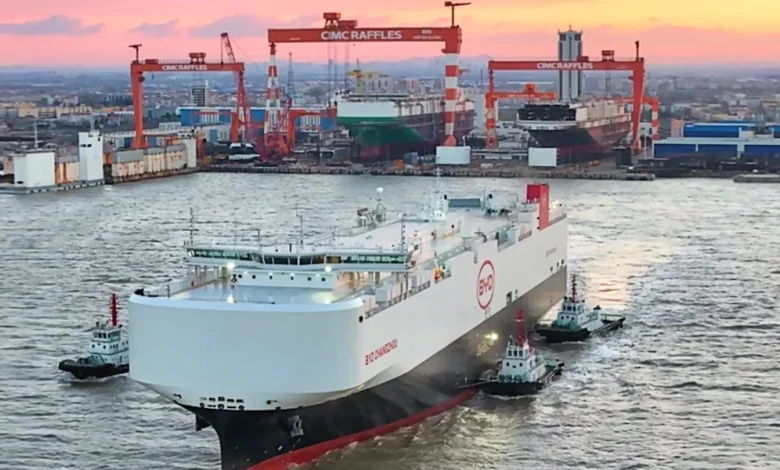
Chinese electric vehicle giant BYD is aggressively scaling up its maritime logistics capabilities to support its surging global ambitions. According to recent reports from Middle Eastern maritime publication Robban Assafina and automotive outlet CarNewsChina, citing industry chain sources, BYD has placed an order for ten additional pure car and truck carriers (PCTCs). Each of these massive vessels is designed with a capacity of 9,200 car equivalent units (CEUs). This massive new order underscores the automaker’s rapid transition from a domestic market leader to an influential, highly vertically integrated global powerhouse determined to control its entire supply and distribution chain.
The newly reported acquisition, if confirmed across all manufacturing milestones, will significantly expand BYD’s dedicated maritime fleet. The company’s expanding fleet of liquefied natural gas (LNG)-powered vessels is projected to total 18 ships, boasting a combined cargo capacity capable of transporting over 130,000 vehicles simultaneously. This strategic move highlights how major Chinese automakers are overcoming traditional third-party shipping bottlenecks by investing heavily in proprietary logistics, thereby insulating their export operations from fluctuating global charter rates and vessel shortages.
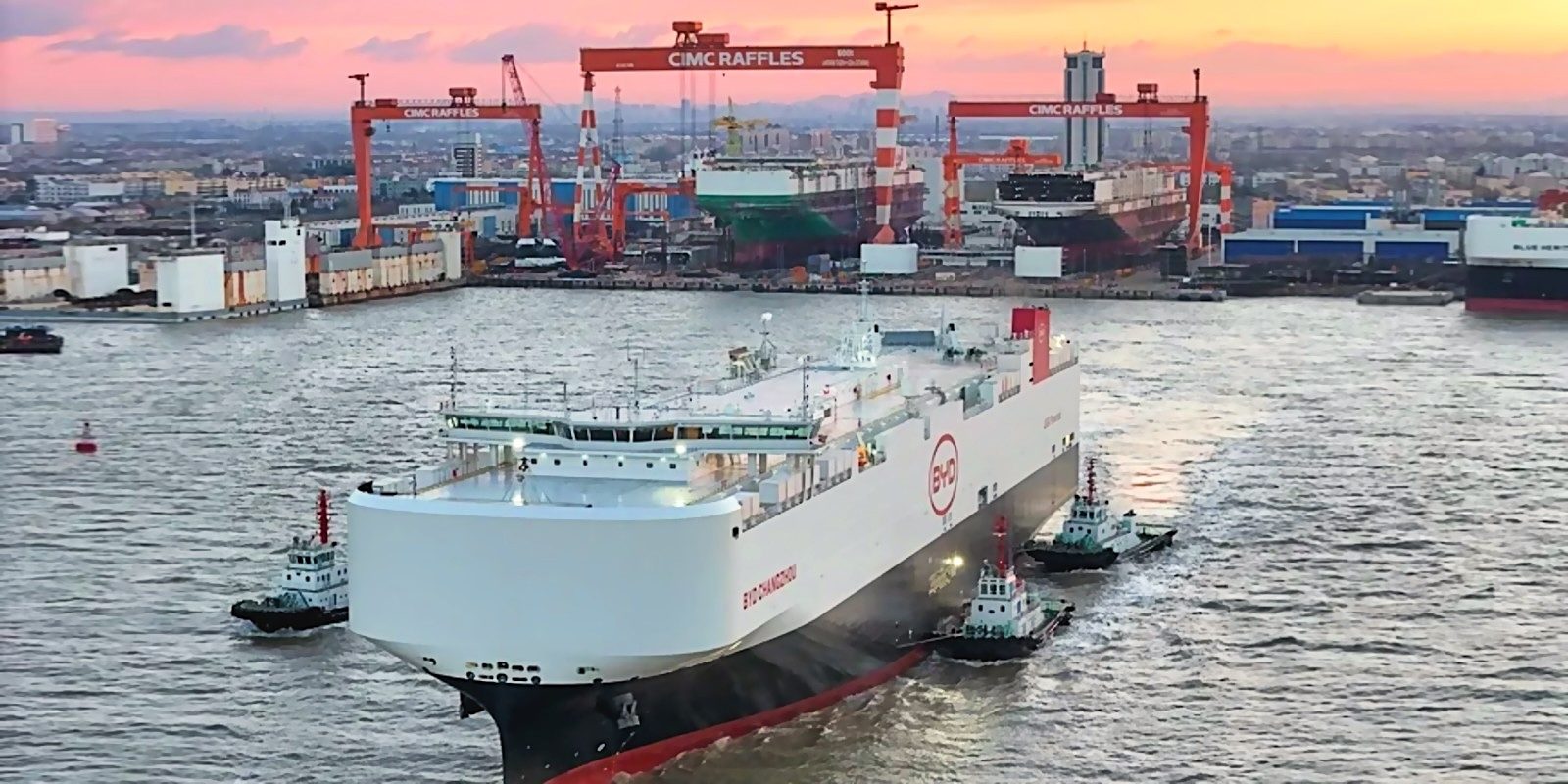
Anatomy of a Maritime Titan: The 9,200 CEU Class
The foundation of BYD’s maritime strategy was laid when the company introduced its flagship transport vessel, the BYD Shenzhen. Setting sail on its maiden voyage, the Shenzhen established a new benchmark for vehicle carrier capacity, offering 9,200 parking spots—an area equivalent to roughly 20 professional football fields. Designed to maximize efficiency while adhering to modern environmental standards, these vessels utilize LNG propulsion to significantly reduce carbon emissions compared to traditional bunker fuel-powered carriers.
Carrying thousands of electric vehicles (EVs) and plug-in hybrid electric vehicles (PHEVs) across international waters introduces unique safety and engineering challenges, particularly concerning battery management and fire suppression at sea. By engineering and utilizing custom-built vessels designed from the keel up to handle modern new energy vehicles (NEVs), BYD aims to streamline loading operations, minimize transit times, and safeguard its high-value cargo during long-haul transoceanic voyages to Europe, the Middle East, and the Americas.
Chronology of BYD’s Export and Logistics Expansion
The trajectory of BYD’s international expansion has moved at a staggering pace over the last several years. Understanding the timeline of this growth reveals a deliberate strategy of simultaneous market penetration and infrastructure acquisition:
- March 2023: BYD officially launches its passenger vehicle sales operations in the United Kingdom, marking a major milestone in its Western European market entry strategy.
- April 2025: The BYD Shenzhen officially sets sail on its first international voyage, showcasing the company’s newly minted capability to transport massive volumes of vehicles independently.
- Late 2025 to Early 2026: Export volumes experience exponential month-over-month growth, straining standard global roll-on/roll-off (RoRo) ship availability and prompting the manufacturer to accelerate fleet expansion plans.
- August 2026: BYD records a dramatic surge in international registrations, including a 98% year-over-year increase in the UK, capturing 3.48% of the local new car market. Cumulative global exports for the first eight months of the year approach 1.13 million units.
- September 2026: Industry reports surface regarding the massive order for ten additional 9,200-CEU vessels, bringing the total planned owned fleet to 18 LNG-powered carriers. Simultaneously, the company updates its affordable EV lineup, introducing advanced models at major automotive exhibitions like the Chengdu Auto Show to capture broader European and global market share.
Export Statistics and Global Market Penetration
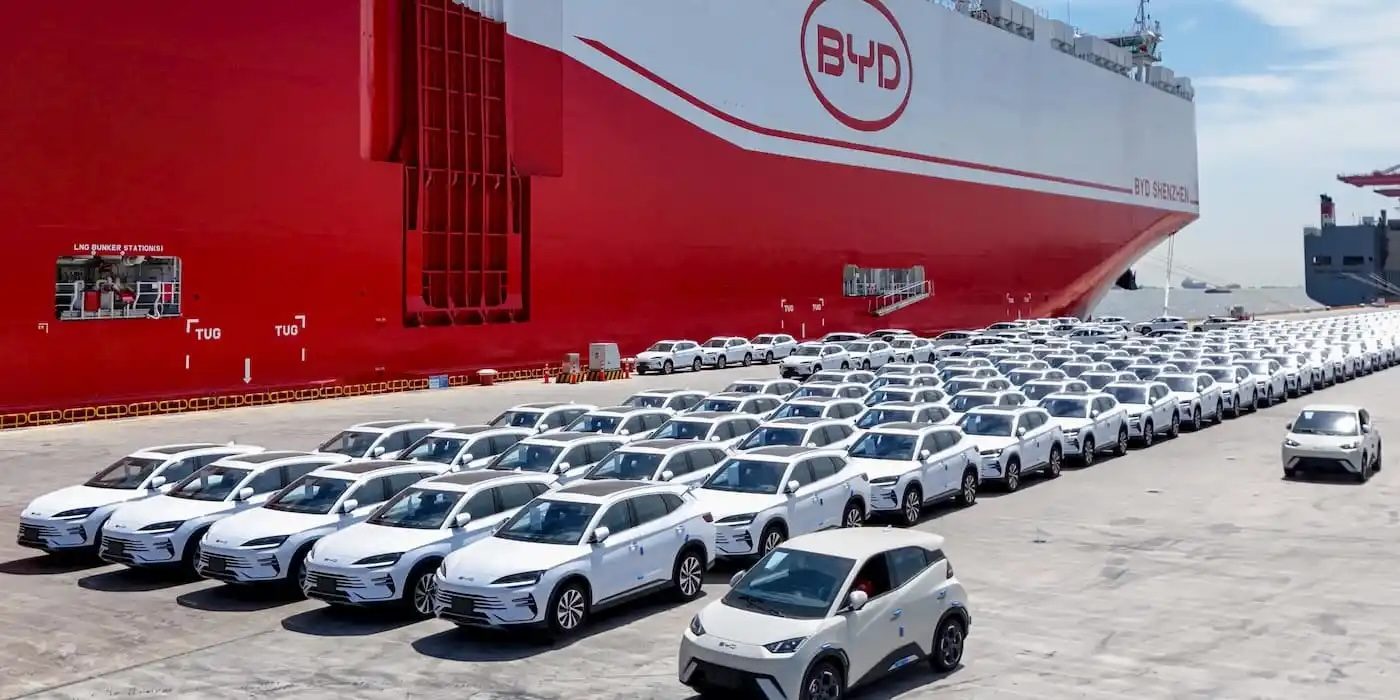
The numbers underpinning BYD’s maritime investments reflect an unprecedented scale of manufacturing and export velocity. Data compiled by CarNewsChina indicates that BYD exported 184,000 passenger vehicles from China in a single recent month, representing a 131% increase compared to the same period in the previous year and a more than 6% jump from the preceding month alone. Within China’s broader automotive sector, BYD commands a dominant 35.4% share of all passenger "new energy" vehicle exports, which encompass both battery electric vehicles (BEVs) and plug-in hybrids.
Cumulatively, BYD’s international exports reached 1,127,000 vehicles through the first eight months of the year, translating to a phenomenal 90% growth rate over the corresponding period in 2025. This sustained export volume requires a predictable, scalable supply chain that traditional charter shipping companies simply cannot guarantee amid high global demand. By owning and operating its own fleet, BYD can bypass port congestion bottlenecks and maintain tighter control over delivery schedules to key destination hubs across Europe, Latin America, Southeast Asia, and Oceania.
Regional Success: The UK and European Markets
While developing nations and neighboring Asian markets served as the initial stepping stones for BYD’s globalization, mature Western markets have increasingly become the primary focus of its growth strategy. In the United Kingdom, where the brand has registered more than 110,000 vehicles since its 2023 launch, momentum has reached new heights. Through August, BYD registrations skyrocketed by 98%, crossing 48,000 units for the year and lifting the brand’s market share to 3.48%—nearly double the 1.92% market share it held during the same timeframe the prior year.
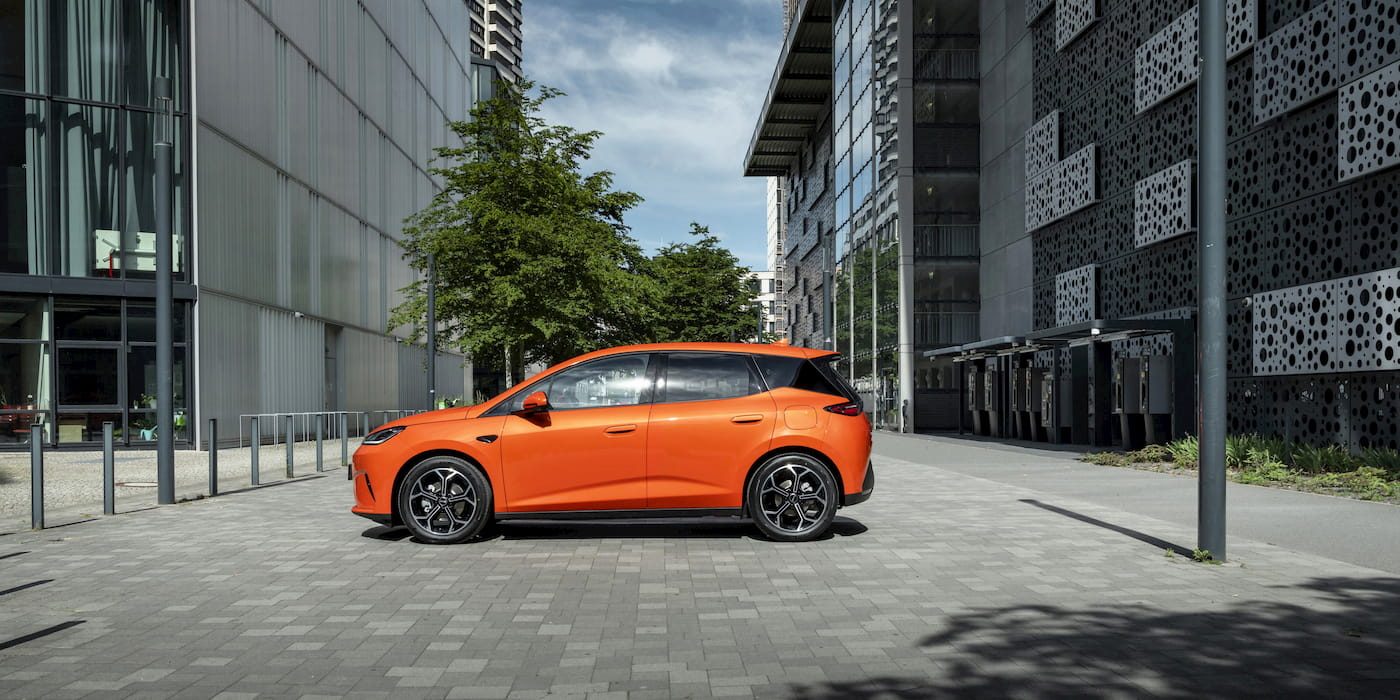
A parallel push is underway across continental Europe. Following strategic vehicle reveals at the Chengdu Auto Show, BYD has rolled out updated iterations of its highly competitive, accessible EV lineups—such as advanced versions of its popular entry-level models—tailored specifically to European regulatory standards and consumer preferences. As trade barriers, tariffs, and regulatory scrutiny increase in regions like the European Union, having a flexible logistics network and locally optimized vehicle offerings enables BYD to adapt swiftly to changing geopolitical landscapes.
Strategic Implications of Fleet Ownership
The decision by an automotive manufacturer to invest billions of dollars into proprietary maritime shipping fleets represents a fundamental shift in how global supply chains operate. Historically, automakers relied almost exclusively on specialized maritime shipping conglomerates to transport finished vehicles overseas. However, the post-pandemic supply chain crunch, combined with the explosive growth of China’s EV sector, triggered a severe shortage of RoRo vessels, causing charter rates to skyrocket.
By commissioning its own fleet of 18 LNG-powered mega-carriers, BYD achieves several critical strategic advantages:

- Cost Predictability: Shielding operations from volatile spot-market shipping rates protects profit margins, especially as automakers engage in aggressive price competition globally.
- Schedule Control: Owning the transport infrastructure allows BYD to prioritize its high-demand export routes, ensuring that vehicles reach regional distribution centers predictably and without arbitrary delays.
- Environmental Compliance: Utilizing LNG-powered propulsion aligns with global maritime decarbonization goals, blunting criticism regarding the carbon footprint associated with long-distance vehicle transport.
- Scalability: With a cumulative cargo capacity exceeding 130,000 vehicles across the planned fleet, BYD possesses the physical infrastructure required to sustain multi-million-unit annual export targets without depending on external capacity constraints.
Broader Industry Impact and Future Outlook
BYD’s aggressive expansion serves as a bellwether for the broader Chinese automotive industry. As domestic manufacturing capacity outpaces local consumption, Chinese automakers are pivoting aggressively toward international expansion, fundamentally reshaping the global automotive landscape. Competitors within China are closely monitoring BYD’s maritime strategy, with other major EV manufacturers and state-backed conglomerates similarly exploring dedicated shipping investments to secure their own export pipelines.
However, this rapid globalization is not without hurdles. Established automotive regions in Europe and North America are implementing stringent trade policies, anti-subsidy investigations, and tariff frameworks designed to protect domestic manufacturing ecosystems. Despite these regulatory headwinds, consumer demand for affordable, technologically advanced electric vehicles continues to drive strong sales figures across foreign markets.
As BYD integrates its new fleet of 9,200-CEU carriers over the coming years, the company will be uniquely positioned to flood international ports with steady streams of next-generation EVs and hybrids. The era of traditional shipping reliance is fading; for industry leaders like BYD, controlling the sea lanes is just as important as mastering the assembly line.