Texas Democrats Mount Legislative Challenge to Repeal Landmark 2023 Diversity, Equity and Inclusion Ban in Public Higher Education

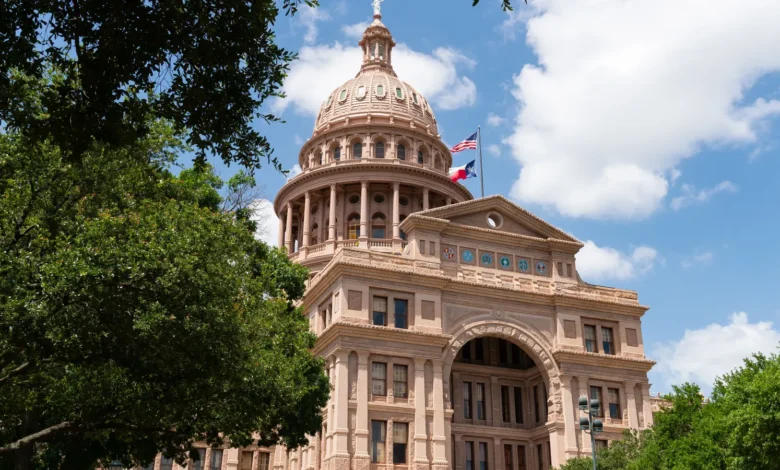
A concerted legislative push is underway in Austin to dismantle Senate Bill 17, the controversial 2023 Texas law that eliminated diversity, equity, and inclusion (DEI) offices, programs, and training across the state’s public colleges and universities. Democratic lawmakers in both the Texas House of Representatives and the State Senate have introduced companion bills aimed at rolling back the sweeping restrictions, setting up a high-stakes political showdown in a historically conservative state.
The renewed legislative battle arrives in the wake of the recent midterm elections, which shifted the state’s political landscape. For the first time since 1996, Democrats have secured two-thirds of a governing trifecta—controlling key seats in the state House and the governorship—injecting unexpected momentum into an initiative that would have faced near-certain defeat in prior legislative sessions. Nevertheless, political analysts caution that even with shifting majorities, securing the full repeal of SB 17 remains an uphill battle against deeply entrenched conservative opposition in the legislature.
Legislative Push and Key Proponents
The repeal effort is being spearheaded in the Texas House by Democratic Representatives Nicole Collier and John Bucy III, who have filed formal legislation to strike down the 2023 statute. Simultaneously, state Senator José Menéndez has introduced a matching companion bill in the upper chamber.
If successful, the legislation would dismantle a law that fundamentally reshaped campus life, administration, and governance at public institutions of higher education throughout Texas. SB 17, which took effect in January 2024, explicitly prohibited public universities and colleges from funding, establishing, or maintaining DEI offices; hiring or contracting employees to perform DEI duties; and compelling students or faculty to undergo training that promotes specific concepts regarding race, sex, or color bias.
While the introduction of the repeal bills represents a significant symbolic and strategic milestone for Texas Democrats, observers note that the arithmetic of the legislature may still insulate the original statute. The Republican legislative footprint, combined with powerful conservative advocacy groups that championed the law’s initial passage, ensures that any effort to restore DEI infrastructure will face intense scrutiny and fierce resistance during committee hearings and floor debates.
Chronology and the National Wave of DEI Restrictions
Texas was at the vanguard of a broader national movement to purge identity-focused administrative structures from publicly funded higher education institutions. Following the passage of SB 17 and companion legislation in states like Florida, a cascading wave of similar mandates swept across the United States. Universities in states ranging from Ohio and Iowa to Alabama and Alaska rapidly shuttered their DEI offices, often preemptively or in direct response to legislative directives.
The impact on Texas campuses was immediate and far-reaching. Months before SB 17 officially went into effect, institutions across the state began dismantling existing infrastructure to ensure compliance. The University of North Texas announced plans to restructure its Multicultural Center and Pride Alliance, absorbing them into broader student affairs operations while establishing a new Center for Belonging and Engagement.

Similarly, the Texas A&M University System issued sweeping guidance to its member institutions, ordering the removal of DEI terminology from official websites and the closure of student affinity offices, though noting that certain support programs could be integrated into broader administrative units. Texas Tech University likewise dissolved its dedicated DEI office.
The rollback of progressive administrative frameworks in Texas eventually extended beyond the initial parameters of SB 17. Brandon Creighton, a key architect of SB 17, assumed the role of chancellor of the Texas Tech University System and pushed the institution’s policies even further. While SB 17 explicitly shielded academic instruction and research from its restrictions, the Texas Tech system moved independently to eliminate academic programs specifically focused on sexual orientation and gender identity, while enacting stringent new guidelines governing classroom instruction regarding race, gender, and sex.
Compliance Audits and Enforcement
To ensure adherence to the statutory requirements of SB 17, the state has instituted rigorous auditing procedures across its higher education networks. Regular state audits have largely confirmed that major academic powerhouses, including the University of Texas System, the vast majority of institutions within the Texas A&M University System, and 19 of the state’s community colleges, are in full compliance with the law.
Violations identified during the audit cycles have been rare but consequential. In previous audit reports, only two institutions were formally cited for noncompliance. One community college ran afoul of the statute after inadvertently requiring a newly hired employee to participate in a DEI-oriented training module. In another instance, Texas A&M University-Central Texas was flagged for entering into a contract that failed to conform to the strict statutory prohibitions outlined in the legislation. These audits underscore the high stakes for university administrators, who face potential funding cuts and severe administrative penalties if they are found to be in violation of the law.

Implications and Future Outlook
The effort to repeal SB 17 highlights a deep ideological divide over the role of higher education in public life. Proponents of the repeal argue that the elimination of DEI initiatives has harmed student recruitment, faculty retention, and overall campus inclusivity, damaging the global competitiveness of Texas universities. They contend that supportive environments for historically underrepresented student populations are essential for academic excellence and workforce preparation in a diverse state.
Conversely, supporters of SB 17 maintain that diversity initiatives fostered ideological conformity, strained public resources, and undermined the principle of merit-based evaluation. Conservative lawmakers who championed the law argue that public institutions should remain entirely neutral on matters of identity and social policy, focusing exclusively on academic rigor and career readiness.
As the new legislative session unfolds, the debate over SB 17 will serve as a bellwether for the broader national culture wars playing out on college campuses. While the Democratic majority in key legislative offices provides a viable pathway for debate, the ultimate fate of the repeal bills remains deeply uncertain, leaving university administrators, faculty, and students waiting to see whether Texas will maintain its strict anti-DEI posture or reverse course on one of the most consequential higher education policies of the decade.