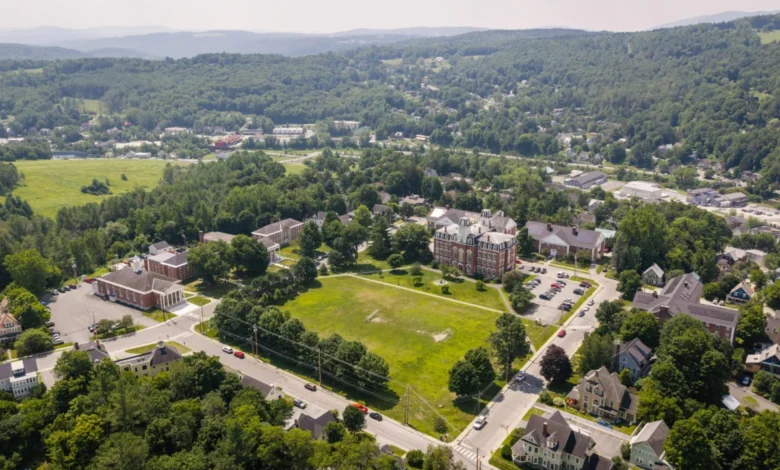
High atop a hill overlooking the capital city of Montpelier, Vermont, sits a collection of 19th-century red-brick buildings that evoke the quintessential image of an American college campus. Yet, beneath the classic architecture and white-trimmed facades, a radical experiment is underway. A consortium of business leaders, government officials, and academic visionaries is working to dismantle the traditional university model, seeking to build an entirely new framework for higher education designed specifically for the 21st century.
The project, known as the Greenway Institute, represents a growing consensus among educational reformers that the modern American college system has become a victim of its own bloated business model. With tuition costs skyrocketing and institutional debt mounting, Greenway’s founders argue that the easiest way to address the systemic failures of higher education is not to reform existing, entrenched institutions, but to start from scratch.
The Context of Institutional Collapse
The timing of the Greenway Institute’s emergence is paradoxical. While the sector is facing what some observers describe as a "mass extinction" event, the demand for a more efficient, practical approach to post-secondary training has never been higher. Over the past decade, Vermont alone has seen seven private colleges shutter their doors, a trend mirrored across the United States as demographic shifts and economic pressures render the traditional residential model increasingly unsustainable.
Mark Somerville, the founding president of the Greenway Institute and a former provost of the Olin College of Engineering, views this instability as a catalyst for innovation. "We need new models in higher education," Somerville asserts. He argues that the current academic structure, which prioritizes amenities, massive administrative layers, and theoretical instruction over practical skill acquisition, has lost its relevance in a rapidly evolving labor market.
A Lean, Work-Based Curriculum
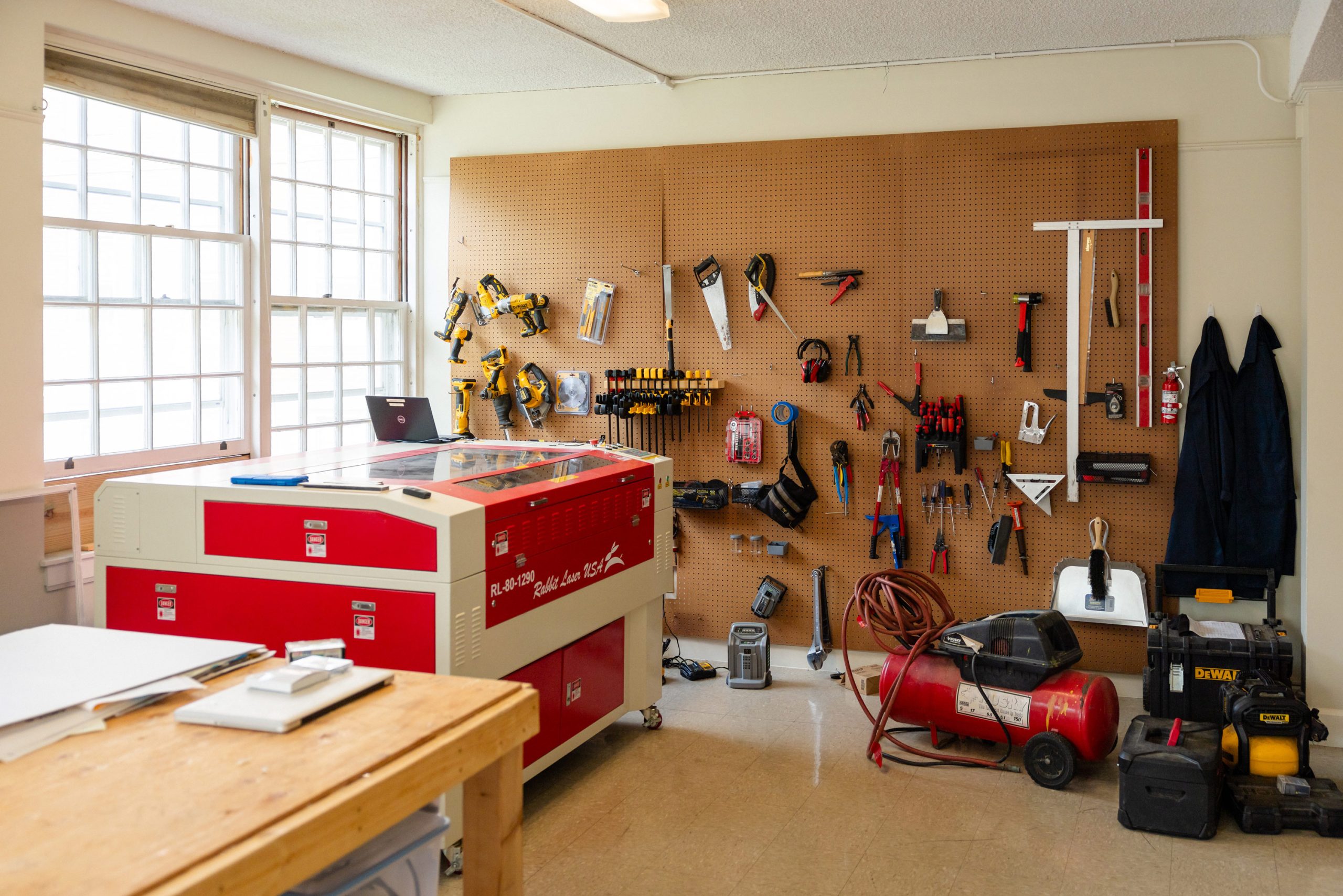
Greenway’s pedagogical philosophy is centered on a "lean" approach that strips away the non-essential, high-cost features of the traditional undergraduate experience. There are no climbing walls, no massive football stadiums, and no sprawling, underutilized student centers. Instead, the institute focuses on a rigorous, project-based engineering curriculum.

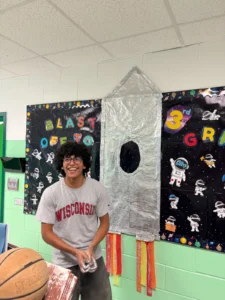
During the prototype semester conducted last year, students were challenged to move beyond standard lecture halls. Instead of memorizing abstract concepts like Norton’s Equivalent Theorem, students were tasked with designing wind turbines and solar-powered traffic signals under the direct supervision of faculty mentors. This "learn-by-doing" methodology is gaining traction among researchers who suggest that such models significantly improve career readiness.
According to a study by the Strada Education Foundation and researchers at the University of Wisconsin-Madison, students who participate in work-based learning see a marked increase in job placement rates and long-term earnings. Despite these benefits, less than half of students at public four-year universities report having access to such programs. Troy McBride, chair of the Greenway board of directors and co-founder of a solar panel manufacturer, puts it bluntly: "We’re stuck in the 1950s. We haven’t responded to the internet, let alone AI. We’re still memorizing things that don’t need to be memorized."
The Economic Case for Reinvention
The financial structure of the Greenway Institute is designed to be as minimalist as its curriculum. By requiring students to manage their own living arrangements—including cooking for themselves and scheduling their own extracurriculars—the institute drastically reduces the overhead costs typically passed on to students through tuition.

The national average for the total cost of attendance at private, nonprofit four-year universities has reached $65,470, according to the College Board. In contrast, Greenway aims to keep tuition at $25,000 or less. This figure is further offset by the institute’s intention to integrate paid co-op placements into the degree path. According to the National Association of Colleges and Employers, full-time co-op positions currently pay an average of over $25 to $27 per hour for juniors and seniors, potentially providing students with more than $50,000 in earnings over the course of their studies.
Challenges in the Regulatory Landscape
While the mission is clear, the path forward is paved with bureaucratic hurdles. Accreditation remains the primary obstacle for any new higher education startup. Greenway cannot apply for formal accreditation until it is fully operational, a process that can take four years or more. This lack of accreditation means that, in the short term, students are ineligible for federal financial aid, including Pell Grants and federal student loans.
Founders are banking on the strength of their private fundraising—having already secured $4.5 million toward a $30 million goal—to bridge this gap. They intend to pursue retroactive accreditation to ensure that degrees earned during the early years of the institute’s operation are recognized by employers and graduate programs.

A Shift in Institutional Culture
The decision to focus on students who are highly motivated and career-focused is central to the project’s success. Rebecca Holcombe, a former Vermont secretary of education and a co-founder of Greenway, emphasizes that the school is not designed for every student. "It’s for kids who really know what they want to do," Holcombe says. "This is a great way to get there fast without having to pay for all the things that, frankly, you may never use or want to take advantage of."
This sentiment is echoed by students who participated in the prototype phase. Emmanuel Attah, an engineering major who experienced the program, praised the autonomy it provided. "It goes right to the point. The students felt really in charge," he noted. For these students, the lack of traditional college amenities was not a loss, but a liberation from the distractions that often impede academic focus.
Broader Implications for Higher Education
The Greenway Institute is not acting in isolation. It is a founding member of the Future Universities Alliance, an organization spearheaded by Duke University to provide an "innovation sandbox" for experimental colleges. This alliance acknowledges that attempting to reform legacy institutions from within is an "agonizingly difficult" process, often stifled by entrenched governance and faculty resistance.

Brian Rosenberg, former president of Macalester College and author of ‘Whatever It Is, I’m Against It’: Resistance to Change in Higher Education, serves on the advisory boards for both Greenway and Polymath University, another experimental project. He suggests that these new ventures serve as a critical alternative to the traditional system. "These projects are essentially an alternative to trying to change these institutions from within, which hasn’t been working very well," Rosenberg stated.
Looking Toward the Future
The goal for Greenway is to grow to a steady state of 500 students by 2031, with plans to expand its model to other locations across the country. The success of the project will ultimately be measured by its ability to prove that a lean, practical, and low-cost model can deliver outcomes superior to those of traditional four-year institutions.
As the team at Greenway continues to work through the logistical checklists on the whiteboards inside their historic Montpelier campus, the broader higher education sector is watching. Whether this "start-from-scratch" approach will force legacy colleges to adapt or merely serve as a niche alternative remains to be seen. However, for those frustrated by the status quo, the Greenway Institute offers a compelling answer to the question: "If not this, then what?"

By stripping away the layers of bureaucracy and focusing on the core purpose of higher education—knowledge acquisition and professional development—Greenway hopes to restore the value proposition of the college degree for a generation of students who have grown skeptical of the current system. As the institute prepares for its planned opening next fall, it stands as a testament to the idea that even in a landscape of decline, there is room for fundamental, systemic reinvention.