A Crucial Gravitational Slingshot: The Mars Flyby
The Mars gravity assist was a meticulously planned event, leveraging the planet’s gravitational pull to alter Psyche’s speed and trajectory without expending substantial amounts of precious onboard fuel. This "slingshot" effect is a common and efficient technique in deep-space exploration, enabling missions to reach distant targets faster and more economically. For the Psyche mission, the Red Planet offered the ideal gravitational leverage to bend the spacecraft’s path towards its namesake asteroid, located between the orbits of Mars and Jupiter.
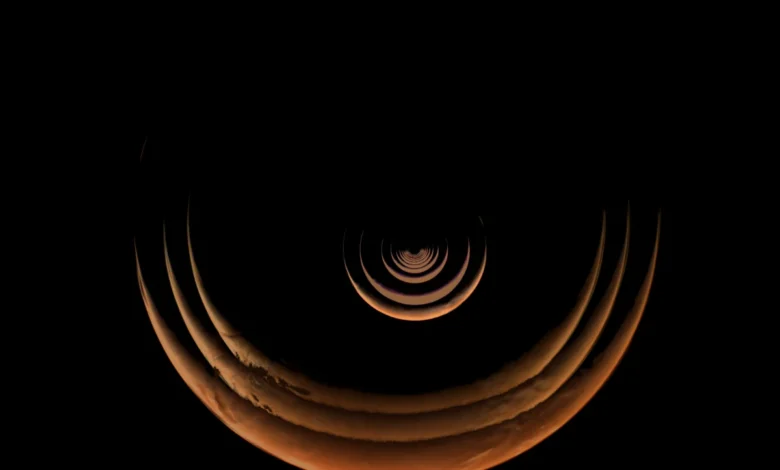
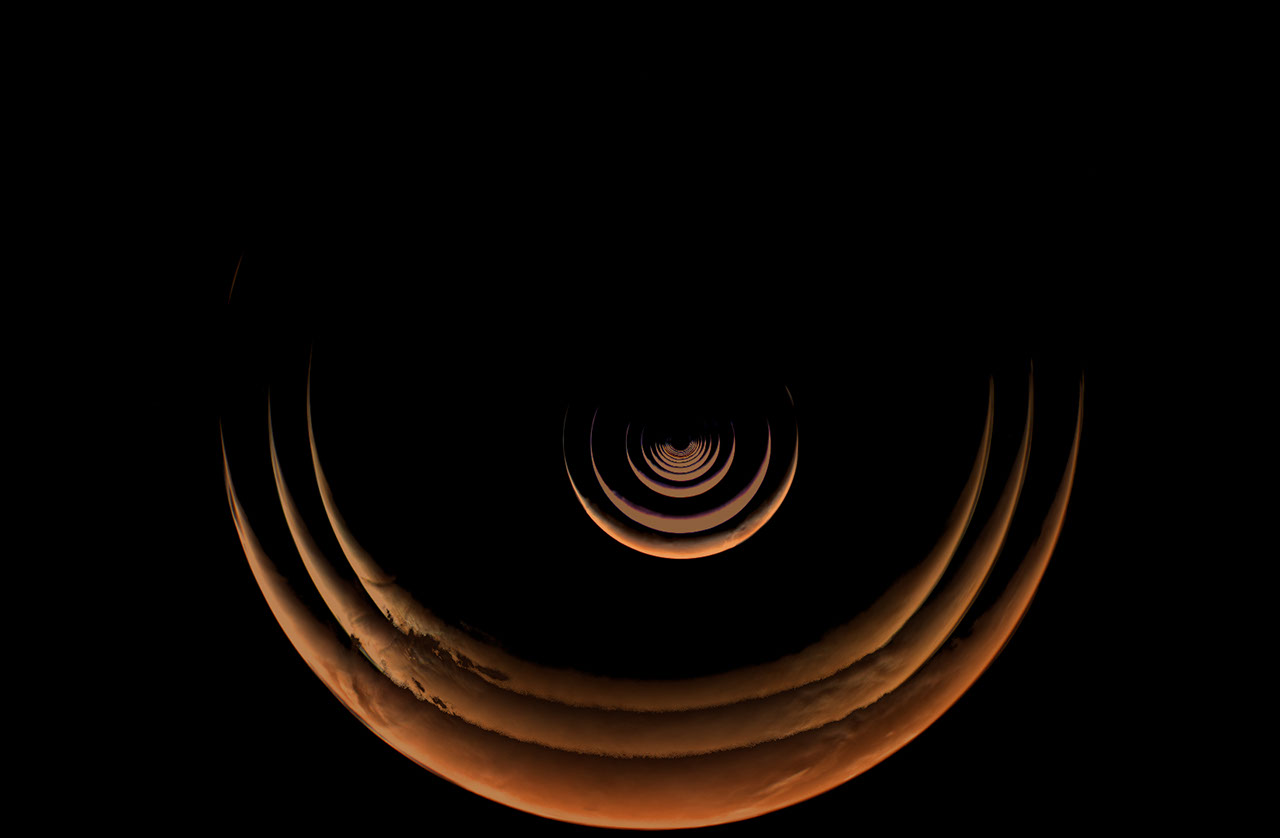
During the two-week imaging window, from May 2 to May 15, 2026, Psyche’s multispectral imager captured a sequence of views as it approached and then departed from Mars. The initial images show Mars as a slender, glowing crescent, a phenomenon attributed to the high "phase angle" from which the spacecraft observed the planet. A high phase angle occurs when the observer (Psyche) is positioned nearly between the light source (the Sun) and the illuminated object (Mars), causing only a thin sliver of the planet facing the spacecraft to be illuminated. As Psyche drew nearer, Mars’ illuminated crescent gradually expanded, demonstrating the spacecraft’s diminishing distance. At its closest point, the Red Planet filled the imager’s field of view, allowing for the capture of high-resolution surface details, critical for instrument calibration and scientific validation.
The data gathered during this close encounter extends beyond mere navigation. It provided an invaluable opportunity for the Psyche team, comprising engineers and scientists from NASA’s Jet Propulsion Laboratory (JPL), Arizona State University (ASU), and other institutions, to test and calibrate the spacecraft’s suite of scientific instruments in a real-world, dynamic interplanetary environment. The multispectral imager, designed to map the surface composition of asteroid Psyche, demonstrated its capabilities by capturing detailed imagery of Mars. This successful operational test ensures that the instruments will perform optimally once the spacecraft arrives at its primary target in 2029. The subsequent compilation of this imagery into a stunning time-lapse video offers both a scientific record of the encounter and an engaging visual experience for the public, highlighting the marvels of space exploration.
The Psyche Mission: Unveiling a Metal World
The ultimate destination of NASA’s Psyche mission is asteroid (16) Psyche, a truly unique object in our solar system. Unlike most asteroids, which are primarily rocky or icy, Psyche is believed to be largely composed of metal, predominantly iron and nickel. This composition has led scientists to hypothesize that (16) Psyche could be the exposed core of an early planetesimal—a building block of a planet—that was stripped of its rocky outer layers by violent collisions during the tumultuous early history of the solar system. If this hypothesis holds true, the mission offers an unprecedented opportunity to study a planetary core directly, providing insights into the formation and evolution of terrestrial planets, including Earth.
Earth’s own core, a dense, metallic region responsible for generating our planet’s protective magnetic field, lies thousands of kilometers beneath the surface, forever out of direct reach. Studying Psyche would be akin to examining a fossilized planetary heart, offering clues about the processes that led to the differentiation of planets into distinct layers—crust, mantle, and core. Such a mission could revolutionize our understanding of planetary formation, revealing whether metal-rich asteroids like Psyche are common remnants of failed planetary embryos or rare anomalies.
The scientific objectives of the Psyche mission are ambitious and multifaceted:
- Determine if Psyche is a planetary core: By analyzing its composition, topography, gravity, and magnetic field.
- Characterize Psyche’s geology and surface features: Understanding its formation and evolution.
- Determine the age of Psyche: Providing context for the timeline of early solar system processes.
- Investigate a new type of world: Exploring a body that has never been studied up close before, expanding our knowledge of solar system diversity.
The mission is a testament to human ingenuity, pushing the boundaries of scientific inquiry and technological capability in pursuit of fundamental questions about our cosmic origins.
Journey to the Asteroid Belt: A Detailed Timeline
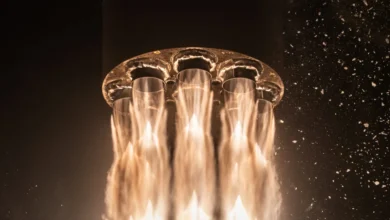
The Mars flyby in May 2026 is a critical chapter in Psyche’s long and intricate journey. The mission officially began with its launch aboard a SpaceX Falcon Heavy rocket from NASA’s Kennedy Space Center on October 13, 2023. After a successful liftoff and deployment, the spacecraft entered its cruise phase, relying on its innovative solar electric propulsion (SEP) system.
Initial Phase (October 2023 – Early 2026): Following launch, the Psyche spacecraft underwent an extensive checkout period, during which engineers verified the health and functionality of all systems. This phase included initial deployments, communication tests, and the activation of its Hall-effect thrusters. These advanced thrusters use electricity generated by the spacecraft’s large solar arrays to ionize and accelerate xenon gas, providing a gentle but continuous thrust that is highly efficient for deep-space travel. This period also saw the successful demonstration of NASA’s Deep Space Optical Communications (DSOC) technology, an experimental payload designed to test high-bandwidth laser communications over interplanetary distances. While DSOC is a separate technology demonstration, its presence on Psyche highlights the mission’s role in advancing future space communication capabilities.
Mars Gravity Assist (May 2-15, 2026): The core event discussed, where the spacecraft used Mars’ gravity to gain speed and refine its trajectory. This slingshot maneuver reduced the overall travel time and fuel consumption for the journey to the asteroid belt. The data and imagery collected during this phase are crucial for verifying navigation accuracy and instrument performance.
Continued SEP Cruise (Late 2026 – Mid 2029): Post-Mars flyby, Psyche will continue its journey through the inner solar system and into the main asteroid belt, steadily accelerating towards its target using its solar electric propulsion system. This long cruise phase requires careful navigation and intermittent thruster firings to maintain the precise trajectory needed for rendezvous.
Arrival and Orbital Insertion (August 2029): Psyche is projected to arrive at asteroid (16) Psyche in August 2029. Upon arrival, the spacecraft will perform a series of orbital insertion maneuvers, gradually spiraling down to closer and closer orbits around the asteroid.
Science Operations (26 Months Post-Arrival): Once in stable orbit, the mission will commence its primary science phase, expected to last approximately 26 months. During this period, Psyche will meticulously map the asteroid’s surface, analyze its composition, measure its gravity field, and search for a magnetic field. The spacecraft will transition through several orbital altitudes, starting from a high-altitude survey orbit to characterize the asteroid’s shape and rotation, then moving to progressively lower orbits for detailed mapping and data collection. Each instrument—the multispectral imager, gamma-ray and neutron spectrometer, and magnetometer—will contribute to building a comprehensive picture of this enigmatic metallic body.
Engineering Marvel: The Psyche Spacecraft
The Psyche spacecraft itself is a marvel of modern engineering, designed to withstand the rigors of deep space and execute complex scientific observations. Developed by NASA’s Jet Propulsion Laboratory (JPL) in partnership with Arizona State University, the spacecraft is built around a powerful solar electric propulsion system.
- Propulsion System: At the heart of Psyche’s propulsion are four Hall-effect thrusters. These low-thrust, high-efficiency engines expel ionized xenon gas at incredible speeds, providing continuous propulsion over long durations. The spacecraft carries approximately 922 kilograms (2,033 pounds) of xenon propellant. This system allows for precise trajectory control and significantly reduces the amount of propellant required compared to traditional chemical rockets, making long-duration deep-space missions feasible.
- Power: To power its electric thrusters and scientific instruments, Psyche is equipped with massive "X-wing" shaped solar arrays, resembling a four-leaf clover. When fully deployed, these arrays span over 24 meters (79 feet) and provide sufficient electrical power even at the greater distances from the Sun where asteroid Psyche resides.
- Scientific Instruments:
- Multispectral Imager: Comprises two identical cameras designed to acquire high-resolution images of the asteroid’s surface. These images will be used to create detailed maps and provide data on its topography, surface features, and mineralogical composition. The successful imaging of Mars during the flyby serves as an excellent operational test for this critical instrument.
- Gamma-Ray and Neutron Spectrometer: This instrument will detect and measure gamma rays and neutrons emanating from the asteroid’s surface. These emissions provide crucial data on the elemental composition of the surface materials, helping scientists determine the proportions of iron, nickel, silicates, and other elements.
- Magnetometer: Designed to detect and measure any residual magnetic field on Psyche. The presence or absence of a magnetic field would offer significant clues about the asteroid’s formation history and whether it once possessed a dynamo-generated field, similar to Earth’s core.
The spacecraft’s robust design and sophisticated instrumentation reflect years of development and innovation, all geared towards unlocking the secrets of a metallic world.
Voices from the Mission
The successful Mars flyby has been met with enthusiasm and relief across the mission team and NASA leadership. While direct quotes are not yet available, the sentiment can be inferred from the typical reactions to such critical mission milestones.
"This Mars gravity assist was a flawless execution, a testament to the incredible engineering and navigation expertise of our team," a spokesperson for NASA’s Jet Propulsion Laboratory might state. "The images captured during the flyby are not just beautiful; they are invaluable. They confirm that our multispectral imager is performing exceptionally well, providing us with confidence as we continue our journey to Psyche."
The mission’s Principal Investigator, Dr. Lindy Elkins-Tanton of Arizona State University, would likely emphasize the scientific significance. "Every step of this mission brings us closer to understanding a truly unique object in our solar system. The data from the Mars flyby helps us refine our trajectory and prepare our instruments for the unprecedented science we expect to conduct at asteroid Psyche. This mission has the potential to rewrite textbooks on planetary formation."
NASA Administrator Bill Nelson could underscore the broader implications for space exploration: "The Psyche mission embodies the spirit of discovery and innovation that drives NASA. Successfully navigating this complex Mars gravity assist demonstrates our capabilities in deep-space travel and brings us closer to unlocking fundamental secrets about the universe. This mission, along with others, continues to inspire the next generation of scientists and engineers." These inferred statements reflect the profound satisfaction and excitement surrounding the mission’s progress.
Beyond Mars: Implications for Planetary Science and Exploration
The Psyche mission, with its successful Mars flyby, holds far-reaching implications for several fields of science and technology.
Revolutionizing Planetary Science: By directly studying a metal-rich asteroid, Psyche offers a unique window into the early solar system. It could confirm theories about planetary differentiation, the process by which early planetary bodies separated into distinct layers. If Psyche is indeed a protoplanetary core, its study could reveal whether the cores of early planets formed molten or solid, and how quickly they cooled. This would provide crucial comparative data to our understanding of Earth’s own core and those of other terrestrial planets like Venus and Mars. The mission also contributes to the broader understanding of asteroid diversity, adding a distinct category to the predominantly rocky and icy bodies previously studied.
Advancements in Space Exploration Technology: The mission’s reliance on solar electric propulsion is a significant technological leap. The successful operation of the Hall-effect thrusters over such vast distances demonstrates the viability and efficiency of this technology for future deep-space missions, potentially enabling more ambitious journeys with reduced fuel requirements. Furthermore, the Deep Space Optical Communications experiment, though separate from the core science, showcases NASA’s commitment to developing faster, more efficient ways to transmit data from across the solar system, which will be vital for future human and robotic exploration.
Inspiration and Public Engagement: The visually stunning imagery of the Mars crescent, compiled into a time-lapse, serves as a powerful tool for public engagement. Such visuals capture the imagination, making the complex science and engineering of space exploration accessible and exciting. This fosters greater public interest in STEM fields and inspires future generations to pursue careers in science, technology, engineering, and mathematics.
The Psyche mission is more than just a journey to an asteroid; it is an expedition to the very foundations of planetary existence. Each milestone, including the recent Mars flyby, reinforces the mission’s promise to deliver groundbreaking scientific discoveries and to push the boundaries of what is possible in space exploration. As the spacecraft continues its silent, electric-powered cruise towards its metallic target, the scientific community and the public alike eagerly anticipate the revelations that await us in the main asteroid belt.