The Last Fragment of the Laurentide Ice Sheet Reveals an Ancient Climate Shift Halted by Human Activity

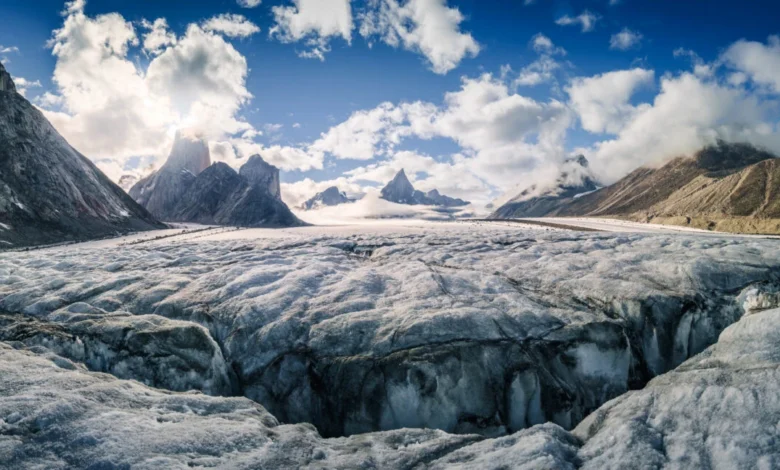
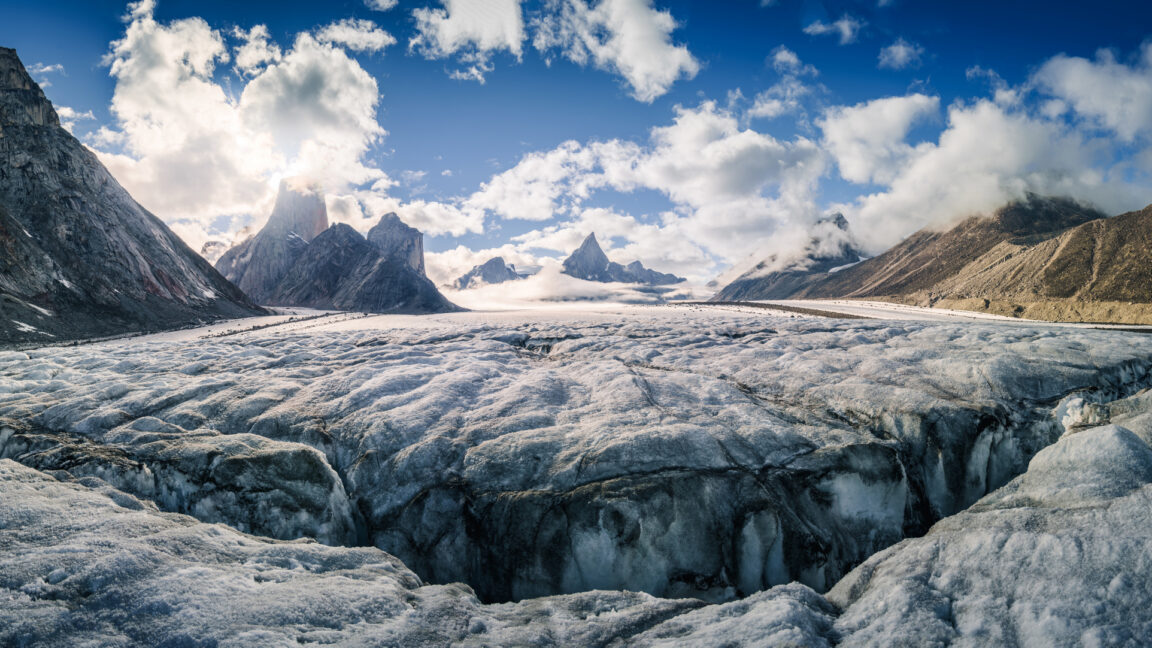
The Barnes Ice Cap, a sprawling, frozen remnant perched upon the central plateau of Baffin Island in the Canadian Arctic, serves as the final, silent witness to the history of the Laurentide Ice Sheet. For millennia, this colossal ice mass—which once buried most of North America under two miles of ice during the Pleistocene epoch—has functioned as a natural archive of Earth’s climatic oscillations. Recent research published in the journal Science now suggests that this remnant was not merely retreating; it was, until very recently, the site of a dormant, multi-millennial effort to restart a new glacial period, a cycle that human-induced climate change has definitively disrupted.
The Anatomy of an Ancient Ice Sheet
The Laurentide Ice Sheet was the titan of the last glacial cycle, a massive expanse that locked away enough water to lower global sea levels by approximately 80 meters. As the Holocene began and the climate warmed, the sheet underwent a protracted retreat, eventually leaving behind only isolated pockets of ice. The Barnes Ice Cap is the most significant of these survivors.
Dr. Nicolás Young, a geologist at Columbia University’s Lamont-Doherty Earth Observatory and the lead author of the study, explains that the unique status of the Barnes Ice Cap as a “cold-based” glacier is what allows it to preserve the secrets of the past. Unlike "warm-based" glaciers, which feature a layer of meltwater at their base that allows them to slide across the landscape—effectively scouring away geological evidence—the Barnes Ice Cap remains frozen directly to the bedrock.
"It acts exactly like ice plastered to a car windshield in winter," Dr. Young noted. Because it does not slide, it does not erode the terrain beneath it. Instead, it preserves the tundra environment it covers. When the ice expanded during cooler periods, it simply smothered the local flora, preserving organic material in a state of cryogenic suspension for thousands of years.
A Chronology of Re-expansion
The research team employed a dual-dating approach to establish a precise timeline of the ice sheet’s history. The first method involved the measurement of beryllium-10, an isotope that accumulates in rock surfaces exposed to cosmic rays. By analyzing boulders near the current ice margin, the team determined that the Laurentide had retreated to roughly its present-day size by approximately 3,600 years ago, with further thinning likely occurring until about 3,000 years ago.
The second, more granular method involved "kill dates"—the radiocarbon dating of mosses and other tundra vegetation that were crushed and entombed by advancing ice. By cross-referencing these kill dates with data from smaller neighboring ice caps, the researchers constructed a timeline of glacial re-advance.
- 10,000 to 11,000 years ago: Solar energy reaching the high northern latitudes peaked, followed by a long-term decline in insolation.
- 8,000 to 2,000 years ago: Atmospheric carbon dioxide levels rose by approximately 20 parts per million, creating a minor greenhouse effect that partially countered the cooling caused by reduced sunlight.
- 3,600 years ago: The Laurentide Ice Sheet reached its smallest recorded size during the current interglacial period.
- 2,000 years ago: The cooling effect of reduced solar radiation finally overwhelmed the warming effect of carbon dioxide. Glacial expansion resumed, marking what researchers describe as the beginning of a new, natural glaciation phase.
- 1750 to 1850 CE: The Industrial Revolution begins, initiating a rapid rise in atmospheric greenhouse gas concentrations.
- 1960: The tipping point is reached. Human-caused warming accelerates, causing the Barnes Ice Cap’s mass balance to turn negative, ending the two-millennium advance.
The Tug of War: Solar Forcing vs. Carbon Forcing
The findings provide a rare glimpse into the "tug of war" between orbital forcing and greenhouse gas concentrations. For the better part of 8,000 years, the Earth was trending toward a natural cooling phase. While previous climate models suggested that the next ice age would be postponed for tens of thousands of years due to high levels of greenhouse gases, Dr. Young argues that these models are not necessarily contradicted by the new findings.
"Many people define glacial inception as a state where ice sheets reach a certain, massive size," Young noted. "Until now, there was no way to pinpoint the exact moment an ice sheet turns around and begins to grow." The data suggests that nature had begun that process 2,000 years ago, even if the progress was slow and subtle. The "Little Ice Age," which culminated around 1800 CE, was not an anomaly but rather the peak of a two-thousand-year trend of glacial expansion that was cut short by the rapid injection of industrial-era carbon emissions.
The Death of the Barnes Ice Cap
The implications for the Barnes Ice Cap today are stark. In the 1960s and 1970s, approximately 35 percent of the ice cap’s surface was situated above the local snow line—the altitude above which snow persists throughout the summer. By the early 2000s, that figure had plummeted to 3 percent. Currently, none of the ice cap sits above the snow line.
This absence of an "accumulation zone" means the ice cap is essentially experiencing a terminal melt. Every summer, the entire surface of the ice cap is subject to melting, with no new snow accumulating to replenish the mass. Glaciologists conclude that, under any current or projected carbon emission scenario, the Barnes Ice Cap will cease to exist within the next few centuries.
Broader Scientific and Environmental Implications
The study challenges the perception of humans as passive observers of climate cycles. By documenting the termination of a 2,000-year-old glacial advance, the research suggests that human activity has fundamentally altered the natural pacing of the Earth’s climate system.

"We have evidence now that humans, and specifically greenhouse gases, have actually terminated one of the most consistent cycles on Earth," Dr. Young stated. For over 2.5 million years, the planet has toggled between glacial and interglacial states with remarkable regularity. The modern intervention, characterized by the rapid release of carbon dioxide at a magnitude unprecedented in the geological record, has effectively "canceled" the next expected phase of this cycle.
While some might interpret the prevention of a new ice age as a positive, researchers are quick to clarify that the current warming trajectory represents a destabilization rather than a stabilization. The rapid loss of Arctic ice has immediate consequences for global sea levels and ocean circulation patterns. Furthermore, the loss of these "relict" ice sheets means the loss of critical paleoclimatic records that allow scientists to understand the sensitivity of the Earth’s climate to atmospheric changes.
Conclusion: A Legacy Lost
The ongoing retreat of the Barnes Ice Cap serves as a final, urgent call for data collection. As the ice margin continues to pull back, it will reveal older, long-buried organic material that could provide even deeper insights into the climate conditions of the last several thousand years. However, the window of opportunity is closing.
The research underscores that while the Earth has its own internal mechanisms for climate regulation—as evidenced by the 2,000-year attempt at glacial expansion—those mechanisms are now being overwhelmed by anthropogenic forces. As the Barnes Ice Cap disappears, it takes with it the physical evidence of the most consistent rhythm in Earth’s history, leaving behind a climate system that is increasingly defined by the volatility of human influence rather than the slow, predictable pulse of orbital mechanics. The study published in Science provides the empirical foundation for understanding that we are living in a period of unprecedented geological and climatic shift, one that has effectively overridden the natural course of the planet’s future.