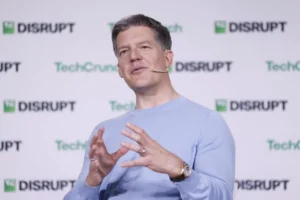
In late May, during a sit-down in Athens, Neil Rimer, co-founder of the highly successful venture capital firm Index Ventures, articulated a profound observation that has resonated widely: as unprecedented wealth accumulates around artificial intelligence, "there will be some sort of a redistribution." Speaking at the Panathenea tech festival, a vibrant new gathering in the ancient city, Rimer elaborated on his conviction, stating, "It’ll either be voluntary or it’ll be involuntary, but it’ll happen, and I hope it’s voluntary." He further posited that tech leaders possess a unique opportunity, and perhaps a responsibility, to "play a leading role in seeing that through."
Coming from most commentators, such a statement might be dismissed as conventional populist rhetoric. However, from Rimer, a figure instrumental in shaping the technological landscape and amassing significant personal and institutional wealth over three decades, the public pronouncement carries substantial weight. His words underscore a growing tension within the tech industry and society at large regarding the equitable distribution of prosperity generated by transformative technologies like AI.
The Architect of Wealth: Neil Rimer and Index Ventures’ Unprecedented Success
Neil Rimer’s journey into the heart of global technology investment began with the co-founding of Index Ventures, a firm that has consistently delivered exceptional returns. Since its inception, Index Ventures has raised approximately $15 billion from external investors, building a formidable portfolio of groundbreaking companies. The firm’s recent performance has been particularly stellar, with 2024 witnessing significant exits that reportedly netted Index roughly $9 billion. These included the highly anticipated IPO of Figma, a collaborative design platform, and Google’s strategic acquisition of the cybersecurity firm Wiz. Such financial achievements solidify Index Ventures’ position as one of the most influential venture capital firms globally.
Rimer himself stepped back from the day-to-day exigencies of investing in 2021, shifting his focus towards more reflective and philanthropic endeavors. He now spends a considerable portion of his time in Athens, a city with deep personal ties through his wife’s heritage and where his children proudly hold Greek passports. His public appearance, marked by a rumpled button-down shirt and jeans, stood in stark contrast to the often-uniformed attire of his peers, perhaps reflecting a departure from the conventional Silicon Valley archetype and a deeper engagement with broader societal issues.
Beyond his professional accomplishments, Rimer has actively engaged in philanthropic pursuits. He serves on the board of Endeavor Greece, an organization dedicated to mentoring entrepreneurs in emerging markets, fostering local innovation and economic growth. From 2019 to 2025, he chaired the board of Human Rights Watch, a prominent international non-governmental organization that conducts research and advocacy on human rights. In a significant act of giving in late 2021, he, along with his father and two brothers, donated $13 million to McGill University. This substantial contribution facilitated the renovation of a campus building, now aptly named the Rimer Building, and the establishment of a new Institute for Indigenous Research and Knowledges, demonstrating a commitment to education and cultural preservation.
A Shifting Philanthropic Landscape: The Decline of Voluntary Giving
Rimer’s call for redistribution arrives at a moment when the traditional mechanisms of voluntary philanthropy, particularly among the ultra-wealthy, appear to be losing momentum. The Giving Pledge, launched in 2010 by Warren Buffett and Bill Gates, was designed to encourage billionaires to commit at least half of their fortunes to charitable causes during their lifetime or upon their death. Initially met with enthusiasm, its relevance has been increasingly questioned. A New York Times report in March highlighted a significant decline in new signatories: 113 families joined in the first five years, followed by 72, then 43, and a mere four in all of 2024. This trend suggests a growing disinterest or skepticism towards large-scale, public philanthropic commitments among some of the wealthiest individuals in tech. Notably, the world’s wealthiest person, Elon Musk, has famously stated that his businesses "are philanthropy," implying that wealth creation and job generation through his ventures sufficiently fulfill his societal obligations, rather than direct charitable donations.
This pattern extends beyond the high-profile Giving Pledge. Data indicates a broader contraction in American charitable giving. While total American charitable giving reached a record $592.5 billion in 2024, driven largely by a few exceptionally large donations, the number of American households actually donating has steadily fallen for five consecutive years, dropping by 4.5% in 2024 alone, according to the Stanford Social Innovation Review. In 2000, two-thirds of U.S. households contributed to charity; today, roughly half do. Even among affluent households, a demographic traditionally more inclined to philanthropy, giving has slipped from 90% in 2017 to 81% last year, as reported by Bank of America and Lilly Family School data.
The phenomenon is visible even within Index Ventures’ own portfolio, specifically with Anthropic, a leading AI company. Business Insider recently explored the philanthropic inclinations of newly wealthy clients, many of whom are Anthropic employees with ties to the effective altruism movement—a philosophical and social movement advocating the use of evidence and reason to determine the most effective ways to benefit others. While Anthropic offers to match employee donations of up to 25% of their equity to charity, financial planner Alex Caswell noted that while some clients utilize this program, most are not integrating philanthropy into their long-term financial plans. Instead, their focus gravitates towards angel investing or launching their own companies. "That’s what I’m seeing more than the desire to become philanthropic," Caswell told the outlet, indicating a preference for entrepreneurial ventures over traditional charitable giving.
The Involuntary Path: Legislative Attempts at Redistribution
The perceived vacuum created by declining voluntary giving is now encountering increasing pressure for legislative intervention. In California, a state synonymous with technological innovation and immense wealth generation, voters will decide this year on a controversial 5% one-time wealth tax. This proposed measure specifically targets the state’s billionaires, aiming to address wealth disparities through direct taxation. The prospect of such a tax has already prompted pre-emptive actions, with some prominent figures, including Google co-founders Sergey Brin and Larry Page, relocating their primary residences to South Florida, a state known for its absence of state income or wealth taxes.
The timing of potential initial public offerings (IPOs) in the tech sector may also be influenced by these legislative developments. OpenAI, another major player in the AI landscape, is reportedly considering going public in 2027. Cynics suggest that one factor in this timing could be the proposed California wealth tax, which, if passed, would calculate net worth based on an individual’s worldwide assets as of the end of the current calendar year. An earlier IPO could potentially subject founders and early employees to the tax, whereas a later offering might allow for strategic planning around its implications.
Unsurprisingly, any large-scale wealth redistribution measure faces significant opposition. California Governor Gavin Newsom has voiced concerns, and economists have pointed out the historical challenges of such taxes. Many industrialized countries have repealed similar wealth taxes since 1990, often after witnessing an exodus of their wealthy residents and the complexities of implementation. The debate centers not only on the fairness of such taxes but also on their practical enforceability and potential for capital flight.
Other proposed solutions are equally contentious. OpenAI has reportedly discussed offering the U.S. federal government a 5% equity stake in the company. CEO Sam Altman has framed this idea as a means of sharing AI’s potential upside with the broader public, suggesting a collective benefit from the technology’s advancement. However, critics view this proposal with skepticism, interpreting it as a strategic move to garner political favor and mitigate regulatory scrutiny in Washington. The notion of "Uncle Sam" on a company’s cap table has historically been anathema to Silicon Valley, where independence and minimal government interference are deeply ingrained values. As veteran investor Roelof Botha quipped during a separate interview last year, echoing a common sentiment, "[Some] of the most dangerous words in the world are: ‘I’m from the government, and I’m here to help.’"
The Staggering Scale of AI Wealth
The sheer magnitude of wealth accumulating outside these philanthropic or governmental mechanisms is staggering and continues to grow. Last month, Elon Musk, following SpaceX’s IPO, became the first person to reach a net worth of over $1 trillion, a landmark achievement that underscores the unprecedented scale of contemporary private fortunes. Forbes’ 2026 rankings alone identified 45 new AI billionaires, whose combined net worth totals an astounding $2.9 trillion. This figure predates the anticipated public offerings of companies like Anthropic and OpenAI, which are poised to create even more billionaires and multi-millionaires. The Business Insider story on Anthropic employees highlighted the potential for immense localized wealth concentration, noting that once Anthropic and OpenAI complete their IPOs, their combined employees could hold enough wealth to purchase nearly a third of all homes in the San Francisco metropolitan area, exacerbating existing housing and inequality challenges.
While the current concentration of wealth feels unprecedented, its historical context offers a nuanced perspective. The share of wealth held by the top 1% of U.S. households reached 31.7% in the third quarter of last year, a record since the Federal Reserve began tracking this data in 1989. This figure is roughly equivalent to the combined wealth held by the bottom 90% of households, illustrating a profound imbalance. However, this still falls short of the 45% commanded by the top 1% during the peak of the first Gilded Age in 1916.
Yet, when the lens is narrowed to the absolute pinnacle of wealth, the picture shifts dramatically. Renowned economist Gabriel Zucman’s calculations reveal that at the height of the Gilded Age, around 1910, America’s four largest fortunes represented a combined 4% of U.S. GDP. Today, that same sliver of the population—now comprising 19 households instead of four due to the broader distribution of ultra-wealth—commands an astonishing 14% of GDP. This metric suggests that while wealth may be slightly more diffused at the very top compared to a century ago, the concentration of power and resources in the hands of an ultra-elite few is arguably more pronounced than ever before.
Echoes of History: The Gilded Age and the Paths to Redistribution
Rimer’s articulation of two paths—voluntary or forced redistribution—finds compelling precedent in American history, specifically during the last period of extreme wealth concentration: the first Gilded Age. In 1889, at the zenith of this era, industrialist Andrew Carnegie published his seminal essay, "The Gospel of Wealth." Carnegie argued that a rich man should consider his fortune a sacred trust, to be diligently administered and distributed for the public good during his lifetime. He famously declared it a "disgrace to die wealthy," laying the intellectual groundwork for modern philanthropy and serving as a direct ancestor to initiatives like the Giving Pledge. His philosophy emphasized active, strategic giving by the wealthy to uplift society, rather than merely accumulating personal fortunes.
However, the voluntary path, even with Carnegie’s impassioned advocacy, proved insufficient to address the deep societal pressures of the time. By the mid-1930s, amid the Great Depression, Louisiana Senator Huey Long gained a national following with his populist "Share Our Wealth" program. Long’s radical platform demanded steep taxes on the rich, proposing to cap personal fortunes and use the proceeds to guarantee every American a minimum income, a home, and access to education. His rising popularity, particularly among the working class, sent tremors through the political establishment.
Worried about losing crucial public support to Long’s movement, President Franklin D. Roosevelt responded with what the press dubbed the "soak-the-rich tax." This legislative package dramatically raised the top marginal income tax rate to as high as 79%. While it redistributed less wealth than Long had advocated, it stands as the clearest historical example in the United States of politically forced redistribution arising when voluntary giving and existing economic structures failed to adequately address mounting social and economic pressures. It demonstrated the government’s capacity and willingness to intervene decisively to rebalance the economic playing field.
The Moral Center of Tech and the Choice Ahead
These historical parallels are not lost on Rimer, who has spent his entire career immersed in the tech industry. What increasingly captivates him, however, is what he terms "the moral center of tech companies." He traces this fascination back to his days as a Stanford undergraduate in 1984, a time when Apple discounted the first Macintosh for students, and figures like Steve Jobs and other Apple founders were, in Rimer’s words, "heroes" for building something they genuinely believed was beneficial for the world. This era was characterized by a utopian vision of technology as a democratizing force for good.
What troubles Rimer now is the palpable shift in public perception. He expresses concern over hearing his own children discuss certain tech companies in a manner reminiscent of how earlier generations spoke of defense contractors or cigarette manufacturers—industries often viewed with suspicion or moral opprobrium. This evolving sentiment reflects a growing public disillusionment with aspects of the tech industry, stemming from issues ranging from data privacy and algorithmic bias to market dominance and, indeed, wealth concentration.
Critics might point out that Rimer, as a prominent investor in companies like Anthropic and other tech giants, is a direct beneficiary of the very windfall he argues will eventually require sharing. However, Rimer’s position is clear: he would much rather witness his fellow beneficiaries voluntarily contribute a portion of their wealth back to society than have it forcibly taken from them through taxation or other governmental mandates. He sees a stark choice ahead: an "easy way" of proactive, voluntary engagement with redistribution, or a "hard way" imposed by historical precedent and societal demand. Rimer is betting on the wisdom of individuals to choose the former, hoping that the tech elite will proactively address these imbalances before history, once again, makes the choice for them. The unfolding narrative of AI wealth will ultimately reveal which path society, and its most powerful economic actors, decide to take.