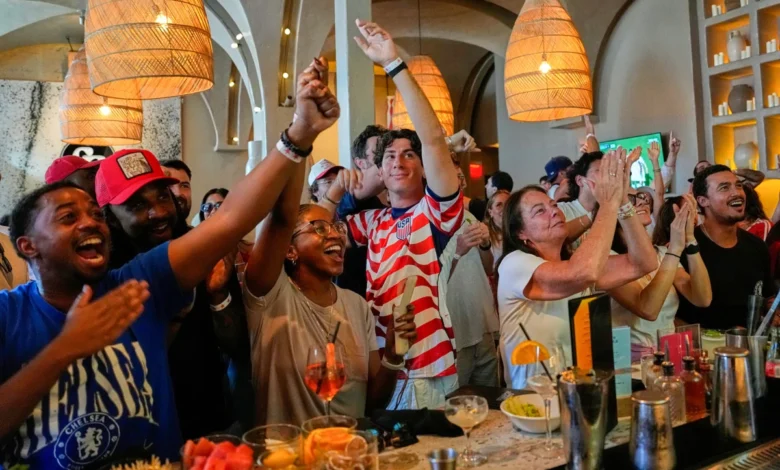
In an era defined by deep-seated partisan divides and a thinning of the American social fabric, researchers at the Harvard Kennedy School (HKS) are investigating an unconventional tool for social mending: professional sports fandom. The Fandom and Social Connection Initiative, led by Todd Rogers, the Weatherhead Professor of Public Policy, and doctoral student Audrey Feldman, suggests that the shared rituals of sports loyalty may offer a rare bridge across racial, economic, and political chasms. While the billion-dollar business of sports is well-documented, its function as a "social solvent" remains a remarkably underexplored frontier in the social sciences.
The initiative emerges at a time when traditional community institutions—churches, civic clubs, and local political organizations—are in a state of secular decline. According to the researchers, sports fandom represents one of the last remaining forms of social infrastructure that is simultaneously wide, deep, and diverse. With nearly three-quarters of Americans identifying as followers of professional sports teams, the project aims to quantify how these allegiances can be leveraged to reduce loneliness and foster cross-partisan empathy.
The Scholarly Void and the Birth of the Initiative
Despite the ubiquity of sports in global culture, Rogers and Feldman discovered a significant gap in academic literature. Their analysis of top social science journals revealed that only approximately one in every 800 articles concerns sports. This "scholarly blind spot" prompted the launch of the Fandom and Social Connection Initiative, which recently received a foundational gift from FOX Sports to support its research.
The project began somewhat serendipitously. Feldman, an economics graduate from Notre Dame, arrived at the Harvard Kennedy School with a focus on how behavioral science could improve the lives of marginalized populations, such as refugees. During a conversation with Rogers regarding international development, the two discovered a mutual passion for sports—Rogers for the Philadelphia Eagles and Feldman for the Notre Dame Fighting Irish. This personal connection sparked a professional inquiry: could the same mechanisms that bonded a professor and a student over football be applied to broader societal challenges?
The initiative is positioned as a "green field" for research, applying rigorous game theory and behavioral interventions to a field that has historically been dismissed by academics. Rogers notes that in surveys, non-fans often perceive passionate sports fans as less "evolved," placing them low on the metaphorical "ascent of man" scale. The HKS project seeks to reclaim the reputation of fandom, arguing that it is not a primitive distraction but a sophisticated form of social organization.
Data-Driven De-polarization: Sports vs. Politics
One of the most striking findings from the initiative’s preliminary work involves the political composition of sports fanbases compared to the American electorate. While the United States Congress is increasingly characterized by "geographic sorting"—where 19 of the 50 state delegations are comprised entirely of a single party—sports fanbases remain stubbornly diverse.
Data analyzed by Rogers and Feldman shows that even the most "partisan" fanbases are far more integrated than modern political districts. For instance, the Tennessee Titans, identified as having the "reddest" (most Republican) fanbase in the NFL, still maintain a ratio of roughly two Republicans for every one Democrat. Conversely, the Los Angeles Chargers, the "bluest" (most Democratic) fanbase, show a similar inverse ratio. In the stands of a stadium, individuals who would otherwise never interact in a political or social setting find themselves cheering for the same objective.
To test the strength of this connection, the researchers conducted a game theory experiment using a computer survey. Participants were presented with "counter-partisans"—individuals who held views on culture and politics diametrically opposed to their own. When participants were asked to award a financial "bonus" to one of these individuals, the presence of a shared sports team was the most significant variable.
The data revealed that knowing a counter-partisan rooted for the same team increased the likelihood of a participant awarding them a bonus at rates higher than sharing a race, ethnicity, education level, or home region. Only shared religion came close to matching the influential power of shared fandom. This suggests that sports loyalty functions as a "super-identity" capable of overriding traditional tribal markers.
The Psychology of the Shared "Photo Album"
The initiative draws heavily on the work of Daniel Wann, a professor at Murray State University and a pioneer in the psychology of fandom. Wann’s research, which Rogers cites as a primary influence, describes shared fandom as a "shared photo album." To follow a team is to share a temporal and emotional map with millions of strangers.
"To know what team someone roots for is to know where they were in February 2018 and where they will be next September," Rogers explains. This synchronization is not merely metaphorical. Emerging psycho-physiological research indicates that the brainwaves (EEGs) of spectators often synchronize during the high-stakes moments of a match. This biological alignment creates a sense of "collective effervescence," a term coined by sociologist Émile Durkheim to describe the feeling of belonging and communal energy generated by shared rituals.
Furthermore, the elective nature of fandom adds to its social potency. Like religion, sports fandom is often inherited from parents but must be actively renewed by the individual. The persistence of "cursed" fanbases—such as those of the Cleveland Browns or the pre-2004 Boston Red Sox—serves as evidence that the primary motivation for fandom is not winning, but the maintenance of social bonds with family, neighbors, and colleagues.
Sports as a Public Health Intervention
Beyond its role in political de-polarization, the HKS researchers are exploring sports fandom as a potential remedy for the "loneliness epidemic." In 2023, the U.S. Surgeon General, Dr. Vivek Murthy, issued an advisory declaring loneliness a public health crisis, noting that social isolation is as damaging to health as smoking 15 cigarettes a day.
In an op-ed published in TIME Magazine, Rogers and Feldman argued that embracing a sports team is a "simple and universally accessible medicine." Unlike many social clubs that require high entry fees or specific skill sets, sports fandom has a low barrier to entry. It provides a "safe" topic for conversation with strangers—engrossing and human, yet rarely as volatile as politics or religion.
The researchers have already demonstrated that social connection can be manufactured through sports. In controlled experiments, Rogers and Feldman were able to induce 40 percent of participants to watch a game with others. The results showed that these participants felt a heightened sense of social connection that persisted for weeks after the event.
Chronology of the Initiative and Future Outlook
The Fandom and Social Connection Initiative has moved rapidly from theoretical discussion to active field research.
- Late 2023: Rogers and Feldman begin collaborating at the Harvard Kennedy School, identifying the lack of sports-related social science.
- Fall 2023: The pair publishes an influential op-ed in TIME, framing NFL fandom as a tool for social health.
- Early 2024: FOX Sports provides a gift to formalize the initiative, allowing for larger-scale data collection and partnerships with professional leagues.
- Summer 2024: The initiative launches a partnership with the Worcester Red Sox (the AAA affiliate of the Boston Red Sox). This project involves "nudging" spectators in the bleachers to engage in conversation with their neighbors, testing whether minor environmental changes can trigger social bonding.
- Late 2024/Early 2025: The first wave of formal peer-reviewed findings is expected to be published in major social science journals.
Looking ahead, the researchers are seeking to expand their partnerships to include international soccer leagues and other global sports organizations. Given that 51 percent of the global population identifies as soccer fans, the potential for using sports as a tool for international development and refugee integration is vast.
Broader Implications for Public Policy
The ultimate goal of the Fandom and Social Connection Initiative is to provide policymakers with a new set of tools to address social fragmentation. If sports can indeed serve as a "de-polarizer," there are significant implications for how public spaces are designed and how community events are funded.
"It is social infrastructure in a world where there are few—if any—institutions left that are this wide, and deep, and diverse," Rogers says. By treating stadiums and sports bars not just as commercial venues but as "civic laboratories," the initiative suggests that the path to a more cohesive society might not be found in a political debate, but in the shared agony and ecstasy of a Saturday afternoon game.
As the initiative continues to gather data, it challenges the long-held academic disdain for "the toy department of life." By proving that the bonds formed over a touchdown or a goal are as real and durable as those formed in a town hall, Rogers and Feldman are positioning sports fandom as a vital, if unlikely, guardian of the democratic social contract.