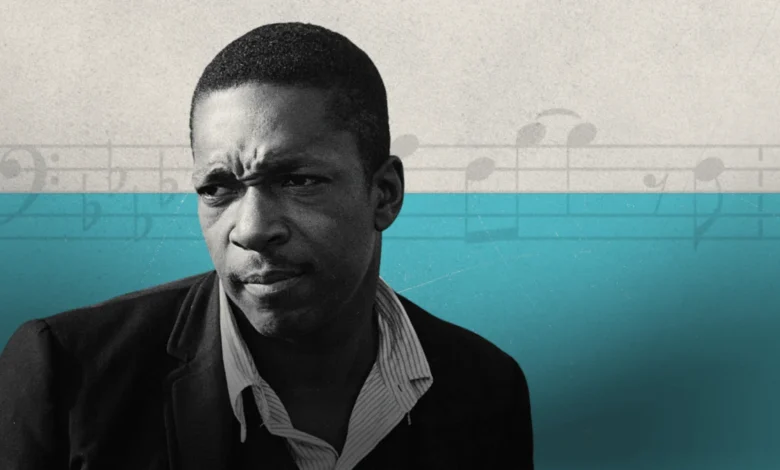
Nearly 60 years after his final studio session, the artistic output and spiritual philosophy of saxophonist John Coltrane remain a cornerstone of 20th-century music. As the global jazz community prepares to commemorate the centennial of his birth on September 23, 2026, scholars, historians, and musicians continue to grapple with the sheer magnitude of his influence. Coltrane, who passed away from liver cancer at the age of 40 in 1967, managed in a career spanning little more than a decade as a bandleader to dismantle the existing architecture of jazz and rebuild it into a medium for profound spiritual and social inquiry.
The upcoming centennial serves as more than a nostalgic anniversary; it acts as a catalyst for a re-examination of how Coltrane’s work—ranging from the hard-bop discipline of the 1950s to the searing, metaphysical freedom of the mid-1960s—continues to inform the modern musical lexicon. His legacy was formally recognized by the Pulitzer Prize board in 2007 with a posthumous special career citation, cementing his status as a national treasure whose contributions extended far beyond the constraints of entertainment.
A Chronology of Transformation
The trajectory of John Coltrane’s life is a study in rapid evolution and relentless self-correction. Born in 1926, Coltrane spent the early years of his career in relative obscurity, often hampered by substance abuse that threatened to derail his potential. It was not until 1955, when he joined the Miles Davis Quintet, that his unique, searing tone began to reach a wider audience.
His career can be segmented into distinct phases of growth:
- 1955–1957 (The Formative Years): During his tenure with Miles Davis, Coltrane began to develop his signature "sheets of sound," a technique characterized by rapid-fire arpeggios and dense harmonic clusters. However, his unreliability due to personal struggles led to his dismissal by Davis in 1957.
- 1957–1959 (The Renaissance): Following a period of intense personal reflection and sobriety, Coltrane experienced a creative explosion. He collaborated with Thelonious Monk, a period he later described as a "musical university," and rejoined Davis to participate in the recording of Kind of Blue (1959), widely considered the most significant jazz album in history.
- 1960–1965 (The Classic Quartet): Forming his own quartet with pianist McCoy Tyner, bassist Jimmy Garrison, and drummer Elvin Jones, Coltrane shifted the focus of jazz from traditional chord progressions to modal explorations. This era produced Giant Steps (1960) and his magnum opus, A Love Supreme (1964).
- 1965–1967 (The Avant-Garde Departure): In his final years, Coltrane embraced the "free jazz" movement, pushing the boundaries of melody and structure until they dissolved into pure expression, as heard in the harrowing and ecstatic live recordings from his final period.
Technical Mastery and Harmonic Innovation
To understand Coltrane’s impact, one must look at the technical rigor he brought to the saxophone. Ingrid Monson, the Quincy Jones Professor of African American Music at Harvard, emphasizes that Coltrane’s dedication was not merely about virtuosity, but about the "mathematics of music" in service of a higher purpose.
His innovation was twofold. First, he revolutionized the harmonic language of the instrument. Giant Steps remains the "litmus test" for jazz musicians; its rapidly changing chord structure requires a level of improvisational fluency that forces a player to discard traditional melodic crutches. Second, he pioneered the "drone" aesthetic in Western jazz. By stripping away complex chord changes—as he did on his 1961 version of "My Favorite Things"—and focusing on a single, resonant pitch, he bridged the gap between Western bebop and the music of South Asia and Africa.
The Spiritual and Social Imperative
Coltrane’s music was never detached from the reality of the American experience. As noted by Vijay Iyer, Harvard’s Franklin D. and Florence Rosenblatt Professor of the Arts, there is an inescapable "sense of struggle" in Coltrane’s discography. This was not a passive aesthetic choice but a direct response to the turbulent 1960s.
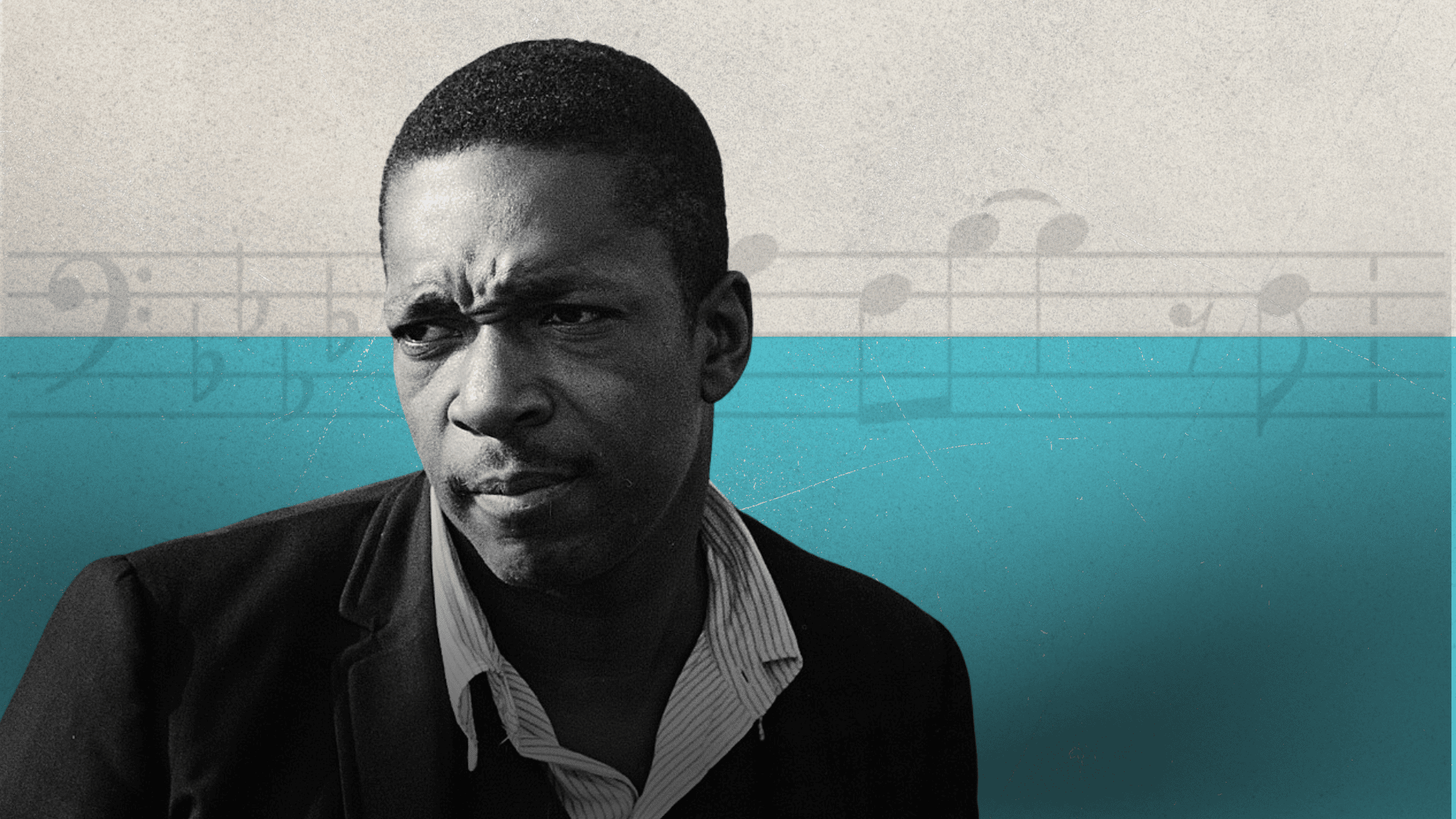
"Alabama," composed in the wake of the 1963 Birmingham church bombing, stands as a testament to his ability to translate political trauma into a cathartic, prayer-like soundscape. This spiritual dimension culminated in A Love Supreme, a four-part suite that serves as a devotional document. Coltrane viewed his role as a conduit for the divine, a philosophy that resonated with a generation of listeners seeking meaning in a fractured, post-World War II society. This perspective, often termed "Third World consciousness," led him to seek inspiration outside the Eurocentric canon, creating a global dialogue that remains relevant today.
The Mechanics of the Industry: Breaking the Mold
Beyond the notes themselves, Coltrane fundamentally altered the economics and performance culture of jazz. Jazz critic Bob Blumenthal points to a significant, often overlooked contribution: the shift in the duration of live performances. Prior to Coltrane, the nightclub model dictated 30-to-40-minute sets followed by mandatory breaks to encourage beverage sales.
Coltrane was a primary catalyst in breaking this convention. By insisting on extended improvisations—often lasting for nearly an hour—he challenged the idea of the musician as a provider of background atmosphere, elevating the concert experience to that of a serious, uninterrupted artistic event. This change allowed for a depth of development in live improvisation that has become the industry standard for jazz performance today.
Analytical Perspectives: The Enduring Influence
The influence of John Coltrane spans far beyond the genre of jazz. His approach to timbre, volume, and emotional intensity provided a blueprint for rock guitarists in the late 1960s and early 1970s, and his rhythmic concepts have been sampled and studied by hip-hop producers for decades.
Harvard experts suggest that his longevity is due to the "integrity" of his search. Unlike many of his contemporaries who found a successful "style" and refined it for their remaining years, Coltrane was in a state of perpetual self-interrogation. His practice regimen—which continued even between sets at nightclubs—was not a pursuit of perfection but an attempt to "open a door" to a greater understanding of the musical universe.
Essential Recordings: A Suggested Path
For those seeking to explore the breadth of his work, scholars recommend moving beyond a chronological approach. The following tracks offer a window into his evolution:
- The Ballad Aesthetic: "Body and Soul," "In a Sentimental Mood" (with Duke Ellington), and "My One and Only Love" (with Johnny Hartman) display a lyrical vulnerability that contrasts with his more intense works.
- Harmonic Complexity: "Giant Steps" and "Spiral" demonstrate his mastery of complex chord changes.
- Modal and Spiritual Exploration: "My Favorite Things," "A Love Supreme," and "Wise One" provide insight into his move toward drone-based music and spiritual devotion.
- The Avant-Garde Frontier: "Chasin’ the Trane," "Venus" (from Interstellar Space), and his live recordings from Seattle represent the final, uncompromising chapter of his career.
Broader Impact and Future Implications
As the world approaches September 23, 2026, the discourse surrounding John Coltrane remains vibrant. His legacy serves as a reminder that the highest forms of artistic expression are often born from a synthesis of intense discipline, technical innovation, and a willingness to confront the social and spiritual anxieties of one’s time.
The implications of his work extend into the future of music education and creative development. By demonstrating that "impossible" musical tasks can be conquered through persistent inquiry, Coltrane provided a roadmap for successive generations of artists. As we reflect on his centennial, the consensus remains that Coltrane was not merely a musician, but a transformer of human consciousness through sound—a figure whose influence is not confined to the past, but continues to shape the future of artistic exploration.