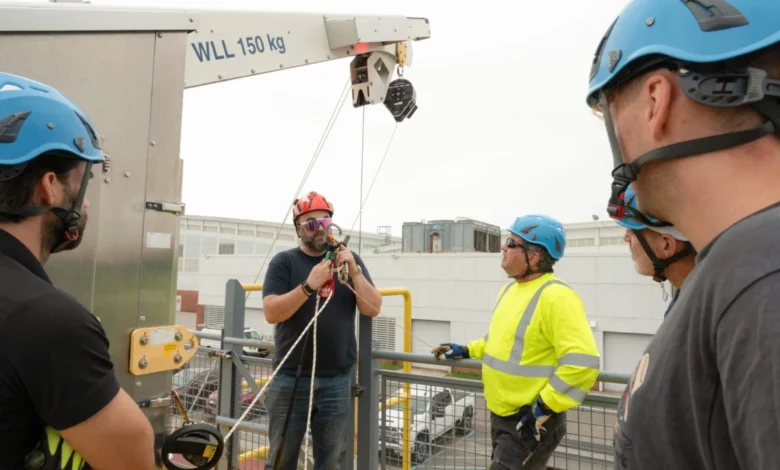
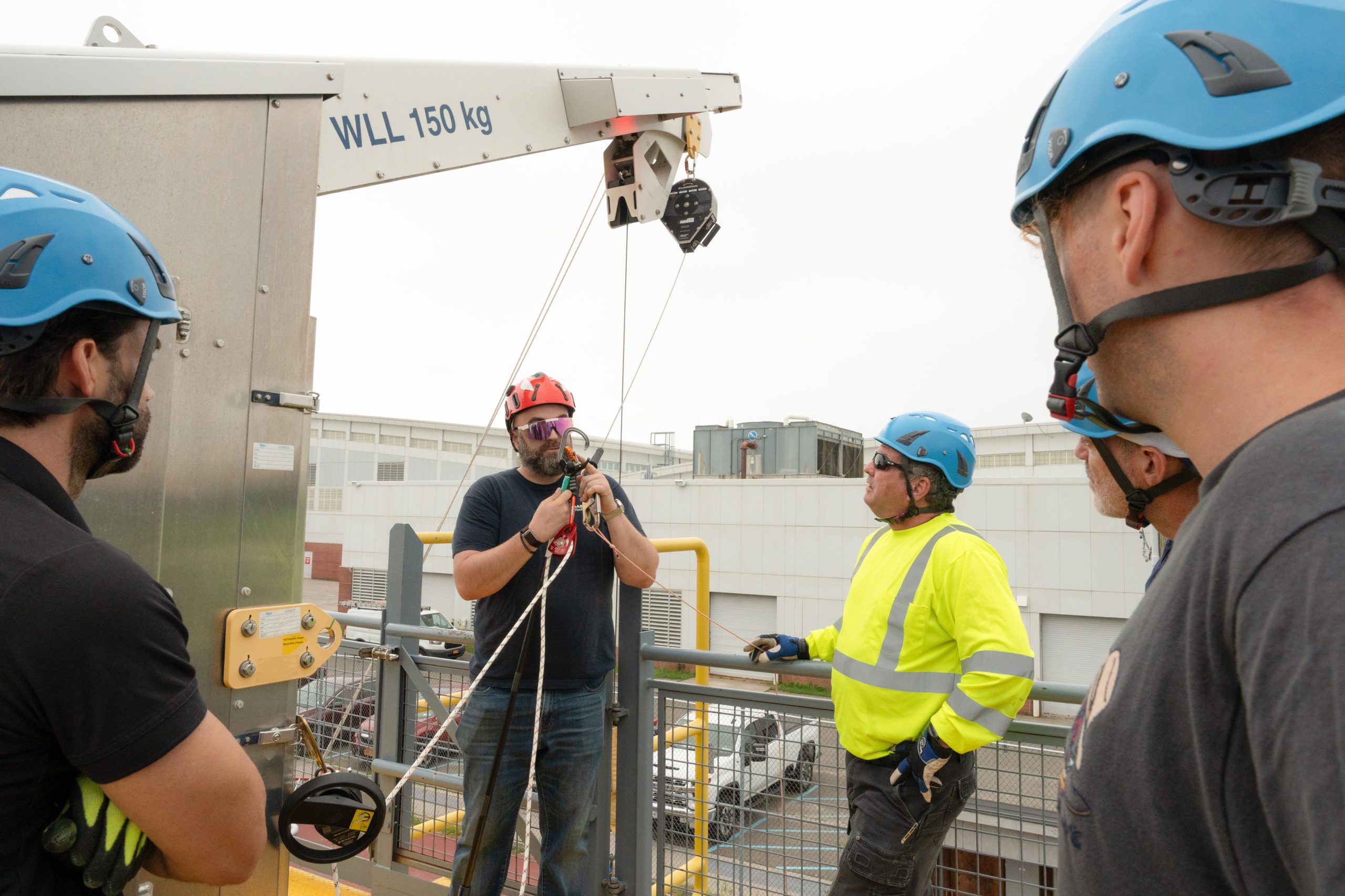
BRENTWOOD, N.Y. — For William “Billy” Bishop, a former Navy sailor and union laborer with Local 1298, the rise of the American offshore wind industry felt like a generational opportunity. Two years ago, when the prospect of high-wage, high-skill work on the Atlantic shelf emerged, Bishop quickly enrolled at the National Offshore Wind Training Center (NOWTC) in Long Island. The center, a strategic partnership between Suffolk County Community College, the Long Island Federation of Labor, and the global energy developer Orsted, offered the specialized safety certifications necessary to work in the high-stakes environment of offshore turbine construction.
After graduating, Bishop transitioned from general labor to specialized structural inspections and maintenance on the Sunrise Wind project off the coast of Long Island. He viewed it as a career-defining shift. However, as the political landscape shifted in Washington, D.C., that optimism has been replaced by a pervasive sense of instability. With federal support for offshore wind waning under the current administration, the pipeline of projects that once promised a decade of steady employment is drying up, leaving both the workers and the training infrastructure that supports them in a state of precarious limbo.
The Rise and Stagnation of a Green Workforce
The vision for American offshore wind was, until recently, one of exponential growth. In 2021, the Biden administration established an ambitious federal target: to deploy 30 gigawatts of offshore wind power by 2030. Achieving this goal would have required a monumental mobilization of human capital. Estimates from the Department of Energy suggested that the industry would need to recruit, train, and deploy approximately 77,000 workers to handle everything from steel manufacturing and turbine assembly to marine logistics and electrical grid integration.
This target sparked a collaborative rush across state lines and academic institutions. From Massachusetts to New York, community colleges and trade unions developed specialized curricula. They were preparing for a "green rush" that would create a new class of maritime energy professionals. But the momentum stalled abruptly on January 20, 2025. Upon taking office for a second term, President Donald Trump enacted a series of aggressive executive actions, including the so-called "wind order," which imposed an immediate pause on all new offshore and onshore lease and permit approvals.
A Chronology of Regulatory Retreat
The trajectory of the industry can be traced through a sequence of policy shifts that have effectively dismantled the sector’s near-term growth.
- 2021–2024 (The Expansion Era): The U.S. offshore wind sector enters a period of rapid development, bolstered by billions in federal tax credits, Department of Energy grants, and the establishment of dozens of permitting pipelines. The first commercial-scale wind farm off the Long Island coast begins delivering power in late 2023.
- January 2025 (The Halt): The new administration issues a broad "wind order," freezing all new federal leasing.
- Mid-2025 (The Stop-Work Crisis): The federal government issues emergency stop-work orders on the five major offshore projects currently under construction, citing "national security concerns." While these are eventually challenged and overturned in federal court, the regulatory chill remains.
- Late 2025–2026 (The Systematic Dismantling): The administration begins a multifaceted campaign to stifle the industry. This includes the cancellation of hundreds of millions of dollars in earmarked grants, the repeal of renewable energy tax credits—which the White House characterized as "market-distorting subsidies"—and a federal buyout program that compensates developers for abandoning their existing offshore leases.
By the second quarter of 2026, no new offshore wind farms had broken ground, and the total installed or under-construction capacity stood at roughly 6 gigawatts, a mere fraction of the previous administration’s goals.
The Economic and Geopolitical Argument
The administration’s stance is rooted in a desire to prioritize traditional energy sources and minimize federal intervention in the energy market. Supporters of the current policy argue that the subsidies previously allocated to offshore wind were inefficient and that the projects presented logistical and national security risks. Conversely, industry researchers, such as those at ClearView Energy Partners, suggest the volatility is unprecedented. Timothy Fox, a managing director at the firm, noted that while energy policy typically fluctuates between administrations, the current oscillation is so violent that it threatens the very foundation of the sector’s long-term investment logic.

The impact on developers has been immediate. Companies like Orsted and Equinor, which had invested heavily in local workforce development, have adopted a defensive posture. In February 2026, the administration initiated a policy of paying developers to surrender their leases, effectively buying the industry out of its own future. For workers like Bishop, the reality is stark: "I would definitely do this forever," he said. "But I see contracts falling through nonstop now in America. This might be the last one for a while."
Pivoting the Training Infrastructure
As the prospect of new offshore projects fades, educational and training institutions are being forced to adapt or face obsolescence. The National Offshore Wind Training Center is not closing its doors, but it is changing its focus. According to Roger Clayman, a director at the center, the strategy is currently one of "wait and see," with a focus on renewing certifications for existing workers rather than onboarding large cohorts of new trainees.
This adaptation is mirrored at universities like Stony Brook, where the Offshore Wind Training Institute has pivoted its curriculum. While the program was originally designed to funnel students directly into wind-specific careers, it now emphasizes broader electrical engineering skills. Students are learning to work with High-Voltage Direct Current (HVDC) systems, which are essential not just for offshore wind, but for the general modernization of the national power grid, including solar-to-battery integration and regional grid stability.
Derek O’Connor, a workforce development manager at Stony Brook, argues that this agility is a necessity. "We’ve been flexible in responding to the changes, being less focused on the specific power generation source and more about grid stability and reliability," O’Connor said.

Broader Implications for the Clean Energy Sector
Despite the collapse of the offshore wind pipeline, the broader clean energy market remains one of the fastest-growing segments of the American economy. The Bureau of Labor Statistics continues to categorize wind turbine technicians and solar installers among the nation’s fastest-growing occupations. This highlights a persistent disconnect: while the federal government has acted to block offshore wind, the market demand for clean energy technicians continues to rise.
Workforce development organizations, such as the Clean Power Institute, are attempting to bridge this gap by rebranding their efforts. In Massachusetts, the state’s Clean Energy Center has shifted its funding from offshore-specific training to a broader "ocean tech" portfolio, focusing on coastal resilience and marine ecosystem monitoring. Similarly, Maryland’s state-sponsored training programs have pivoted to place graduates into the aerospace and shipbuilding sectors, where their mechanical and technical skills remain in high demand.
The Long-Term Outlook
The consensus among industry observers is that the offshore wind sector is entering a period of prolonged dormancy. With projects like New England Wind and SouthCoast Wind sitting on indefinite hold, the skilled labor that was cultivated specifically for these projects is being dispersed back into the general construction market.
For union leaders like John Dunderdale, business manager for Pile Drivers Local Union 56, the situation represents a profound lost opportunity. "The jobs were there. The training was there. The money was there," Dunderdale remarked. His union members, who underwent specialized training to handle 1,800-ton offshore piles, are now being redirected to traditional infrastructure projects. While this ensures employment for his members, it underscores the structural waste of a workforce that was prepared for a specific technological leap that the nation has, for now, decided to abandon.

As for Billy Bishop, he remains at his post on the Sunrise Wind project, which is slated for completion in 2027. He expects to return to traditional onshore construction once the final turbines are installed. Whether the offshore industry will see a resurgence in the future remains a subject of intense debate, but for those who built their careers around the promise of a wind-powered future, the current reality is one of quiet transition, waiting to see if the political pendulum will ever swing back.
Related posts: